Summary
Personal Information
Crime
Voyage
Transportation
Richard Bibby was transported on the Ramillies, departing 25th Apr 1854 and arriving 7th Aug 1854 with 280 passengers.
757 ton barque ship Ramillies was built at Sunderland in 1845. There only appears to be one voyage to Australia with convict passengers. She carried the thirteenth of 37 shipments of male convicts for Western Australia. The 1854 voyage took 79 days and the Ramillies arrived in Fremantle on August 7, with 94 passengers and 277 convicts (1 death recorded on voyage). (The passengers comprised 30 Pensioner Guards and their families.)
 Ramillies (generic)
References
| Primary Source | Australian Joint Copying Project. Microfilm Roll 93, Class and Piece Number HO11/18, Page Number 76 |
| Source Description | This record is one of the entries in the British convict transportation registers 1787-1867 database compiled by State Library of Queensland from British Home Office (HO) records which are available on microfilm as part of the Australian Joint Copying Pro |
| Original Source | Great Britain. Home Office |
| Compiled By | State Library of Queensland |
| Database Source | British convict transportation registers 1787-1867 database |
Claims
No one has claimed Richard Bibby yet.
Photos
No photos have been added for Richard Bibby.
Convict Notes

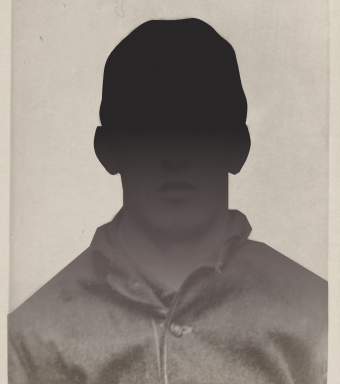
Richard Bibby was 22 years old on arrival, he was single, 5' 5 1/2" tall, light brown hair, dark hazel eyes, fair complexion, stout build, scar under right eye. 19/19/1859 The Inquirer and Commercial News, Perth: The wretched man, Richard Bibby, condemned to death at the recent Quarter Sessions for the murder of the native Biilimarra, was hung at the Perth gaol on Monday. He apparently fancied to the last that he would be reprieved, for, though he admitted his guilt to the clergyman who visited him in his cell, when asked on the scaffold whether his sentence was not a just one, he replied that if the truth had been told he would not have been there. The unfortunate man struggled much, the rope having been unskillfully adjusted. It is said, however, that his neck was dislocated the instant after the drop was drawn, and that his struggles were muscular only. Let us hope it was so. The Dean was unremitting in his attentions to this wretched being, and so was Mr Trigg. He was to all appearance truly penitent. The peculiarity in this case was that it was the first execution in the colony of a white man for the murder of one of the aboriginal population. Many thought that the man's life would have been spared, and very strong intercession was made, but the cool deliberate way the murder was committed, and the previous antecedents of the condemned, he having been transported for robbery with violence, after a long career of crime, was a bar to the exercise of mercy in his case. 26 /10/1859 The Inquirer: From the evidence elicited at the trial, it seems that Bibby was hutkeeper at a station in the Victoria district, belonging to Mr Davis. Something transpired in the Court with reference to some native women, one of whom he expected to be in the camp of the murdered man Billimarra, but who was not there on the night previous to, or on the morning- of, the murder. Whether he attributed her absence to Billimarra' s influence, and killed him in consequence, does not appear. The reason given by Bibby for the crime was that his victim had stolen some lambs ; but the principal witness for the prosecution, a fellow -servant of the murderer, distinctly stated that the carcasses of the only iambs that were lost had been found mangled by the native dogs. Be the cause of the murder what it may, it is clear that on the preceding night Bibby had expressed his determination to deprive Billimarra of life, and that he loaded his pistol for the purpose. With this resolve he went to sleep, and before sunrise the next morning he took his pistol and went to the place where the black man was sleeping, near to his own hut — so near, indeed, that he might be said to be under his' protection; — he then woke him from his earthly slumber, to plunge him in the long sleep of death. The words between them were few, the action brief. He put his pistol to the native's head and shot him. The witness Comely followed him by stealth, and saw the crime committed. A native sleeping close at hand was awoke by the report of the pistol, saw the dead man yet warm and bleeding, and subsequently buried him.