Summary
Personal Information
Voyage
Transportation
John Williams was transported on the Duke Of Portland, departing 31st Dec 1806 and arriving 27th Jul 1807 with 203 passengers.
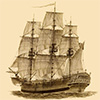 Duke Of Portland (generic)
References
| Primary Source | Australian Joint Copying Project. Microfilm Roll 87, Class and Piece Number HO11/1, Page Number 395 (197) |
| Source Description | This record is one of the entries in the British convict transportation registers 1787-1867 database compiled by State Library of Queensland from British Home Office (HO) records which are available on microfilm as part of the Australian Joint Copying Pro |
| Original Source | Great Britain. Home Office |
| Compiled By | State Library of Queensland |
| Database Source | British convict transportation registers 1787-1867 database |
Claims
"Ancestor"


Photos
No photos have been added for John Williams.
Convict Notes
The 35th Regt. was famously known as “The Orange Lillies,” with orange facings on their scarlet coats — a nod to their Protestant allegiance and royal patronage.
Private Soldier of the British Army’s 35th (Royal Sussex) Regiment.
A "List and Description of Deserters from His Majesty's Service" was printed by the War office in the "Hue and Cry", which would have been the equivalent of the Police Gazette today. The list was published on 5 April 1806, and full details were printed about men who had deserted, in the hope that someone would inform on them, or relate to authorities where they were. John Williams and Samuel Webb's details were printed in "The Hue and Cry" after they had been recaptured and taken back to Lewes barracks. It was a very detailed description of both men. Although physical descriptions were also recorded for convicts, curious differences are found between the information captured in these two sources, with the army recording a full physical description whereas the convict returns concentrated on facial characteristics. Details for John Williams are found in both sources, and together provide a comprehensive pen portrait. He was apparently 5'7-8" in height with a fair-ruddy complexion, grey or hazel eyes, and sandy or red hair, the latter suggesting that he was probably a "strawberry blond". In 1806 he was noted as being of a thin build with an oval shaped head, thin face, sandy hair and eyebrows, long nose, small mouth, long neck, square shoulders, long arms, thick hands, thin legs and small feet." He was also known as a "red-headed Welshman".
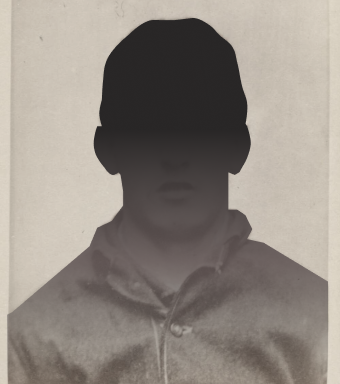
War Office Records. Registers Court Martial. https://nla.gov.au/nla.obj-1606856117/view Private John Williams, 2nd Bn, 35th Regt, Tried at Chichester, 22 April 1806, for Desertion, Transportation for 14 years. Case sent to King 14th May 1806.
Family connections for John (Williams) are: Some amendments added Sep 2025. WILLIAMS John (Williams) son of William (Williams) & Ann (Jones) & brother of 3siblings is said to have been born on 4 6 1787 at Llangammarch Wells Breconshire Wales. He joined the 35th Sussex Regiment of the British Army about 1804. In December 1805 he was accused of desertion/sedition, flogged & sent to the Lewes Barracks hospital, from where he escaped, was recaptured, tried at Chichester Barracks Sussex Court Martial on 22 4 1806, sentenced to 14years & arrived in NSW as a convict on 27 7 1807 after a voyage of 6months on DUKE OF PORTLAND; he was Protestant with red hair. He married at Sarah (Nash age15) on 15 1 1814 at St Johns CofE Parramatta-not shown in Smees records. He was issued his Conditional Pardon on 31 1 1816 & settled with his inlaws on farm in Castlereagh District near Nepean River. In 1823 he moved to a 50acre grant at Camden, which he is recorded as occupying with his family in 1828 & which he sold in 1833. He was recorded in 1827 & 1830 as a settler. He died in 1854 age about67. Some details taken from one of the three John (Williams-DUKE OF PORTLAND) entries on this Website. Sarah (Nash) was born on 16 11 1798 & baptised on 11 8 1805 age6 in group ceremony at St Johns CofE Parramatta. She is recorded in 1828 with her family at Camden. She died on 12 5 1875 age76. Details of Sarah (Nash)s family are given in entry for Mary (Stevens EARL CORNWALLIS 1801) on this Website. John (Williams) & Sarah (Nash) produced at least 7children: mostly girls 1.Robert (Williams) was born on 19 8 1815 & baptised on 24 9 1815 at Christ Church Castlereagh. He is recorded in 1828 with his parents at Camden. He moved from Camden where he was living to Castlereagh in 1828. 2.Mary (Williams) was born on 27 8 1817 & baptised on 28 9 1817 at Christ Church Castlereagh. She is recorded in 1828 with her parents at Camden. 3.Ann/e (Williams) was born on 11 2 1820 & baptised on 9 4 1820 at Christ Church Castlereagh. She is recorded in 1828 with her parents at Camden. 4.Sarah (Williams) was born on 22 7 1822 & baptised on 18 8 1822 at Christ Church Castlereagh. She is recorded in 1828 with her parents at Camden. 5.Elizabeth (Williams) was born on 29 7 1824 at West Bargo & baptised on 14 10 1827 age3 w/Maria at St Pauls CofE Cobbity. She is recorded in 1828 with her parents at Camden. She died in 1906 age about81. 6.Maria (Williams) was born on 15 1 1827 at West Bargo & baptised on 4 10 1827 w/Elizabeth at St Pauls CofE Cobbity. She is recorded in 1828 with her parents at Camden. 7.Eliza (Williams) was born on 18 10 1829 at West Bargo & baptised on 11 1 1830 at St Pauls CofE Cobbity. Reference: Craig James Smee 'Births and Baptisms Marriages and Defacto Relationships Deaths and Burials New South Wales 1788-1830' ..a complete listing from church & other records in the early colony.
NSW 1828 Census Index. John Williams, age 40, F.S, Duke Portland, 1807, 14 years, protestant, Landholder, Camden district. Has 50 acres of land, 40 of which are cleared, and 25 cultivated. Has 10 cattle. Sarah Williams, age 30, BC. Robert, age 13, BC. Mary, age 11, BC. Anne, age 8, BC. Sarah, age 6, BC. Elizth., age 4, BC. Maria, age 2, BC. --------------------------------------------------
JOHN WILLIAMS b. June 4, 1787 d. September 21, 1854 It is most likely that John Williams was born at Llangammarch Wells in Breconshire in Wales in 1787 to William Williams and Ann, nee Jones, the youngest of four children. As was not uncommon for the times John joined the army, not a Welsh regiment but the British Army’s 35th Sussex Regiment and this was when he was just 17. It was, after all, a time of revolution and riot and, more or less, continuous war with France. By December 1805 red-headed John, then a 19 year old private, was accused of sedition/desertion. After the first part of his punishment by flogging he was sent to the hospital at Lewes Barracks and while there and recovering he escaped but was soon recaptured. On April 22, 1806 John Williams was sentenced at Chichester Barracks and found guilty of “Having deserted on the 9th day of March 1806 from the hospital of the said regiment in Lewes Barracks in the County of Sussex (Sufrex), then being a prisoner in the said hospital and so continuing a deserter until brought back to the said Regiment then lying at Lewes aforesaid on the 30th day of the said month of March.†He received a 14-year sentence and was transported to New South Wales aboard the Duke of Portland.1 The Duke of Portland, a ship of 523 tons, arrived at Port Jackson on July 27, 1807.2 John must have ‘kept his nose clean’ because on January 31, 1816 he was accorded a conditional pardon. The family settled in the Castlereagh district, probably initially with Sarah’s mother Maria and Robert Guy on their farm near the Nepean River. In 1823 the Williams family moved and settled on a 50 acre grant of land at Camden (West Bargo). They remained there until 1833 when they sold their land. However, son Robert had returned to the Castlereagh area in about 1828. As previously mentioned, John had taken his family on, what was then, a great journey and adventure. In this respect he was a pioneer of the earliest order. Consider, it was in the middle of 1823 that there was a ‘push south for new pasture land [which] yielded rich rewards.’ Early pioneering by Commander Currie who, with others, discovered Lake George and generally followed the lead of Hume and Hovell but veering more to the east and continuing ‘south, passing among “fine forest country intersected by stony rangesâ€, until they came to pasture land which the Aborigines called “Manarooâ€.4 The 1828 Census shows that John, with his family, was a landholder at Camden (West Bargo). In 1833 they had moved again settling on the banks of Jerrabombera Creek, near present day Queenbeyan. Nevertheless, by 1839 they had moved again, this time further south to the Monaro district and were leasing a very large property of over 10,000 acres called ‘Head of Curry Flat’ with some 840 head of cattle. This property was near the present day town of Nimmitabel along the Monaro Highway between Cooma and Bega on the coast. John and Sarah Williams and their descendents are today honoured as being of the earliest pioneers in the entire area with a commemorative park, named in their memory, ‘Lake Williams’.5 In the early part of the January in 1814, John, while living at Seven Hills had married Sarah Nash at St. John’s, Parramatta and they were to have 13 children over a period of nearly 30 years. John died on 21st September 1854 at the age of 67 and ‘he perished in a snow storm at Grosse’s Plain (south of Jindabyne) … having died of “exposure to snow, cold and wet.â€â€™ He is buried along with Sarah in the old Whyalla Road cemetery in Cooma.6 The headstone records: