
Summary
Personal Information
Crime
Voyage
Transportation
Alexander Agar was transported on the Thomas Arbuthnot, departing 6th Jan 1847 and arriving 4th May 1847 with 289 passengers.
Built 1841 at Aberdeen, Scotland. Wood ship of 621 Tons. Thomas Arbuthnot, 1847. “The Thomas Arbuthnot convict ship, Captain Thomson, sailed from Spithead this morning for Port Phillip, with a superior class of delinquents, officially called “exiles.” These are the first “exiles” sent to the above settlement, which the inhabitants of that respectable place are very wroth at, and have memorialised the Government on the subject. The most ingenious trades and professions are carried on, on board this ship; in fact, we believe, all trades in vogue have their representatives on board. The most ingenious affair, however, is a newspaper in manuscript, published every Saturday, having its foreign and domestic correspondence, advertisements, and, indeed, all the necessary accessories to an apparently well-conducted journal. The articles are well written and the arrangements well made. The name of this paper is the Citadel, and the conductors dub the captain of the ship ” the governor.” The Citadel having no opponents enjoys a large circulation. The editor is a man who has been of considerable note in the legitimate literary world; but all names and circumstances in connexion with their present position is strictly preserved secret with regard to these “exiles,” the greatest majority of whom are juvenile offenders from Millbank, Pentonville, and Parkhurst (Isle of Wight) prisons.”—Times, January 12. Published in the Launceston Examiner, 2 June 1847. https://trove.nla.gov.au/newspaper/article/36252218?searchTerm=Thomas Arbuthnot There was a lot of public criticism of the arrival of these “Exiles” in New South Wales, and of their treatment, by being offered training, etc, to the detriment of honest but poor labourers.
 Thomas Arbuthnot (generic)
References
| Primary Source | Australian Joint Copying Project. Microfilm Roll 92, Class and Piece Number HO11/15, Page Number 149 (76) |
| Source Description | This record is one of the entries in the British convict transportation registers 1787-1867 database compiled by State Library of Queensland from British Home Office (HO) records which are available on microfilm as part of the Australian Joint Copying Pro |
| Original Source | Great Britain. Home Office |
| Compiled By | State Library of Queensland |
| Database Source | British convict transportation registers 1787-1867 database |
Claims
"I have research Alexander Agar's life in depth"


Photos
No photos have been added for Alexander Agar.
Convict Notes
Alexander Agar was born in London c 1828 to Edward Agar (a shoemaker born in Ireland) and Mary. He had an older sister, Mary Ann and brother Thomas, who died as a baby. The family lived around the Seven Dials area of London. Alexander's first conviction was for stealing locks, for which he was sentenced to six weeks, with a whipping. When he was sentenced to transportation for stealing a handkerchief, the recorder recommended he be sent to Parkhurst prison, noting Alexander could read and write well, but couldn't be controlled by his father. He was sent to Parkhurst Prison where he was trained in shoemaking, and then transported to Port Phillip on the Thomas Arbuthnot. Alexander Agar's partner was Catherine Collins, but they never married. Catherine had migrated from Ireland in 1849 aboard the Pemberton and married Henry Speed shortly afterwards. She had had three children, when she partnered with Alexander Agar. Her daughter, Sarah Speed (1855-1933), used the surname Agar from an early age. Alexander and Catherine had the following children: - Alexander (1857-1884) - Catherine (1859-1894) - Edward William (1862-1863) - Frederick William (1864-1959) - Mary Ann (1866-1931). Alexander was brought before the courts in Geelong for stealing a watch (the prosecutor did not appear and the case was dismissed) and for assaulting Catherine. Otherwise, he is not recorded in court records or newspapers. The records suggest the family was poor and the children were involved in petty crimes from an early age. Alexander lived around the Spring Street end of Lonsdale Street, but Catherine Collins appears to have lived separately from about 1869. Alexander was a shoemaker, but Catherine supported the family through prostitution, as did Sarah and daughter Catherine, who both worked in brothels on Little Bourke Street, and in Little Lon. They had criminal records for vagrancy and prostitution, and Sarah served time for abandoning her daughter. Son Alexander was made a ward of the state in 1869 and later imprisoned repeatedly for robbery, affray and assault. He was an associate of John Leedham, son of exile David Leedham, who also came to Melbourne on the Thomas Arbuthnot. Alexander Jr was killed in an illegal fight in 1884 in Sydney. The youngest two children were made State wards after brushes with the law but had no criminal records as adults. Catherine Collins died in 1874 after an extensive stay at the Melbourne Hospital. She is buried with her sister and mother at the Melbourne General Cemetery. Alexander Agar died at Sarah's house in Carlton and is buried in a different part of the Melbourne General Cemetery with his daughter, Catherine and her two daughters, who both died as babies.

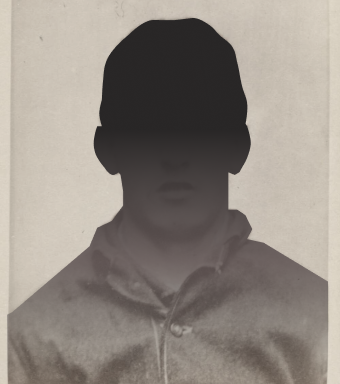
AGAR, Alexander Convicted: Westminster City General Sessions Date: 29/03/1843 Age: 14 Occupation: Labourer Offence: Stealing a handkerchief Sentence: Transportation 10 years Classification: Success (absorbed into colonial society as a free citizen) Alexander Agar was born c1829 probably in London. Nothing is known of his childhood and early life prior to his being summoned to appear at the Westminster City General Sessions on 29/03/1843 accused of “Stealing a handkerchief”, found guilty and sentenced to 10 years transportation. Aged 14 he had apparently been employed as a Labourer. He was first sent to Westminster Bridewell as part of the normal holding arrangements and then, on 18/07/1843, transferred to Parkhurst Prison. His initial Gaoler’s report commented that he was “Quiet, Orderly”, was single but not recorded whether or not he could read and write.(i) During his imprisonment he was taught the shoemaking trade , it was confirmed that he could both read and write and according to the Parkhurst Prison Goverrnor he was “Generally good – does not always speak the truth”.(ii) On 01/01/1847 he was discharged from Parkhurst Prison in readiness for transportation to the Port Phillip District of the Colony of New South Wales as an “Exile”, that is, he would be entitled to a Conditional Pardon immediately upon arrival.(iii) Alexander Agar eventually sailed aboard the “Thomas Arbuthnot” on 11/01/1847 as disembarking at Williamstown in the Port Phillip District on 04/05/1847. His disposal was marked “Not specified.”(iv) There is then approximately a 7 year interval before further information on his life history becomes available. This is not uncommon. Quite a few of the Parkhurst “Exiles” became Shepherds, Domestic Servants on outback properties or went gold prospecting and as there were no prescriptive “monitoring” arrangements requiring records invariably a marriage is a normal point of re-emergence in tracing terms. In the case of Alexander Agar it was the birth of his first child, Alexander, on 23/10/1854 in Melbourne that marked his re-emergence.(v) Although no confirmation has been retrieved it appears that Alexander Agar married Catherine Collins sometime prior to 1854 as she is referred to as Catherine Agar on the birth of Alexander above. She had arrived in Melbourne on 14/05/1849 aboard the “Pemberton” as part of the Irish Famine Orphans Scheme, aged 14 and born in Limerick, and had been employed by Mrs. Cadden, Post Office, Melbourne, as an apprentice at £5 p.a.(vi) The family history shows that 3 other children were born to the couple besides Alexander: (1) Catherine in 1860; (2) Edward William in 1862 but died in 1863: and (3) Frederick William in 1864. Alexander Agar died in 1904 aged 78 in Brunswick, Victoria, although his wife, Catherine, had pre-deceased him very early in 1874 aged 38.(vii) . Notes: (i): Parkhurst Prison Register, The National Archives, HO24/15, p.27. (ii) Keith M. Clarke, Convicts of the Port Phillip District, Waramanga (ACT), 1999, p.1 of 111 in the Section Exiles to Port Phillip 1844-1849. NB: A large amount of the Parkhurst Prison information can be substantiated by reviewing the website “Convicts to Australia” http://members.iinet.net.au/~perthdps/convicts/park8.html which deals with the convict ship “Thomas Arbuthnot”. (iii): TNA, HO24/15 (iv): Keith M. Clarke (v): Digger – Pioneer Index Victoria 1836-1888 (Year 1998), [CD-ROM]. (vi): http://www.irishfaminememorial.org/orphans/ships_vic.htm (viii): Digger – Pioneer Index Victoria 1836-1888 (Year 1998), [CD-ROM]