Summary
Personal Information
Crime
Voyage
Transportation
Charles Anderson was transported on the Henry Tanner, departing 27th Jun 1834 and arriving 26th Oct 1834 with 220 passengers.
 Henry Tanner (generic)
References
| Primary Source | Australian Joint Copying Project. Microfilm Roll 90, Class and Piece Number HO11/9, Page Number 376 |
| Source Description | This record is one of the entries in the British convict transportation registers 1787-1867 database compiled by State Library of Queensland from British Home Office (HO) records which are available on microfilm as part of the Australian Joint Copying Pro |
| Original Source | Great Britain. Home Office |
| Compiled By | State Library of Queensland |
| Database Source | British convict transportation registers 1787-1867 database |
Claims
No one has claimed Charles Anderson yet.
Photos
No photos have been added for Charles Anderson.
Convict Notes

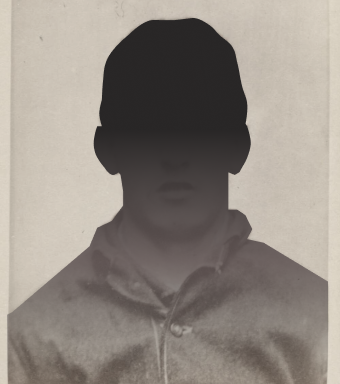
The above references hide a story of horrific cruelty by the administration at Sydney. Source: Sydney Living Museums, Dr Fiona Starr. Some hapless individuals experienced the full horrors of convict transportation. It was no wonder that some, like Anderson, endured periods of mental instability. Navy seaman and thief Charles ‘Bony’ Anderson arrived in Sydney from Devonshire in 1834, aged 24. He was heavily tattooed, with designs of a mermaid, anchor, buoy, cottage, flag, heart, crucifix, sun, moon and seven stars, Adam and Eve, serpent and tree. In the next few years he was frequently flogged, for mutinous conduct, striking fellow prisoners, assaulting an overseer and neglect of work. After one offence he was apparently cruelly chained to a rock on Goat Island, in public view and fed with a long pole. In 1838 the Barracks’ court sentenced him to the horrific punishment of life in ‘double irons’ on Norfolk Island, but he was later returned to cockatoo Island, where he was considered a lunatic and kept in a straightjacket. Following his transfer to the Tarban Creek Lunatic Asylum, Anderson was pronounced sane. He received his freedom in 1854. -------------------------------------------------- http://www.australiaforeveryone.com.au/files/places_goatisld.html Located in the middle of Port Jackson to the east of the Harbour Bridge, Goat Island has a long history of human habitation. The Aborigines referred to it as Mel-Mel, the First Fleet settlers chose to call it by its present name as it was here that Gov. Phillip allowed three goats purchased in Capetown on the journey out from England to forage. Over the years the island has been used as a quarry (by convicts), a home for convicts awaiting transportation to Norfolk Island, for explosives storage, as a research centre during the Bubonic Plague (1901) and as the headquarters for the management of Sydney Harbour. Convict era relics: A hollowed out section of sandstone in an overhang on Goat Island, which was carved to hold Charles 'Bony' Anderson, a wild convict who was chained here for two years around 1838 during the island's days as a convict prison. Anderson had suffered a mental impairment which made him violent as a result of a head injury received during his service in the Royal Navy. During 1835 he received over 1,200 lashes for his numerous attempts to escape the island. Anderson was one of 200 convicts who worked on the construction of the Gunpowder Magazine Complex on the island between 1833 and 1839. During those years, gangs of convicts quarried stone and levelling ground on a site at the south-western side of the island. The powder magazine they built is a substantial, stone-built, bomb-proof construction.
Convict Index. Charles Anderson, per Henry Tanner, 1834, Ticket of Leave, No 48/316. district: Goulburn; Tried , Devon Ass/Col. Charles Anderson, per Henry Tanner, 1834, Ticket of Leave, No 53/40. District: Brisbane; Tried, Devon. Charles Anderson, per Henry Tanner, 1834, Certificate of Freedom, 24 Apr 1854, No 54/0036. -------------------------------------------------- Index to Letters Colonial Secretary Received. 1835. Letter No 35/6239. 1837. Letter No 37/814. 1843-1847. Norfolk Island convict with date of Colonial conviction. 1844. Letter No. 44/4814. 1845. Letter No. 45/796 and No. 45/5195.
And Joseph Williams, 33, Charles Anderson, 22, and Thos. Walker, 37, sentenced also one month hard labour each, and then transported 7 years, for breaking into a dwelling house, at Ringmore, having undergone the former part of their sentence were removed from the Devon County Gaol, in order to being placed board the Hulk at Woolwich. North Devon Journal, 1 May 1834.