Summary
Personal Information
Transportation
Andrew Burrowes was transported on the Hive, departing 24th Aug 1835 and arriving 10th Dec 1835 with 52 passengers.
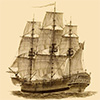 Hive (generic)
References
| Primary Source | The Australian/arts/review/tedeschis-murder-at-lyall-creek http://members.pcug.org.au/~ppmay/cgi-bin/irish/irish.cgi?requestType=Search&ship=Hive (2) [1835] http://www.environment.nsw.gov.au/MaritimeHeritage/researchcentre/wreckhive.htm http://www.jenwilletts.com/searchaction.php?page=1&surname=&ship=hive 1835&firstname= https://woollydays.wordpress.com/2015/08/09/survivors-of-the-hive-shipwreck-irish-convicts-in-australia/ |
Claims
No one has claimed Andrew Burrowes yet.
Photos
No photos have been added for Andrew Burrowes.
Convict Notes
Native of Sligo, tried for highway Robbery & sentenced to Life. Listed at time of sentencing as single he was transported to NSW on the ship Hive. 1838 Assigned as a stockman to Henry Dangar at Big River he was prosecution witness to the Liverpool Plains Massacre later known as the Myall Creek Massacre. Thursday 29th November 1838: 'Prosecuting the massacre, John Hubert Plunkett had three witnesses for the prosecution: the overseer William Hobbs who first alerted the magistrate, a young Irish convict assignee stockman named Andrew Burrows who was downriver with Hobbs when the massacre occurred, and George Anderson who was at the station when the gang arrived. Anderson took no part in what occurred, unlike his workmate Charles Kilmeister who succumbed to pressure and joined in. All three witnesses were terrified of the potential repercussions. Three years later, Burrows was dead. ‘‘Died suddenly,’’ the inquest recorded.' The Liverpool Plains Massacre - (Myall Creek Massacre) - The trial took place in the Supreme Court on Thursday 29th November, before is Honor Judge Burton and the following civil jury: - Mr. John Sewell, Foreman; Mr. William Knight of Castlereagh Street; Mr. Francis King, soap boiler, King Street; Mr. John Little, publican, King Street; Mr. Richard Leworthy, tailor, George Street; Mr. Henry Linden; Mr. Benjamin Lees, Parramatta; Mr. E. Hyland, Redwood; Mr. W. Johnson; Mr. Alexander Long, publican, York Street; Mr. John Leary, publican, York Street, and Mr. William Jones, Pitt Town. The prisoners arraigned at the bar were Charles Kilmaister, James Oates, Edward Foley, John Johnson, John Russell, William Hawkins and James Parry. The indictment contained twenty counts, the first five charging the prisoners with the murder of an aboriginal child; the next five with the murder of a male aboriginal child; the next five with the murder of a female aboriginal child, and the last five with the murder of an aboriginal boy named Charlie. The case for the prosecution was conducted by the Attorney General, assisted by Mr. Therry. The defence was conducted by Messrs A'Beckett, Foster and Windeyer, who had been specially retained for that purpose by the Hunter River Black Association. Witnesses included Thomas Foster, superintendent on the estate of Dr. Newton at the Big River about 150 miles beyond Invermein; William Hobbs, superintendent on Henry Dangar’s estate at the Big River; Edward Denny Day, Police Magistrate; George Anderson, an assigned servant of Henry Dangar; John Bates, assigned servant to Mr. Dight of Richmond and employed on Dight’s station at the Big River; Mr. Kinnear Robertson, Colonial Surgeon; Robert Sexton, assigned servant to Dr. Newton; Charles Reid, a ticket of leave holder employed by Henry Dangar; Andrew Burrows, an assigned servant to Henry Dangar. At a quarter past one the Jury retired, and at two o’clock returned to Court with a verdict, finding the prisoners guilty on the first five counts of the indictment and acquitting them on the last five