Summary
Personal Information
Voyage
Transportation
George Bailey was transported on the Lord Hungerford, departing 30th Jun 1821 and arriving 26th Dec 1821 with 228 passengers.
 Lord Hungerford (generic)
References
| Primary Source | Australian Joint Copying Project. Microfilm Roll 88, Class and Piece Number HO11/4, Page Number 52 |
| Source Description | This record is one of the entries in the British convict transportation registers 1787-1867 database compiled by State Library of Queensland from British Home Office (HO) records which are available on microfilm as part of the Australian Joint Copying Pro |
| Original Source | Great Britain. Home Office |
| Compiled By | State Library of Queensland |
| Database Source | British convict transportation registers 1787-1867 database |
Claims
No one has claimed George Bailey yet.
Photos
No photos have been added for George Bailey.
Convict Notes

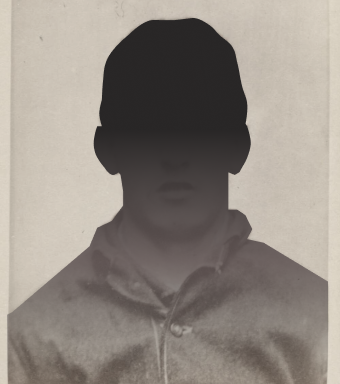
Australian Convict Transportation Registers - Other Fleets & Ships, P. Name; George Bailey Ship; Lord Hungerford. V D L. July 1821 Trial; Gloucester Date; 4 April 1821 Sentence; Life Noted against name; EXECUTED 4 Jan 1843. New South Wales, Australia Convict Ship Muster Rolls and Related Records. Age; 22 [1799] Trade; Farm Lab Height; 5 ft. 2 in George Bailey - 4 January 1842 - Hanged at Hobart for the murder of Thomas Lord at Swanport (Swansea) The Courier (Hobart, Tas. : 1840 - 1859) Fri 7 Jan 1842. Page 4 . EXECUTION OF WILLIAMSON AND BAILEY. EXECUTION OF WILLIAMSON AND BAILEY. As full details of the evidence which led to the conviction of James Williamson and George Bailey, of the wilful murder of Thomas Lord, at Swan Port, were contained in our reports of the last Criminal Sessions, we will not revert to the circumstances of the atrocious deed, but merely lay before our readers, as an appendage to the accompanying sketches, a succinct account of their persons, together with what we have been able to collect as to their deportment between the times of their condemnation and their execution, which took place on Tuesday morning last, at a few minutes past eight. GEORGE BAILEY, AS TAKEN IN THE DOCK. Born in Broad Summerford, Wiltshire, in the year 1799. Bailey stood about five feet two inches. His expression was that of nervous stupidity, and was remarkable only for bearing a far more advanced age than that which he gave himself though the appearance of sixty, for which any observer would have given him credit, was no doubt brought on by the disorderly life which, according to his own statement, he had never ceased to lead. On the 4th April, 1821, he was tried at Gloucester for burglary, and sentenced to transportation for life ; he did not, however, reach these shores till April 25,1823. His life seems to have been an uninterrupted tissue of crimes of every hue. One of his first ideas on arrival in the colony, was to conspire the death of his master, the more easily to rob the premises. For this attempt he took his trial, but, for some reason of which we are ignorant, was acquitted. He was after-wards detected in the act of making a canoe for the purpose of effecting his escape from the island, and subsequently convicted of an unnatural crime, besides a formidable category of minor offences. Bailey's deportment, from his first appearance in Court, was that of insurmountable dread at what he seemed to anticipate would be his fate, though the evident want of fortitude which characterised him appeared to sanction the hope that something might transpire to avert it. During the trial, the perspiration trickled down his hollow cheeks, and his handkerchief was in constant use to dry up the tears which would not be repressed. He followed the lengthened arguments which sprang from Mr. Macdowell's objection on his behalf, with an earnestness almost painful to behold, his blood-shot eyeballs almost starting out from under his furrowed brow, and, though the discussions were exclusively of a technical nature, not a word seemed to escape him ; when, however, any allusion was made to the term "capital punishment," he seemed unable longer to support the excitement, and at last let himself drop in the dock. During the week which intervened between the condemnation and execution of these two unhappy men, Bailey repeatedly asserted his innocence, and requested Williamson to say that he ( Bailey) knew nothing of the murder ; but this Williamson refused to do, saying that he could not, as Bailey was aware that he had assisted in it. On one occasion, Williamson went down on his knees and earnestly implored the other to make a full confession ; but the latter was overheard to say, "Hold your tongue and leave me alone, I want to go to sleep." Bailey's last moments were in unison with the nervous irritability displayed throughout. He was obliged to be carried up the scaffold ladder, and supported by two men on the drop during the time that the rope was being placed round his neck ;and, before the cap had been secured, his hands, by their particular motion, seemed to denote that he had fallen into a swoon ;indeed, we feel convinced that long before the drop fell sensi bility in him was extinct. Such was the violent end of two fellow-creatures, who, giving way to those baneful propensities, drunkenness and wanton idleness, as well as to the dictates of evil inclined dispositions, left this world a melancholy warning to others, and without even the hope that any pity would be engendered by the sight of sufferings proportioned only to the wickedness of their lives. Whether the numerous assemblage of persons-the greater number females-who attended to witness the execution, were borne there by idle curiosity, or a wish to see retribution levied on men so guilty, we are unable to say ; but it is our earnest hope that what they did behold, may operate as a salutary check upon those but too common vices the consequences of which can be but misery and remorse, if not the fate of WILLIAMSON and BAILEY. ----------------