Summary
Personal Information
Crime
Voyage
Transportation
William Bennett was transported on the Frances Charlotte, departing 27th Dec 1836 and arriving 15th May 1837 with 151 passengers.
 Frances Charlotte (generic)
References
| Primary Source | Australian Joint Copying Project. Microfilm Roll 90, Class and Piece Number HO11/10, Page Number 435 (220) |
| Source Description | This record is one of the entries in the British convict transportation registers 1787-1867 database compiled by State Library of Queensland from British Home Office (HO) records which are available on microfilm as part of the Australian Joint Copying Pro |
| Original Source | Great Britain. Home Office |
| Compiled By | State Library of Queensland |
| Database Source | British convict transportation registers 1787-1867 database |
Claims
No one has claimed William Bennett yet.
Photos
No photos have been added for William Bennett.
Convict Notes

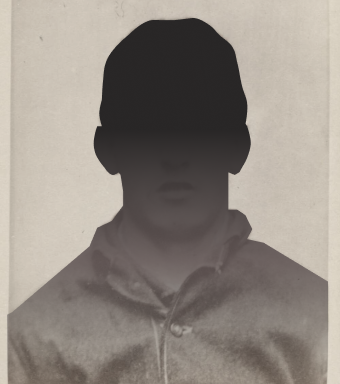
No; 2617 Name; William Bennett Height; 5 ft 7 1/2 inches Age; 18 years old [Born abt. 1819] Trade; Labour Where tried, Central Court Native Place. Whitechapel

EXECUTION: 23 March, 1847: William Bennett was hanged at Hobart (Tasmania, Australia, Convict Court and Selected Records, 1800-1899; Register; Registers of convict deaths, 1845-1874). Note: There had been an unsuccessful petition to the Governor for remission of the death sentence passed on William Bennett and Peter Kenny (Colonial Secretary correspondence; 1847; File number:1267; Record ID: NAME_INDEXES:1785802; Resource: CSO20/1/45 file number 1267). --00-- NEWSPAPER report: 26 March, 1847 -- from the Hobart Town Advertiser, p2: "Execution.—On Tuesday morning Peter Kenny, who was convicted of the attack on Mr Francis, and William Bennett, convicted of the attack on the man Shard at Port Arthur, were executed. They were both Roman Catholics and were attended to the scaffold by one of their own ministers. There was, as usual on these occasions, a crowd of brutal and unfeeling wretches, who delight in viewing the sight of a human being in his last agonies. We are sorry to add that many of the number were women." (https://trove.nla.gov.au/newspaper/article/264518871) --00--
17 March, 1847 -- from the Launceston Examiner, p7: 'PORT ARTHUR AND THE 'SYSTEM' The following trial is reported in the Hobart Town papers. Mr. Justice Montagu presided. Comment is unnecessary:-- William Bennett and William Stephens were capitally charged with having, on the 14th December last, with malice aforethought, cut and wounded one Thomas Shard on the back part of the head, with intent then and there to murder him. There was a second count, charging the blow to have been given with intent to do some grievous bodily harm. This case exhibited the dreadful state and the desperate character of the gangs at Port Arthur. Shard died from the dreadful wound inflicted upon his head. The evidence of the murdered man, taken when all hope of recovery had vanished, was produced. From this, and the testimony of several prisoners who were working in the wood gang at the time, we gather the following facts:-Bennett and Shard had some words on the evening preceding. Bennett accused him of giving information to the sub-overseer with regard to his having obtained possession of some tobacco, which was taken from Bennett. Early on the morning stated in the information, Shard, the deceased, and a man of the name of Barwood, were engaged upon a log of wood, cutting it in two with a cross-cut saw. There were four pairs of men sawing at the same log. The prisoner Bennett's work on that morning was to wheel some wood in a barrow, at a distance of about 100 yards from the log. Shard was working with his back close to a stump, when Barwood (his mate at the cross-cut saw) observed an axe raised behind the stump, and the two hands of a man; a heavy blow of the axe fell upon the hind part of Shard's head, and the unfortunate man fell instantly by the side of the log. As the blow was being struck, the head of the man who struck the blow (in the words of witness) 'shot forth' from behind the stump; that man was Bennett, who then leaped on the top the log, with the bloody axe in his hand, and, with an oath, threatened to serve Barwood in the same way. Barwood ran away, and was followed by the prisoner at the bar, William Stephens, who put his foot out to trip up the witness, and throw him down; but, from the ground being very slippery, he fell himself in the act of doing so, and Barwood made his escape and informed the overseer of what had occurred. Other men who were working at the log corroborated the statement in all its essential particulars. One man swore that Bennett said, when Shard was struck down, and the blood streaming from his head, 'You -----, I have settled you now.' A prisoner constable deposed that he insisted on the men picking up Shard as he lay on the ground, but some of them would not do it. He was eventually taken to the hospital, and Bennett immediately apprehended; Stephens was not taken in charge at the time. Bennett declared his entire innocence, and said Shard, when first asked about it, stated that he had been hurt by a man of the name of Arnold. Stephens said, he thought it was Barwood who struck the blow, and that was the reason why he ran after him. A number of prisoner witnesses dressed in yellow, and in irons, were called by the prisoners to prove the statements of the two men at the bar. His Honor. -- It was for the jury to decide whether, upon the evidence, they could be convinced that Stephens was so acting with Bennett for a common purpose. But it was better to err on the side of mercy; and if they had a doubt Stephens should have the benefit of it; as to Bennett, he must confess that the evidence of such men as had been called -- and from necessity called -- for the prosecution ought to be looked upon with the greatest suspicion; -- a case, not very long ago, had been tried in that Court, in which the prisoner was capitally convicted, and yet it turned out that the whole charge against the man was fabricated. He mentioned this that they might be upon their guard. His Honor read over the evidence, and commented on it. The jury returned a verdict of guilty against Bennett, but acquitted Stephens. Bennett was immediately called up for judgment, and asked whether he had anything to say why he should not be adjudged to die according to law. Bennett, who seemed perfectly unconcerned, made a long statement relating to the infamous character of the witness against him: he declared that one them had been guilty of an unnatural crime, and pronounced them all as unworthy of credit. He said he could send down 20 subpoenas, and get men, after a 'spell' from Port Arthur, to Hobart Town to swear a man's life away. It was their whole study, from Monday morning to Saturday night, how they could get favour; and if a man had a pipe of tobacco, that was enough for them to obtain his being punished. 'For myself (said the prisoner, with the utmost unconcern and hardihood) I care nothing. I am not disturbed at it at all. If I die innocent in this world, I shall receive the benefit of it in the next.' His Honor coincided in the prisoner's remarks as ... of the dreadful character of the men at Port Arthur; and would not believe any single one of them; but here, there were a number, whose statements were consistent, and their evidence was corroborated by other witnesses, and he entirely concurred in the verdict of the jury. His Honor then said --'I do not see the shadow of a doubt. The time is very near when you will have to pass from here to eternity. I most earnestly implore of you to entertain no hope; your fate is inevitable. It is no punishment to send men like you from Port Arthur to Norfolk Island -- men steeped in guilt, reckless of consequences, and inured to crimes of the most revolting description. Attend to your religious instructors; pray for that mercy to the Almighty which cannot be extended to you in this life; for remember, you have an immortal spirit which must appear before the tribunal of the eternal God. Pray to him, and give up all hopes of your life being spared.' Sentence of death was then passed in the usual form. The prisoner was perfectly unmoved." (https://trove.nla.gov.au/newspaper/article/36251569/3612537). --0--
23 January, 1847 -- from the Hobart Courier, p2: "HOBART TOWN SUPREME COURT... ATTEMPT TO MURDER. William Bennett, charged with an attempt to murder, at Port Arthur, was placed at the bar. The crown prosecutor, the Attorney-General, read to the court an affidavit which had been received from Port Arthur, certifying that the prosecutor was unable to attend, in consequence of the severe injuries received at the hands of the prisoner; the most imminent danger being apprehended if he were removed in his present state. His Honor, asking the prisoner if he had anything to say that he should not be remanded, against which the prisoner had nothing to urge, remanded him accordingly." (https://trove.nla.gov.au/newspaper/article/2972851) --0--
ANOTHER TRIAL: 9 January, 1847 -- from the Hobart Courier, p2: "MURDEROUS ASSAULTS AT PORT ARTHUR.--The Swallow, which arrived on Tuesday, brought up two prisoners of the crown committed for trial on charges of assault with intent then and there to kill and murder. One of the prisoners, William Bennett, from Port Arthur, cut down his victim--a fellow prisoner--with an axe; the man'a life is despaired of. Charles Tomlins, the other prisoner, committed a desperate assault on a fellow prisoner at Salt Water Creek, on Tasman's Peninsula." --0--
CONVICTION: 4 May, 1846: Convicted in Hobart of uttering a forged £1 note; sentenced to 7 years and to be sent to Port Arthur for two years (https://stors.tas.gov.au/CON31-1-3$init=CON31-1-3p152). --0--
IN VDL: 15 May, 1837: On arrival, he was listed as convict #2617, 18 years old, single, a labourer, transported for picking pockets with a previous conviction for a similar offence (3 months' jail); native place White Chapel (https://stors.tas.gov.au/CON31-1-3$init=CON31-1-3p152). --0-- 28 August, 1845: Recommended for a Conditional Pardon. --0--
TRIAL TRANSCRIPT: "2044. WILLIAM BENNETT and JOHN CARROLL were indicted for stealing, on the 9th of September, 1 handkerchief, value 2s., the goods of Samuel Clarke, from his person. SAMUEL CLARKE. I live at Maze Pond, Southwark. On the 9th of September, at three or four o'clock, I was in Holborn, and had a handkerchief—I received information, and found it was gone—this is it—it is marked with my initials. GEORGE CHIDGZEY (police-constable C 74.) Between three and four o'clock on the 9th of September, I was in Holborn, and saw the two prisoners and another man behind the prosecutor—I saw them get close round him—I followed them chose, and looked over Bennett's shoulder, and saw him take this handkerchief from the prosecutor's pocket—he handed it back for Carroll to take, but I took it out of his hand, and took them both—they had walked about fifteen yards together—I did not see them speak to each other—they were walking close behind the gentleman, Bennett was close behind the prosecutor, and the other two were covering him—Carroll appeared to be ready to receive it—he had his hand by his side—the other made his escape. Bennett. There was a man in front of me—he picked the gentleman's pocket, and flung the handkerchief on the ground—the officer took me and this one, and said we were with him—he saw the other man running down Creed-lane at the time. Carroll. I had my hands in my pockets at the time I was taken—I could not be accessory to the fact at all—I never took my hand out of my pocket. BENNETT— GUILTY. Aged 17.— Transported for Fourteen Years. CARROLL— NOT GUILTY." (https://www.oldbaileyonline.org/) --0--
TRIAL: 19 September, 1836: Convicted at the Old Bailey and sentenced to 14 years' transportation for larceny from the person -- see trial transcript below. --0--