Summary
Personal Information
Crime
Voyage
Transportation
William Bland was transported on the Denmark Hill, departing 30th Nov 1812 and arriving 30th Nov 1813 with 1 passengers.
The "Denmark Hill" ship was built as a 253 ton cargo ship She made a voyage to Australia in 1822 and landed ...convicts in Van Diemen's Land (Tasmania).
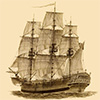 Denmark Hill (generic)
References
| Primary Source | Australian Dictionary of Biography |
Claims
No one has claimed William Bland yet.
Photos
No photos have been added for William Bland.
Convict Notes
Family connections for William (Bland) are: Some amendments added Sep 2025. BLAND William (Bland) son of Dr William/Robert was born on 5 11 1789 in London. He trained in medicine, was examined by Royal College of Surgeons & entered the navy in 1809 as surgeons mate. In 1812 he became surgeons mate. On 7 4 1813, on HESPER at Bombay, he undertook a pistol duel with purser Robert (Case). He was tried for murder/manslaughter by the Governor General in Council in the Judicial Department at Bombay East Indies on 14 4 1813, sentenced to 7years & arrived in Van Diemens Land (Tasmania) as a convict on 30 11 1813; he arrived in Hobart town in January 1814 on DENMARK HILL; & was sent to Sydney on 14 7 1814 on FREDERICK arriving on 18 7 1814-to the Asylum at Castle Hill to care for the inmates. He was issued his Pardon on 27 10 1815. He practiced in Sydney & sought, in 1816, for job in administration. He was a surgeom in 1817 & gained restoration of his naval rank & privileges. He was a surgeon when he married firstly Sarah (Henry) on 17 4 1817 at St Phillips CofE Sydney. He successfuly sued a William (Drake) & was awarded 2,000lb, which he didn't receive. In September 1818 he was accused of issuing 'pipes'-rolled-up anonymous & libellous manuscripts hidden under logs etc to be discovered by passers-by-found guilty & sentenced to 12months, fined 50lb & gave security for good behaviour for 12months after release & held at Parramatta (gaol?). He returned to practice in Sydney. He joined the Benevolent Society-becoming a Life Member in 1830, was a philanthropist to health matters, education-he was Secretary & President of Sydney College- & literary works-he helped form Sydney School of the Arts; he took part in Political activity in the colony & was an inventor.>>> [Some details taken from this Website; where 2entries are found & more information is available] ..[Sarah (Henry) was born in 1797 in Ireland. She was taken to South Seas in August 1796 (date a bit out) on DUFF by her parents-to Tahiti & on to Sydney NSW in May 1798 on NAUTILUS. She apparantly was taken to UK by her family-or to Tahiti in October 1799, then returned to Australia again in 1800s (or February 1810 from Tahiti) on NAUTILUS to Kissing Point. She may have been taken back to Tahiti in 1811 & back to Australia in 1813 to her fathers wedding. She was unfaithful, perhaps with Richard (Drake), which caused her separation & she left the colony-perhaps with (Drake).] Details of Sarah (Henry)s family are given BELOW. .. >>>William (Bland) married secondly Eliza (??? her second (2of3) marriage) in February 1846. He died on 21 7 1868 age68 of pneumonia intestate & given a State Funeral. Eliza (???/Bland) married firstly (1of3) ??? (Smeatham) who died.>>> [Noted there are 3possible (Smeathams) in Convict listing on this Website] .. >>>Eliza (???/Bland) married thirdly Joshua (Peck his second marriage) on 26 3 1872. After death of her husband in 1884 she received his goods from his Will. She died in 1888. Joshua (Peck) was born on 12/19 11 1803 on Norfolk Island & baptised on 11 12 1803 w/Thomas on Norfolk Island. (speculation is noted in Ref:.'Exiled...' that he was a twin of Thomas; which seems unfounded) He was recorded in February 1805 off stores on Norfolk Island. He left Norfolk Island with his parents as part of the first evacuation on 25 12 1807 on HMS PORPOISE to Van Diemens Land (Tasmania), arriving on 17 1 1808, to New Norfolk. In June 1821 he, his father & brothers William & Thomas were convicted of stealing Government sheep, from a stockyard on Camden Plains 9miles from Launceston & 3/4mile from where the (Peck)s were living, & sentenced to 14years to be served at Newcastle NSW. He may have arrived in Newcastle on 6 6 1821 on JUPITER. He is recorded in 1825 working for Mr (Evans) at Newcastle & in 1829 he was working for Dr (Evans). He married firstly Elizabeth (Thornton) Ticket of Leave on 14 10 1830 at Christ Church Newcastle. He returned to Van Diemens Land & was farming 15acres at Pattersons Plains by 1835. He suggested the Governor purchase his property & house as a farm or as a school house, seemingly without success. On 30 4 1839 he purchased part of 'Curramore' from his nephew Rolls (Lette). He also bought land in Wellington St Launceston-the Australian & Tasmanian Hotel which was licensed to him in 1840. In 1862 he was sued successfully by employees for underpayment for work completed at White Hills. He was sued successfully again by his servant & cook for underpayment of work done (because she did not have enough work to do). He died on 2 7 1884 age84 & was buried in family vault at St Peters Cemetery St Leonards; his Will appointed his brother Thomas as his trustee, which left his goods to his wife, his 15acres & house to Thomas (Baker) & his estate to the sons of Thomas (Peck). Details of Joshua (Peck)s family are given in entry for Joshua (Peck/Peek SCARBOROUGH/CHARLOTTE 1788) on this Website. HENRY This updated August 2025. William (Henry), son of George and Sarah, was born on 21 7 1770 at Sligo Ireland & became a preacher in Countess of Huntingdon's Connexion Cambridgeshire &missionary of the (London) Missionary Society. He studied at Trinity College Dublin Ireland; & later embraced Methodism & the Congregationalist denomination. He married firstly Sarah (Mabon) of Dublin in Ireland. In August 1796 he sailed to South Seas on DUFF with his family-to Tahiti. He arrived in Sydney NSW as a missionary with his family in May 1798 on NAUTILUS.>>> Sarah (Mabon) of Dublin Ireland sailed to South Seas in August 1796 on DUFF with her family-to Tahiti. She arrived in Sydney NSW with her family in 1798 on NAUTILUS.>>> William (Henry) & Sarah (???) produced 2children: 1.George (Henry) was born in Ireland. He was taken to South Seas in August 1796 on DUFF by his parents-to Tahiti & on to Sydney NSW in May 1798 on NAUTILUS. He apparantly was taken to UK by his family-or to Tahiti in October 1799, then returned to Australia again in 1800s (or February 1810 from Tahiti) on NAUTILUS to Kissing Point. He may have been taken back to Tahiti in 1811 & back to Australia to his fathers wedding. .. 2.Sarah (Henry) was born in 1797 in Ireland. She was taken to South Seas in August 1796 (date a bit out) on DUFF by her parents-to Tahiti & on to Sydney NSW in May 1798 on NAUTILUS. She apparantly was taken to UK by her family-or to Tahiti in October 1799, then returned to Australia again in 1800s (or February 1810 from Tahiti) on NAUTILUS to Kissing Point. She may have been taken back to Tahiti in 1811 & back to Australia in 1813 to her fathers wedding. She married firstly William (Bland surgeon his first marriage) on 17 4 1817 at St Phillips CofE Sydney.>>> ..[William (Bland) son of Dr William was born on 5 11 1789 in London. He trained in medicine, was examined by Royal College of Surgeons & entered the navy in 1809 as surgeons mate. In 1812 he became surgeons mate. On 7 4 1813, on HESPER at Bombay, he undertook a pistol duel with purser Robert (Case). He was tried for murder/manslaughter by the Governor General in Council in the Judicial Department at Bombay East Indies, sentenced to 7years & arrived in Van Diemens Land (Tasmania) as a convict on 30 11 1813; he arrived in Hobart town in January 1814 on DENMARK HILL; & was sent to Sydney on 14 7 1814 on FREDERICK arriving on 18 7 1814-to the Asylum at Castle Hill to care for the inmates. He was issued his Pardon on 27 10 1815. He practiced in Sydney & sought, in 1816, for job in administration. He had been Pardoned by 1817; & was a surgeon in 1817 & gained restoration of his naval rank & privileges. He successfuly sued a William (Drake) & was awarded 2,000lb, which he didn't receive. In September 1818 he was accused of issuing 'pipes'-rolled-up anonymous & libellous manuscripts hidden under logs etc to be discovered by passers-by-found guilty & sentenced to 12months, fined 50lb & gave security for good behaviour for 12months after release & held at Parramatta (gaol?). He returned to practice in Sydney. He joined the Benevolent Society-becoming a Life Member in 1830, was a philanthropist to health matters, education-he was Secretary & President of Sydney College- & literary works-he helped form Sydney School of the Arts; he took part in Political activity in the colony & was an inventor. He married secondly Eliza (??? her second (2of3) marriage) in February 1846. He died on 21 7 1868 age68 of pneumonia intestate & given a State Funeral. ..[Some details taken from this Website; where 2entries are found & more information is available] ..Details of William (Bland)s family are given above .. >>>Sarah (Henry) was unfaithful, perhaps with Richard (Drake), which caused her separation & she left the colony-perhaps with (Drake).] ..[Richard (Drake) was an officer with East India Company who left the colony-perhaps with Sarah.] .. >>>William (Henry) apparantly returned to UK with his family; however, 'Australian Dictionary of Biography' advises the family returned to Tahiti in October 1799. He is recorded as arriving in Australia again with his family in 1800s (or February 1810 seeking refuge from Tahiti) on NAUTILUS to minister at Kissing Point. He was made Justice of the Peace for Pacific Islands in 1811 & returned again to Tahiti.>>> >>>Sarah (Mabon) apparantly returned to UK with her family-or to Tahiti in October 1799. She is recorded as arriving in Australia again with her family in 1800s (or February 1810 from Tahiti) on NAUTILUS to Kissing Point. She died in 1812, perhaps in Tahiti. William (Henry) & Sarah (Mabon) produced 3more children: 3.Samuel Pinder (Henry) was born in 1800 in Ireland (from Smees records). He is recorded as arriving in Australia with his parents in 1800s (or February 1810 from Tahiti) on NAUTILUS to Kissing Point. He may have been taken back to Tahiti in 1811 & back to Australia in 1813 to his fathers wedding. He became a Captain master of QUEEN CHARLOTTE & GOVERNOR MACQUARIE for King Pomare II of Tahiti. He married Sophia (Wood) on 28 6 1821 at St Johns CofE Parramatta. In 1821 he was made Pomare's 'sole agent for the disposal of his cargoes in Sydney'. In 1822 he had a law suit with Edward (Eagar). He died in 1852 age about52. ..Sophia (Wood) was born on 11 5 1804 at Hawkesbury & baptised on 11 8 1805 in group ceremony at St Johns CofE Parramatta. She married Samuel Pinder (Henry) of Sydney on 28 6 1821 at St Johns CofE Parramatta. She died in 1868 age about64. ..Details of Sophia (Wood)s family are given in entry for Sarah (Leadbetter EARL CORNWALLIS 1801) on this Website. ..Samuel Pinder (Henry) & Sophia (Wood) produced at least 4children: ..1.William Ebenezer (Henry) was born in 1822. ..2.Samuel Pinder (Henry) was born in 1824. ..3.Alfred Henry (Henry) was born in 1828. ..4.Sophia (Henry) was born in 1830. .. 4.Eleanor (Pinder) was born in 1803 in Ireland (from Smees records). She is recorded as arriving in Australia with her parents in 1800s (or February 1810 from Tahiti) on NAUTILUS to Kissing Point. She may have been taken back to Tahiti in 1811 & back to Australia in 1813 to her fathers wedding. .. 5.William Ebenezer (Henry) was born on 9 2 1810 & baptised on 25 12 1810 at St Johns CofE Parramatta. He apparantly was taken to UK by his family-or to Tahiti in October 1799, then returned to Australia in 1800s (or February 1810 from Tahiti) on NAUTILUS to Kissing Point. He may have been taken to Tahiti in 1811 & back to Australia in 1813 to his fathers wedding. He died in 1842 age about31. .. >>>William (Henry) married secondly at age63-(Smees records-Ann (Shepherd age16) of Kissing Point on 1 6 1813 & took her to Tahiti. He died on 1 4 1859 age88 at Ryde Sydney father of perhaps 15children. Ann (Shephard), daughter James & Ann (Thorn), was born on 2 10 1797 & baptised on 21 10 1797 at St Phillips CofE Sydney. She went to Tahiti with her husband. She died on 28 7 1882 age84 in Sydney. Details of Ann (Shepherd)s family are given in entry for James (Sherrerd ACTIVE 1791) on this Website. William/Thomas (Henry) & Ann (Shepherd) produced 10children: 1.Henry (Henry) was born on 1 6 1813 at St Johns CofE Parramatta-not shown in Smees records. 2.-10.??? (Henry) probably born in Tahiti. The Publications 'Pacific Manuscripts Bureau...' eg 'Complete Annotated Catalogue Printed Documents Series' provide much information. REFERENCES Craig James Smee 'Births and Baptisms Marriages and Defacto Relationships Deaths and Burials New South Wales 1788-1830' ..a complete listing from church & other records in the early colony. Irene Schaffer & Thelma McKay 'Exiled Three Times Over! Profiles of Norfolk Islanders Exiled in Van Diemens Land 1807-1813' James Hugh Donohoe 'Norfolk Island 1788-1813-The People and Their Families' Reg Wright 'Forgotten Generation of Norfolk Island & Van Diemens Land'
The Denmark Hill was not actually a convict ship. It did many sailings and was used to transport William Bland from India. Bland, William (1789–1868) by John Cobley: This article was published in Australian Dictionary of Biography, Volume 1, (MUP), 1966 William Bland (1789-1868), medical practitioner and politician, was born on 5 November 1789 in London, the second son of Dr Robert Bland. He trained in medicine, qualified at an examination conducted by the Royal College of Surgeons as surgeon's mate in the navy in 1809 and was promoted to the rank of naval surgeon in 1812. While serving in the Hesper at Bombay, he was involved in a wardroom argument with Robert Case, the purser. As a result Bland fought a duel with pistols with Case on 7 April 1813 and wounded him mortally. Bland was tried for murder in Bombay on 14 April and found guilty. He was recommended for mercy and sentenced to transportation for seven years. Bland reached Hobart Town in the Denmark Hill in January 1814 and Sydney in the Frederick on 14 July. He was sent as a prisoner to the asylum at Castle Hill to take care of the inmates, but he may have been allowed to practise privately, as it is known that he treated a free person in this period. He remained at Castle Hill until 27 October 1815, when he received a pardon. Bland began private practice in Sydney, but early in 1816 applied for office in the administration. He was offered the medical appointment at Port Dalrymple on condition that he passed an examination to be conducted by Drs D'Arcy Wentworth, William Redfern and West, but he refused as he considered himself better qualified than his examiners. His practice flourished, and in 1817 he was able to take an apprentice, William Sherwin. In that year he unsuccessfully petitioned the Lords of the Admiralty for restoration of his naval rank and privileges. On 17 April 1817 Bland married Sarah, the 20-year-old daughter of William Henry. Her infidelity caused him again to appear in court. He sued Richard Drake, an officer of the East India Co., for £3000 damages. Bland obtained a verdict for £2000, but Drake absconded from the colony before paying. Bland and his wife separated and she left the colony. On Thursday and Friday, 24 and 25 September 1818, Bland was in court again. 'Pipes' lampooning the governor had been found in the Parramatta Road. The 'pipes' accused the governor of misleading the farmers and referred offensively to Lachlan Macquarie's wish to perpetuate his name on foundation stones. Bland was charged with 'composing, writing and publishing … a manuscript book, containing divers libels on His Excellency Lachlan Macquarie Esq'. Bland skilfully conducted his own defence but was found guilty. He was sentenced to twelve months imprisonment, 'and to remain imprisoned until the fulfilment of the sentence', and to a fine of £50. In addition he and two others had to give security for his good behaviour for two years. Bland served his sentence at Parramatta, and from his prison wrote a letter on 14 July 1819 to Earl Bathurst. This letter was forwarded with Macquarie's own dispatches. Bland criticized seven episodes during Macquarie's administration. It is significant that three of these occurred before Bland arrived in the colony. At the completion of his sentence, Bland returned to his private practice, and in 1821 began a long association with the Benevolent Society. He not only provided professional services at the asylum but, until 1829, also dispensed medicines at his own home. In addition, in 1825 he was asked to advise on extensions and improvements to the buildings. His advice that a room should be erected for the dual purposes of mortuary and operating theatre sounds strange in the twentieth century. Bland was praised for his exertions by Governor (Sir) Ralph Darling in a dispatch in 1828 and became a life member of the society in 1830. He continued his professional work in the asylum until 1863. He was on the staff of the Sydney Dispensary from its inauguration in 1826-27 and served it until the dispensary lost its identity by merging with the infirmary in 1845. Bland was a philanthropist in many ways. The record of some of his subscriptions is extant and he was a regular patron of literary workers. He assisted the people of Ashfield to build a church with gifts of both money and land. He helped the development of education in the colony. Early in 1825 a free grammar school opened in Phillip Street but this school closed in 1826. The project was revived in 1828 at a pubic meeting convened to consider a plan advanced by Bland. The foundation stone of a new building was laid by the chief justice in 1830 and the Sydney College opened on 19 January 1835. Bland was treasurer from 1835 to 1844 and in 1845 became president, an office he held when the buildings were sold to the University of Sydney in 1853. He helped in the formation of the Sydney School of Arts and Mechanics' Institute, which opened in 1833. In 1849 Bland's interest in education and his status as a citizen resulted in the inclusion of his name in the list of proposed members of the first senate of the university. A bill to found the university was introduced in the Legislative Council, with the list of nominees for the senate appended. Robert Lowe spoke vehemently against allowing the management of the university to fall into the hands of former convicts. The bill was passed, but without the list of nominees, and the proclamation appointing the senate on 24 December 1850 did not include Bland's name. Bland's political activity began early. In 1821 he attended meetings of an association of emancipists, and in 1825 he was responsible for a publication urging distillation in the colony, to encourage agriculture and to economize in currency. He consistently supported William Charles Wentworth and the emancipists in the struggle for a jury system and took a leading part in a public meeting in January 1827 held to demand trial by jury and a representative assembly. In 1830 he actively opposed attempts to alienate large areas of crown land, and in 1831 joined the committee of the Australian Landowners Association to fight the Ripon land regulations. At another public meeting in 1830 a committee which included Bland was formed to demand legislation by representation and to appoint a parliamentary agent in the House of Commons. Petitions demanding representative government and trial by jury failed in 1830 and 1833. In September 1834 Sir Edward Lytton Bulwer, M.P., wrote from England that the Australian situation was not well understood in London. He suggested that an organized association should be formed, and that it should appoint a parliamentary agent for New South Wales. As a result the Australian Patriotic Association was formed in 1835, with Bland as chairman of the committee of correspondence. The object of the association was to draw up a draft bill for the government of the colony, and two draft Constitutions were completed before the end of the year. Bulwer acted as parliamentary agent until 1838, when he was succeeded by Charles Buller. A petition went forward to the British government in 1839. In 1842 parliament passed an act to authorize representative government in the colony by a single chamber of twelve nominees and twenty-four elected members. The first election was held on 15 June 1843 and Bland was elected as a representative of Sydney. He was a vigorous councillor with a distinctive approach to the land question. He believed that paying for immigration from the fund created by colonial land sales resulted in an export of capital which the colony could not afford. He diverged farther from the attitude of the majority of the landed interest by favouring government encouragement to create a yeomanry. He continued his protests against the alienation of crown lands; he was on the select committee to investigate expenditure on public buildings; he advocated a reduced municipal franchise; he was on the select committee to investigate the desirability of a parliamentary agent in London; he was appointed to the committee to investigate the lunatic asylum at Hunters Hill; he was a member of the select committee to inquire into the renewal of transportation. He was appointed a trustee of the New South Wales Savings Bank on 23 January 1844. However, in the second election for the Legislative Council in 1848, and probably because of his enthusiasm for the reintroduction of transportation, Bland was defeated by Robert Lowe. Lowe resigned in 1849 and Bland was re-elected, but he resigned in the next year. In 1858 he was nominated to the Legislative Council, by then part of the recently created bicameral parliament, and resigned with its other members in 1861, according to the terms of section 3 of the Constitution Act. In February 1846, Bland, then a widower, married a widow, Eliza Smeathman. Bland was a trustee and at one time president of the Australian Medical Subscription Library founded in 1846, and first president of the Australian Medical Association formed in 1859. He contributed articles to the Australian Medical Journal on 'Bites of Venomous Snakes of Australia' and on 'Dislocations'. He performed operations for removal of cataracts from the eyes and of stones from the bladder. In 1832 he performed a remarkable operation for the cure of an aneurysm of the subclavian artery; it was only the seventh known operation of its kind. Bland reported the details of the operation and of the instrument he had improvised for it in the Lancet in the same year. He performed this operation on another patient in 1838. Apart from the surgical instruments he improvised, Bland made drawings of two inventions. He published a brochure entitled Suppression of Spontaneous Combustion in Wool Ships on 27 March 1843: carbonic acid gas was to be circulated freely through the holds of the ships and thus prevent combustion. In 1855 he published The Atmotic Ship. This contained a drawing of a balloon filled with hydrogen; it was to be propelled by four screw propellors, two driven by steam, and the other two 'by their impulsive effects against atmospheric pressure'. A model of the device against combustion was shown at the International Exhibition in London in 1851, and of the Atmotic Ship at the Crystal Palace in 1854. Bland edited the Journey of Discovery to Port Phillip, New South Wales; by Messrs W. H. Hovell and Hamilton Hume in 1824 and 1825 (Sydney, 1831), and published New South Wales: Review of the Examination of Mr James Macarthur's Work (1839); and some of his letters to governors were printed. A banquet was held in July 1856 to celebrate the grant of a new Constitution by the British government. Bland accepted an invitation to preside and received a deserved ovation. On 5 November 1858 he was given a sum of money and a candelabra for his services to the community, but in 1861 an attempt to procure an annuity for him was defeated in the Legislative Council. In 1861 he was declared a bankrupt. Bland continued in active medical practice until 1868. In that year, he developed pneumonia and died intestate on 21 July. He was accorded a state funeral. A portrait of Bland is in the Mitchell Library, Sydney. There are hundreds of references to William Bland and it is surprising that there should be so many gaps in knowledge of a man who was a public figure for so long. There seems no doubt, from his brightly coloured carriages, of his flamboyance. His quarrels with Lowe and his heated newspaper battle with Dr McCrae over the treatment of a patient suggest a basically argumentative disposition, and he appears to have entered without great reluctance into the duel which led to his original conviction. Though bankrupt in 1861, he was at one time a large landowner, with property at Prospect Hill, Hunters Hill, Yass and Gerringong. He appears to have had an interest in horse racing; he was a member of the Turf Club until he resigned to join the Australian Racing Club founded in 1828. There is little doubt of his ability and patience as a surgeon, and of his selfless affection for the sick and the poor. It is also clear that he devoted tremendous energy and much time to establishing in New South Wales two basic freedoms: the right of man to be tried by his peers, and his right to participate in the election of his government. It is probable that a contemporary view of Bland provides as accurate a picture as can be contrived. Dr Evans wrote in the Empire on 21 January 1862: 'there is a class of men among the old colonists, to whom those locks, whiter than the driven snow, are a crown of glory: and who, when they shall follow him to his grave, will feel that, whoever may come after him, none can ever assume his place, as one of the earliest founders and patriarchs of liberty on this continent. For more than forty or perhaps fifty years, has this brave, consistent and accomplished man been struggling, sometimes against imperial, and at other times against local tyranny, on behalf of a people who at one moment appreciated his motives, and at another joined with their own oppressors in disparaging, if not in vilifying their greatest benefactor. An elegant scholar, a man of science, and a gentleman of that antique school of urbanity and refinement, which modern barbarism and ruffianism have almost trampled into oblivion—William Bland'.