
Summary
Personal Information
Crime
Voyage
Transportation
Patrick Brian was transported on the St Vincent, departing 28th Dec 1852 and arriving 26th May 1853 with 214 passengers.
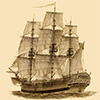 St Vincent (generic)
References
| Primary Source | Australian Joint Copying Project. Microfilm Roll 92, Class and Piece Number HO11/17, Page Number 625 (315). --0-- Roscoe, Katy (2018), “Convicts and the Sea: the naval influence on Gibraltar Convict Establishment” at https://staffblogs.le.ac.uk/ |
| Source Description | This record is one of the entries in the British convict transportation registers 1787-1867 database compiled by State Library of Queensland from British Home Office (HO) records which are available on microfilm as part of the Australian Joint Copying Pro |
| Original Source | Great Britain. Home Office |
| Compiled By | State Library of Queensland |
| Database Source | British convict transportation registers 1787-1867 database |
Claims
No one has claimed Patrick Brian yet.
Photos
No photos have been added for Patrick Brian.
Convict Notes


IN VDL: 26 May, 1853: On arrival in VDL, PATRICK BRIAN was listed as convict #27865, a stonemason imperfect, 24 years old, 5’6” tall with dark hair, light hazel eyes and a fair complexion. He was single, Roman Catholic, and literate. He said he had been transported for stealing a handkerchief, prosecutor at New Oxford Street, London; previous conviction for similar (3 months) and for assault (2 months) (https://stors.tas.gov.au/CON33-1-115$init=CON33-1-115p19). Family: Mother Mary, brothers John and James – all at his native place, George Street, St Giles (http://foundersandsurvivors.org/pubsearch/convict/chain/ai07090). For further details see his VDL Conduct record at https://stors.tas.gov.au/CON33-1-115$init=CON33-1-115p19 and his Indent record at https://stors.tas.gov.au/CON14-1-47$init=CON14-1-47_00140_L. --00--
On Gibraltar, Patrick Brian was listed as 19 years old when convicted, sentenced to 10 years for “stealing from the person”; thrice convicted for same; born in London; Catholic; brown hair, dark hazel eyes and fair complexion, 5’6 tall; literate; mason; single; relatives/family – mother living Clarke’s Building, George Street, St Giles (UK, Prison Commission Records, 1770-1951; Misc.; Register of Prisoners; 1810-1822 [mislabelled]). --0-- 3 February, 1853: He was sent aboard the St Vincent for transportation to VDL. --00--
Gibraltar and Bermuda were listed public works stations (and the second stage in the penal process). On Gibraltar, as “convicts worked together with free men on the dockyards, lines between them became blurred. Convicts, like seamen, were ‘easily recognised’ by ‘their swarthy, weather beaten complexions…[and] muscular well-knit frames’. The discipline on the penal settlement was also influenced by the naval department, who superintended part of the works. In the 1840s, for example, convicts were provided ‘a half gill of rum’ at 11am and 5pm, which they drank from a trough. This mirrored the daily allowance of diluted rum, known as grog, to Royal Naval seamen in the Victorian era. Convicts were also allowed to use part of their earnings, to buy goods, usually tobacco, which they were allowed to smoke in the evening in the barracks. Though official correspondence cited health reasons for grog allowance, it seems likely that the convict authorities feared insubordination if they were banned from drinking and smoking, which were provided to the sappers and dockyard workers whom they worked alongside… In 1854, the acting overseer stated that “half of the offences were committed when the men were excited by rum”. For more serious offences, convicts were flogged with a ‘cat o’nine tails’ whip against the ‘flogging mast’, and during an investigation Dr William Baly concluded that the whip which was used was an old naval cat, which was ‘much heavier than any now used in the government prison and hulks at home, or in the army.’” (Roscoe, Katy (2018), “Convicts and the Sea: the naval influence on Gibraltar Convict Establishment” at https://staffblogs.le.ac.uk/). --0--
TO GIBRALTAR: 4 March, 1851: BRIAN, PATRICK #1353, arrived on Gibraltar from England per Hercules. He was held on the Europa hulk (UK, Prison Commission Records, 1770-1951; Misc.; Register of Prisoners; 1810-1822 [mislabelled]). --0--
TRIAL: 11 May, 1848; Patrick Brian was convicted at Clerkenwell QS and sentenced to 10 years for stealing from the person (https://stors.tas.gov.au/CON33-1-115$init=CON33-1-115p19). --00--