
Summary
Personal Information
Crime
Transportation
Patrick Byrne was transported on the Mangles, departing 21st Jun 1822 and arriving 8th Nov 1822 with 190 passengers.
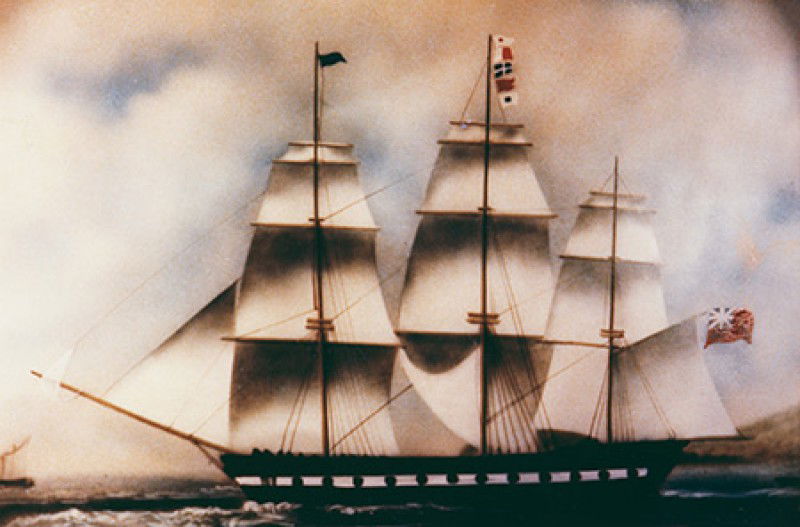 Mangles
References
| Primary Source | SRNSW ref:, Convict Indents Ship source: Mangles, Year: 1822; Vol. number 4/4008, Entry no: 94 |
Claims
No one has claimed Patrick Byrne yet.
Photos
No photos have been added for Patrick Byrne.
Convict Notes

Patrick Byrne, aged 26, occupation: carpenter; was 5ft 9 inches tall, with dark hair, grey eyes, born at Co. Limerick, and was tried at a Special Session at Rathkeale in Co Limerick in March 1822. Special Sessions were held solely to try prisoners under the Insurrection Act, which had been declared to be in force in Limerick because of the ‘disturbed state’ of the county, with ongoing activity such as swearing false oaths, threatening evictions, night meetings of Ribbonmen etc. Patrick Byrne’s crime was being absent from his dwelling at a certain time of night, contrary to the Insurrection Act. Others found guilty at the same 1822 Rathkeale Sessions and also transported on Mangles were John Collins, Patrick Lysaght, John Hickey, Thomas Driscoll, James Roche, (all five for being out of home after hours), John Neville for serving a threatening notice, David Donovan, and William Nix. Freemans Journal, 12 March 1822, p.3 “RATHKEALE Special Sessions Thursday March 7 “Patrick Byrne, an intelligent man, was put to the bar for having been found on the road near Shanagolden, at an unseasonable hour. “The prisoner said that he wished Capt Bateman was on his jury because he knew him etc. The Court replied that the prisoner could have no reliance on any magistrate and that if a Gentleman or Magistrate had anything to advance in the way of [a prisoner’s] character, they should come forward and give their testimony on oath and undergo a cross examination. “For the prosecution, William Sutherland, a soldier of the 42d, stated that he found the prisoner on the road in the neighbourhood of Mount Henry; prisoner gave rather a confused account of himself. There was one with him who scaled a wall and fled. The [soldier] party consisted of about 20 men that were patrolling, one of them fired, but the fellow escaped. “Thomas Mulcahy for the defence said that the prisoner had been at his house to borrow a plough, horses etc “The prisoner was found guilty.” Freemans Journal, 12 March 1822, p.4 “RATHKEALE Special Sessions Friday March 8 (fourth day) Patrick Byrne, Patrick Lysaght, John Collins, and David Donovan, were then put forward and all sentenced to seven years transportation. [Three others were also sentenced to 7 years but Michael Cuddihy was remanded, and he and two others were not transported after all.] “The persons convicted at the above Sessions were sent off last night to Cork, with a strong detachment of the 42d Highlanders, 3d Light Dragoons, and Police. A large concourse of people were present to witness the same, computed at least to about 5000 persons. When the prisoners were taken through. The streets of the air was rent with shrieks and sobs by their relatives. ______________________________________
Patrick Byrne was 26 years old on arrival in NSW. There was no crime listed next to his name, but he was a Whiteboy and was charged with others who were Whiteboys. 1822: To William Howe Esq., Upper Minto. 23/5/1823: Convict servant of Timothy Nowlan, to proceed to Newcastle per Elizabeth Henrietta. 6/4/1827: TOL Paterson Plains. 11/6/1829: COF Married Sarah Clift per Kains 1831.