Summary
Personal Information
Crime
Voyage
Transportation
Robert Cranston was transported on the Hougoumont, departing 10th Oct 1867 and arriving 9th Jan 1868 with 281 passengers.
875 ton ship was built at Moulmein in 1852. http://www.australiangeographic.com.au/journal/on-this-day-in-history-australias-last-convict-ship-docks.htm ---------------------------- Incorrect Image ....This is a four masted steel hulled Barque in the drawing , im surprised Australian Geo didn't do a bit more research on this .......The Hougoumont was a works ship on the Forth Bridge Project in 1885 ....the one potrayed as a drawing in Aust Geo is the later version of this ship.....the photograph i have attached is the correct and original convict vessel. --00-- 1867 "The hired convict ship Hougoumont, which has been taken up by the Government for the conveyance of a numerous party of convicts to Freemantle, Western Australia, left the Nore on October 1, and proceeded down Channel, after receiving on board 150 convicts from the establishments at Chatham and Millbank. The convicts from the Chatham establishment, at St. Mary's, embarked from the dockyard on board the paddle-wheel steamer Adder, Mr. W. J. Blakely, and were in charge of a numerous party of convict guards and wardens, all heavily armed. Among the convicts shipped were a party of fifteen Fenians, who were engaged in the late conspiracy in Ireland, together with the officers and crew convicted of scuttling the ship Severn, and some others who have achieved notoriety from their crimes. The Fenian convicts, like the remainder of the prisoners, were chained together in gangs, but it was observed that they were kept apart from the other convicts in a portion of the vessel by themselves. The steamer Petrel also took down a number of convicts from the establishment at Millbank for shipment on board the Hougoumont, in charge of a strong escort and convict guard. On Tuesday, October 8th, the Hougoumont arrived in Portland roads. Shortly before midday ninety convicts were marched down to the Government pier at Portland under a strong escort of the 12th Light Infantry. The party included twenty-three Fenian convicts, among whom it was said, was Moriarty. The Government steamer employed in the breakwater service was used for conveying the convicts on board the Hougoumont transport ship. The convicts were chained together on embarking, and on board the steamer a strong guard of marines from her Majesty's ship St. George was formed, and saw the convicts safely placed on board the Hougoumont. The Governor of the penal settlement at Freemantle, Captain Young, is on board the Hougoumont, and returns in that ship to his sphere of duty after paying a visit to his native land." Source: Sydney Morning Herald, Thu 19 Dec 1867, p4, English Shipping, available on Trove at https://trove.nla.gov.au/newspaper/article/28608271?searchTerm=hougoumont.
 Hougoumont
References
| Primary Source | Australian Joint Copying Project. Microfilm Roll 93, Class and Piece Number HO11/19, Page Number 264 |
| Source Description | This record is one of the entries in the British convict transportation registers 1787-1867 database compiled by State Library of Queensland from British Home Office (HO) records which are available on microfilm as part of the Australian Joint Copying Pro |
| Original Source | Great Britain. Home Office |
| Compiled By | State Library of Queensland |
| Database Source | British convict transportation registers 1787-1867 database |
Claims
No one has claimed Robert Cranston yet.
Photos
No photos have been added for Robert Cranston.
Convict Notes

He faced three charges at his court martial in June 1866, relating to attending Fenian meetings, harbouring deserters and mutinous conduct. They are described in greater detail, by Pease (1897, pp39-47): “The trial of Private Robert Cranston was one of the longest. It was held in the Victoria Library, Colonel Brett presiding. Cranston was arraigned on the following charges: First: For mutinous conduct in having at Dublin, on the 18th February, 1866, come to the knowledge of an intended mutiny in her Majesty's troops then quartered in Richmond barracks, Dublin, and not giving information of the said intended mutiny to his commanding officer. Second charge: For conduct to the prejudice of good order and discipline in the following instances:—First instance: For having at Dublin, in the month of December, 1865, endeavored to induce Private Foley, 64th Regiment, to join the illegal society called the Fenian Brotherhood, having for its object the overthrow by force and violence of her Majesty's government in Ireland. Second instance: For having at Dublin, in the month of January, 1866, endeavored to induce Private Thomas Morrison, 61st, to join an illegal society called the Fenian Brotherhood, having for its object the overthrow by force and violence of her Majesty's government in Ireland. Third instance: For having at Dublin, on the 17th February, 1866, used the following language to Private Abraham, 61st Regiment: ‘An outbreak will take place in a few days. I am to get a sworn member of the Fenian Society in each of the barrack rooms in Richmond barracks to put a bit of sponge into the nipples of all the rifles belonging to the men who are not Fenians, and thereby render them useless. When the regiment is called out to meet the Fenians, the Fenians will advance close up to it; the men of the 61st who belong to the Fenians will not fire on them, and the others who are loyal will not be able; and the Fenians amongst the 61st will then go over to their party and at once fire on those who refuse to join the society.' Third charge: For having in December, 1865, and in January and February, 1866, at Dublin, knowingly received and entertained Thomas Chambers, 61st Regiment, a deserter from the said regiment, and not giving notice to his commanding officer. The assistant adjutant-general, the Hon. Col. Fielding, prosecuted, assisted by Dr. Townsend. Mr. McMechan, with Mr. Lawless as attorney, appeared for the prisoner. Deputy Judge-Advocate. Have you any objection to be tried by the president, or by any other member of this court? Prisoner. None, sir. The charges having been read by the deputy judge-advocate, the prisoner pleaded not guilty. The prosecutor having stated the case for the prosecution, witnesses were called and examined. Head Constable Talbot was examined, and deposed that he was present at Fenian meetings in December, 1865, and January and February, 1866. Did the soldiers take part in the proceedings of those meetings? Prisoner objected. Deputy Judge-Advocate. The particular part taken by soldiers cannot be specified; only the fact that they took part, if they did so. Were they present when the objects were discussed?—Yes. Private James Meara examined by the prosecutor: I have belonged to the 1st Battalion of the King's Regiment (8th) for five years. I have known the prisoner since August 1865; in December, after Christmas, I met him in Hoey's public house in Bridgefoot Street. On that occasion there were also present several civilians, Fenian centres, and some soldiers. I was a member of the Fenian Society. There was to have been a rising of the Irish Fenians in the army. I was at several Fenian meetings in the month of December, 1865, at Hoey's; and in January, 1866, at Barclay's public house in James's Street; and in March, 1866, at Shaughnessy's public house at Newbridge, and also at Tunny's public house, Barrack Street, in August, 1865. At Tunny's, in August, 1865, I met William Francis Roantree, the prisoner Cranston, and several others, Baines and Rynd. At Shaughnessy's I met Baines, Doyle of the 61st, and some of the 4th Dragoon Guards. At Hoey's I met Chambers of the 61st, Wilson, Hogan, and Keatinge of the 5th Dragoons, a few of the 87th, Devoy, Williams, Rynd, and Baines. At the meeting in Hoey's in December, a rising in the army was discussed. Several men of the 61st were brought down to be sworn by Devoy and Chambers, and I saw the prisoner take an active part in the meeting. I was never arrested on a charge of being connected with the Fenian Society.
--00-- Born on 18 March, 1842 (FindAGrave record), at Stewartstown in County Tyrone, Robert Cranston helped his father on the farm before enlisting, at 20 years of age, in the 61st (South Gloucestershire) Regiment of Foot stationed at Richmond Barracks in Dublin. “He joined his fortunes with the Fenian conspiracy [in 1864] and industriously assisted in ‘propagating the faith’. Of his regiment, at least six hundred were sworn members of the Fenian organization” (Pease, p15). --0-- 1866, April: Robert Cranston, “a remarkably tall soldier of the 61st Regiment, known to all as ‘Big Bob’ Cranston” was arrested at Richmond Barracks in Dublin and “dragged to a cell” (FitzSimons, p36). [Note: His WA Convict Record does not support this. On it, he is 5’6¾”.] --0--
Robert Cranston was among 17 Irish soldiers serving in, or deserters from, the British Army who were transported to WA aboard the Hougoumont. Of these so-called military Fenians (Irish Republican Brotherhood/IRB prisoners), eight – including Private Cranston – had been given life sentences. In 1869, all of the military Fenians from the Hougoumont were ignored when the House of Commons granted free pardons to Fenian convicts in WA, England and Ireland. But, in 1876, six Fenian “lifers” in jail at Fremantle were dramatically rescued and taken to freedom in America aboard the whaling barque Catalpa. They were: Sergeant Thomas Darragh and Privates Robert Cranston, Michael Harrington, Thomas Hassett, Martin Hogan and James McNally Wilson. Thousands of words have been written about their escape, including the 1897 account, “The Catalpa Expedition”, by Zephaniah Walter Pease; “The Fenians and Australia c1865-1880”, a PhD thesis by Keith Amos (1987); Eamon McDermott’s (1988) article “Martin Hogan and the Catalpa Rescue”, in The Old Limerick Journal, Vol 23, pp112-124; “John Devoy’s Catalpa Expedition”, edited by Philip Fennell & Marie King (2006); and Peter FitzSimons’s (2019) “The Catalpa Rescue”. With so much of the life of Robert Cranston already on public record, only a few key dates and details are listed below, from sources such as prison records, books, newspaper reports and various linked online sites. --00--
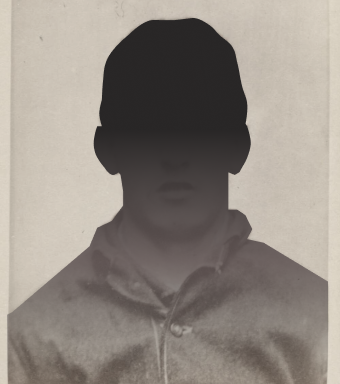
PHOTO of ROBERT CRANSTON: Taken in 1866 while he was an inmate of Mounjoy Prison, Dublin, and labelled Image ID 1111433. It is available online at https://digitalcollections.nypl.org/items/510d47dc-975f-a3d9-e040-e00a18064a99 (see The New York Public Library Digital Collections, 1866).

The Great Australian Escape https://en.wikipedia.org/wiki/Catalpa_rescue Well documented ,published and promoted escape of the Militant Fenian band of convicts from Perth