
Summary
Personal Information
Crime
Voyage
Transportation
Henry Dickerson was transported on the Hougoumont, departing 10th Oct 1867 and arriving 9th Jan 1868 with 281 passengers.
875 ton ship was built at Moulmein in 1852. http://www.australiangeographic.com.au/journal/on-this-day-in-history-australias-last-convict-ship-docks.htm ---------------------------- Incorrect Image ....This is a four masted steel hulled Barque in the drawing , im surprised Australian Geo didn't do a bit more research on this .......The Hougoumont was a works ship on the Forth Bridge Project in 1885 ....the one potrayed as a drawing in Aust Geo is the later version of this ship.....the photograph i have attached is the correct and original convict vessel. --00-- 1867 "The hired convict ship Hougoumont, which has been taken up by the Government for the conveyance of a numerous party of convicts to Freemantle, Western Australia, left the Nore on October 1, and proceeded down Channel, after receiving on board 150 convicts from the establishments at Chatham and Millbank. The convicts from the Chatham establishment, at St. Mary's, embarked from the dockyard on board the paddle-wheel steamer Adder, Mr. W. J. Blakely, and were in charge of a numerous party of convict guards and wardens, all heavily armed. Among the convicts shipped were a party of fifteen Fenians, who were engaged in the late conspiracy in Ireland, together with the officers and crew convicted of scuttling the ship Severn, and some others who have achieved notoriety from their crimes. The Fenian convicts, like the remainder of the prisoners, were chained together in gangs, but it was observed that they were kept apart from the other convicts in a portion of the vessel by themselves. The steamer Petrel also took down a number of convicts from the establishment at Millbank for shipment on board the Hougoumont, in charge of a strong escort and convict guard. On Tuesday, October 8th, the Hougoumont arrived in Portland roads. Shortly before midday ninety convicts were marched down to the Government pier at Portland under a strong escort of the 12th Light Infantry. The party included twenty-three Fenian convicts, among whom it was said, was Moriarty. The Government steamer employed in the breakwater service was used for conveying the convicts on board the Hougoumont transport ship. The convicts were chained together on embarking, and on board the steamer a strong guard of marines from her Majesty's ship St. George was formed, and saw the convicts safely placed on board the Hougoumont. The Governor of the penal settlement at Freemantle, Captain Young, is on board the Hougoumont, and returns in that ship to his sphere of duty after paying a visit to his native land." Source: Sydney Morning Herald, Thu 19 Dec 1867, p4, English Shipping, available on Trove at https://trove.nla.gov.au/newspaper/article/28608271?searchTerm=hougoumont.
 Hougoumont
References
| Primary Source | Australian Joint Copying Project. Microfilm Roll 93, Class and Piece Number HO11/19, Page Number 251 (128). --0-- Peter FitzSimons (2019) “The Catalpa Rescue”. |
| Source Description | This record is one of the entries in the British convict transportation registers 1787-1867 database compiled by State Library of Queensland from British Home Office (HO) records which are available on microfilm as part of the Australian Joint Copying Pro |
| Original Source | Great Britain. Home Office |
| Compiled By | State Library of Queensland |
| Database Source | British convict transportation registers 1787-1867 database |
Claims
No one has claimed Henry Dickerson yet.
Photos
No photos have been added for Henry Dickerson.
Convict Notes

BRANDED: At some point during his 11 separate stints in jail in England, Henry Dickerson was branded with a “D” on his left side (according to his West Australian Convict Record and the WA General Register). The practice of branding was continued by the British until 1871, according to Phillip Hilton’s thesis, “Branded with a D on the left side”. Until 1829, any soldier could be branded but after that it was reserved for deserters who were “marked on the left side, 2 inches (5 cm) below the armpit, with the letter ‘D’, such letter to be not less than an inch long” (Wikipedia). Hilton says branding deserters was “a means of humiliating offenders” (2010, p140, https://eprints.utas.edu.au/17678/2/Hilton_Thesis.pdf), but he doesn’t say how the branding happened and there are conflicting versions among writers. For example, Peter FitzSimons (2019) refers to barbaric fire brandings of the four Fenian deserters among the “Catalpa six” who escaped from WA to America in 1876, while others such as Amos (1987) describe painful tattooing using India ink and an awl. A post on the Irish Garrison Towns website (http://irishgarrisontowns.com/d-for-deserter/) says both practices were used – hot iron/fire branding being the preferred method until around the mid-19th century when it was replaced by tattooing: “A new device was created to mark the soldiers’ skin with ink, or even gunpowder… The large, blunt points [on the branding tool] hint at the pain it caused as a spring mechanism forced these points into the skin. Regimental doctors described the practice as ‘cupping’.” Simon Barnard’s book “Convict tattoos: Marked men and women of Australia” (p55) has several shots of one of these spring loaded, brass “branding instruments” manufactured by John Weiss & Sons of The Strand, London. Barnard says they were used by medical officers to tattoo army deserters. The head of the “Weiss’ Invention” model holds 47 needle points arranged in the shape of a “D”, all clearly capable of puncturing human skin. So, too, the points of the brass instrument featured on the Science Museum of London’s website. Made by Savigny & Co of London, its adjustable points “still bear traces of ink” and were pushed through the skin by a spring-powered mechanism. Savigny & Co was “better known as a major manufacturer of surgical instruments in the 1700s and early 1800s”. The Museum says branding was abolished in 1829, except for army deserters. After this, the mark was tattooed on the body until the practice was abandoned altogether in 1879 (https://collection.sciencemuseumgroup.org.uk/objects/co155799/branding-tool-for-marking-deserters-london-england-1810-1850-branding-tool). --00--
Note: The above document also refers to his alias of CHARLES WORMAN, and to his co-accused Edwin Lester who, it transpires, was also convicted at Newington and sentenced to 10 years' penal servitude. Edwin Lester, too, was transported to WA with Henry Dickerson aboard the Hougoumont. See Edwin Lester's bio at https://convictrecords.com.au/convicts/lester/edwin/70751. --00--
BACK IN THE UK: TRIAL: 9 July, 1866: Tried before T Tilson Esq, Henry Dickerson was convicted and sentenced to 10 years' penal servitude for housebreaking and larceny after a previous conviction for felony. This document shows he was first received into custody on remand on 28 June, 1866. At Newington, he was case #35, aged 23, a painter, semi-literate, having been committed on 5 July to stand trial for "feloniously stealing three glass bottles, one pint of compound, called bitters, and other articles, the property of the Crystal Palace Company, at the Hamlet of Penge" (Surrey, England, Calendar of Prisoners, 1848-1902 for Henry Dickerson, Newington, 1863-1867). --0--
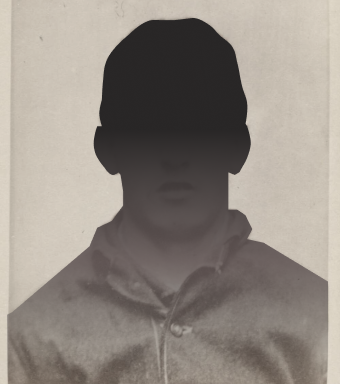
Henry Dickerson had a previous conviction. He was single, literate, 5'0 3/8" tall, dark brown hair, hazel eyes, fresh complexion, middling stout, D left side. 24/12/1873: TOL 23/4/1889: COF, Geraldton Known areas: Fremantle Comments: Carpenter, pulling hand, boatman, teamster, striker. Nothing found on the WA BDM for Henry.