
Summary
Personal Information
Voyage
Transportation
Catharine Dixon was transported on the Henry Wellesley, departing 17th Jul 1837 and arriving 22nd Dec 1837 with 140 passengers.
304 ton ship built in India in 1804.
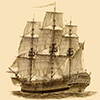 Henry Wellesley (generic)
References
| Primary Source | Australian Joint Copying Project. Microfilm Roll 90, Class and Piece Number HO11/11, Page Number 96 |
| Source Description | This record is one of the entries in the British convict transportation registers 1787-1867 database compiled by State Library of Queensland from British Home Office (HO) records which are available on microfilm as part of the Australian Joint Copying Pro |
| Original Source | Great Britain. Home Office |
| Compiled By | State Library of Queensland |
| Database Source | British convict transportation registers 1787-1867 database |
Claims
No one has claimed Catharine Dixon yet.
Photos
No photos have been added for Catharine Dixon.
Convict Notes

Born Sarah Hughes in Liverpool. Married Henry Dixon 1825 in Liverpool. Sarah ran a brothel in Leith Street, Liverpool. She was convicted of receiving stolen goods in January 1836 and sentenced to 14 years. Henry was convicted of receiving later that year and sentenced to 7 years transportation. He died from consumption shortly after. Sarah arrived in Sydney with her four children. She married Christopher Lawler (Medina 1823) in 1843. They ran brothels in Sydney and both had criminal records for various offences. He daughter, Sarah Ann Dixon married James Walsh (transported as James Driscoll, Thomas Arbuthnot 1847).