
Summary
Personal Information
Voyage
Transportation
Edmund Draycott was transported on the David Clarke, departing 3rd Jun 1841 and arriving 4th Oct 1841 with 308 passengers.
 David Clarke (generic)
References
| Primary Source | Australian Joint Copying Project. Microfilm Roll 91, Class and Piece Number HO11/12, Page Number 324 linc.tas.gov.au http://foundersandsurvivors.org/pubsearch trove.nla.gov.au |
| Source Description | This record is one of the entries in the British convict transportation registers 1787-1867 database compiled by State Library of Queensland from British Home Office (HO) records which are available on microfilm as part of the Australian Joint Copying Pro |
| Original Source | Great Britain. Home Office |
| Compiled By | State Library of Queensland |
| Database Source | British convict transportation registers 1787-1867 database |
Claims
No one has claimed Edmund Draycott yet.
Photos
No photos have been added for Edmund Draycott.
Convict Notes

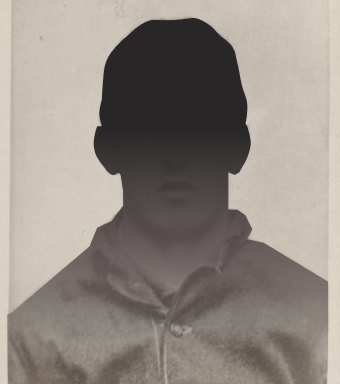
10/7/1840 Leicester Journal Leicestershire, England: LEICESTERSHIRE QUARTER SESSIONS Edmund Draycott, 20, was charged with stealing at Barkby, a coat, waistcoat, silver watch, etc. the property of Thomas Clarke. A former conviction was put in. - Ten years transportation. Previous convictions: Breaking into a shop, 6 months -- Deserting from my apprenticeship, 1 month. Edmund was listed as 22 years old on arrival. He was 5'10" tall, fair complexion, brown hair, small brown whiskers, light hazel eyes, little finger left hand, bent, scar on forehead, could read and write, was single. Mother: Ann Brothers: John, William, Jabez, Thomas. 16/12/1847: TOL 3/7/1850: Free Certificate 27/6/1871: 'Edward' Draycott died at the General Hospital, Hobart, of 'Hydrothorax' (Hydrothorax is a type of pleural effusion in which transudate accumulates in the pleural cavity - often with patients with Cirrhosis)- aged 57. (Also known as Edward Anderson). He was admitted on the 26/6/1871. Inquest: Edward Anderson or Draycott came to his death at the General Hospital at Hobart Town aforesaid having been removed to the siad Hospital from the Gaol as a prisoner under sentence on the 27th day of June in the said year from natural causes and not otherwise. 1/7/1871 The Mercury, Hobart: INQUEST ON A DECEASED PRISONER. An inquest was held at the Royal Exchange Hotel, yesterday afternoon, before the coroner, Mr. Tarleton, and a jury of seven, on the body of Edward Anderson, alias Draycott, who died at the General Hospital on the 27th June. John Miller deposed to having last seen the deceased alive on the 26th June. The deceased was received at the House of Correction on the 22nd May under a sentence of twelve months' imprisonment. On Saturday last he complained, and was persuaded to see Dr. Turnley, who sent him to the sick ward, exempted him from labor, and prescribed for him. On Monday at about one o'clock he was sent to the General Hospital according to the instructions of the medical officer. The deceased was at work on Saturday morning, and would have returned to it in the afternoon had not witness checked him. Men in the sick wards were supplied with such medical comforts and nourishment us were ordered by the doctor. The sleeping accommodation was comfortable ; plenty of bedding was supplied, and a fire kept burning in the sick ward. The deceased was 57 years of age. In reply to the foreman (Mr. Coghlan-Yates) witness said the medical officer attended the gaol daily, and any prisoner desiring to see the medical officer could do so by expressing his wish. The coroner said one or two prisoners of the gang in which the deceased worked had been detained in the gaol, in the event of the jury desiring to hear their evidence, but thought it would be better to hear the medical testimony first. Dr. Turnley had desired to make a post-mortem examination of the body, and he had accordingly ordered such to be done. The coroner further stated that the practice of holding inquests on prisoners was a very old one, and was a wholesome check on gaol officials, although, perhaps, not necessary now as it was in earlier days. It was necessary to hold inquests not only on prisoners dying within the precincts of the gaol, but also in those cases in which prisoners died in the Hospital, as they were as subject to prison discipline there as if confined in the gaol. Dr. Turnley, on being sworn, stated that he saw the man on Saturday last at the dispensary of the penitentiary ; and from what deceased said respecting his symptoms witness prescribed for him a diarrhoea mixture. On Monday he appeared worse, and witness ordered his removal to the Hospital, where he was placed in Dr. Bright's ward. He died on Tuesday afternoon. Dr. Turnley explained the result of the post mortem examination which he had made. He found a quantity of serum in both pleurae caused by inflammation of the lining membrane of the chest, and also in the pericardium. The effusion of these liquids was the cause of death. This inflammation would probably be occasioned by a simple cold. In some cases it proceeded to the stage of effusion very rapidly-- sometimes in twelve hours. Effusion of serum was often difficult to discover when in small quantities. The body of the deceased was well nourished, and there were no marks of violence. The Coroner : Is there anything in the nature of the treatment of the prisoners in the gaol which would render them particularly liable to cold? Dr. Turnley : The dormatories are comfortable, but a system has been introduced lately which only applies to a portion of the prisoners, but which I think is scarcely justifiable, and against which I protested when it was introduced : it is of placing men of short sentences to sleep on the floor, and giving them a very poor allowance of rations. That is the case with men who are in on very short sentences. The Coroner : In this instance ? Dr. Turnley: No, not in this instance. The deceased was a long sentence man. But I think it is a very dangerous thing to do with men getting on in years, particularly in the winter time. They are provided with blankets, but I don't think they have a mattress. Tho long sentence men have good diet and good bedding. In the case of these men they appear to be well lodged and clothed, and their diet is sufficiently good to keep them in good health. There is nothing whatever to complain of in their treatment. In reply to the foreman, Dr. Turnley said Dr. Bright did not treat deceased for pleuritis. When he (Dr. Turnley) saw the man at the penitentiary he merely complained of an openness in the bowels and he gave him a mixture for diarrhoea. Witness did not discover any traces of the effusion of serum on that occasion, as he did not examine deceased's chest. He thought the regulation by which short sentence men slept on the floor came into force at the beginning of 1870. He did not think the faculty were addressed on the subject, but in reply to the letter which was sent to him he gave as his opinion that it would affect the health of the men, and expressed his opposition to it. He believed it was intended as a deterrent. By the introduction of the regulation, a man who committed a petty larceny was treated worse than a burglar. The coroner thought that after the evidence of the medical witness, it was unnecessary to call further witnesses. Death had evidently resulted from natural causes, and it did not appear to have been accelerated by any system in force at the gaol, or by illtreatment by any of the officials. The jury were unanimous in returning a verdict of death from natural causes. No marriage or children found. (Quite a few Edward Anderson's on the lists, but found nothing to connect anyone to 'Draycott'.)

Theft of a watch and clothing. Quite likely he stole from his step father at Blaby. Regular examples of absconding, absent without leave, theft and burglary throughout his life, both in England and Tasmania.