Summary
Personal Information
Crime
Transportation
Hector Fenner was transported on the Nile, departing 18th Sep 1857 and arriving 1st Jan 1858 with 271 passengers.
 Nile (generic)
References
| Primary Source | Australian Joint Copying Project. Microfilm Roll 93, Class and Piece Number HO11/18, Page Number 244. --00--Edgar, W. (Bill). (2018). “The precarious voyage of her majesty’s convict ship ‘Nile’ to the Swan River colony, late 1857 – and the unexpected aftermath.” The Great Circle, 40(1), 20–43. |
| Source Description | This record is one of the entries in the British convict transportation registers 1787-1867 database compiled by State Library of Queensland from British Home Office (HO) records which are available on microfilm as part of the Australian Joint Copying Pro |
| Original Source | Great Britain. Home Office |
| Compiled By | State Library of Queensland |
| Database Source | British convict transportation registers 1787-1867 database |
Claims
No one has claimed Hector Fenner yet.
Photos
No photos have been added for Hector Fenner.
Convict Notes


From his FREMANTLE jail record: FENNER, Hector George; inmate #4509, arrived 1 Jan 1858 per Nile Date of Birth: 1836 Marital Status: Unmarried Occupation: Horse dealer Sentence Place: Winchester, Hampshire, England Crime: Burglary & theft Sentence Period: 20 years Ticket of Leave Date: 9 Dec 1859 Conditional Pardon Date: 12 Apr 1864 Comments: General servant, self-employed, 1863 (https://fremantleprison.com.au/). --00--
IN WA: In 1859, he was appointed a convict Constable (Western Australia, Australia, Convict Records, 1846-1930; Convict Department, Registers, Character Book for Nos 4508-5585 (R8). --0--
MISSING RECORDS: Only half a page survives from his WA Convict Character Book that lists his behaviour in jail in separate confinement in England as "good; "very good" in public works and "good" on the voyage. Such rankings were important, as per Edgar's explanation of the prison system: “After a sentence of transportation was handed down, the prisoner entered into a separate stage where he was placed into an individual cell, isolated from others, apart from brief periods of exercise and attendance at chapel. However, no communication of any kind with other prisoners was permitted at any time. The philosophy behind this penal methodology had its provenances in the religious, monastic traditions; i.e., that in the isolation of his cell the malefactor would be able to contemplate the errors of his way, unadulterated by the negative influences of former contemporaries, and be reformed.” (Edgar, 2018, pp39-40) When first put into practice, the mandated period of separate confinement was 18 months. By the late 1840s, authorities had conceded that such conditions of imprisonment were “injurious to many prisoners’ mental health” and the stint was reduced to 12 months. Periods of separate confinement were reduced further “as a prisoner displayed good behaviour tendencies” (Edgar, p40). Millbank, Wakefield, Pentonville and Mountjoy in Ireland were the “Probation” or “Separate” prisons, as were some local jails. Portland, Portsmouth, Chatham and Spike Island in Ireland were listed public works stations and the second stage in the penal process. After separate confinement, prisoners were “placed on work parties at various locations, most commonly naval stations, where maintenance of facilities was vital for the effective protection of Britain’s far flung commercial and military influences around the world. While there, attitude and behaviour were monitored closely. In theory, only after consistently positive reports was a prisoner moved on to the third stage of his incarceration—transportation.” (Edgar, p40). --0--
OCCUPATION: Horse dealer (Western Australia, Australia, Convict Records, 1846-1930; Convict Department; Estimates and Convict Lists (128/1 - 32)). --0--

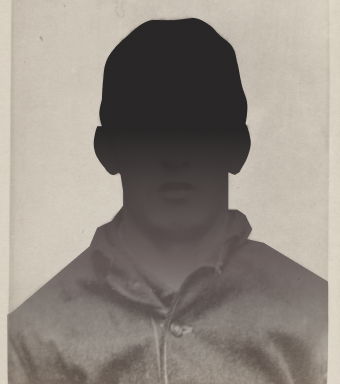
Hampshire Advertiser - Saturday 14 July 1855 BURGLARY – Hector Fenner and John William Goodenough were indicted for burglariously breaking and entering the dwelling house of Thomas Sparville, at Eversley, on the night of the 17th of March, and stealing therefrom 92lbs weight of tea, two small seals, one pair of India rubber colloshes, and divers other articles. Mr Cole prosecuted the prisoners. The facts of the case are these: Thomas Sparville was a grocer and baker, and lived at Eversley; on the night of the 17th of March the shop and house were all fastened up at ten o’clock, and the family went to bed. Early in the morning, at about half-past three, Mrs Sparville heard a noise, but as the baker was to commence work at four this incident did not disturb her. However, the baker came to work, and on getting down stairs he found that the house had been entered through the kitchen windows, the iron stancheons of which were forced. A great many articles were taken, and the prisoners then decamped. In the morning Mrs. Sparville went to a neighbour named Hall, acquainted him with the facts, and requested him to go in pursuit, which he did, being aware that as the articles stolen were very bulky, they could not decamp speedily. A carrier named Watts, who was traveling in his cart that morning, was overtaken by Fenner, who had two bundles of tea, which he desired Watts to allow him to put up in the cart. The prisoner said he was going to take them to his brother, who kept a shop. The identify of Fenner was fully proved by a man named Meering. Mr. Hall, who was just in the rear of the carrier’s cart, was accosted by the prisoner Goodenough, who inquired if a man had passed with two bundles which question being overheard by Fenner, who was just in front, that worthy made himself scare by running away, leaving the parcels of tea behind. He was afterwards taken into custody at Odiham. Shortly after the commission of the offence, Goodenough, who was apprehended at Reading, was found to have in his possession a pair of golloshes and two small seals, which were part of the missing property, and were fully identified by Mrs. Sparville. A ticket-of-leave man, named Weller, was called by the prisoner Fenner to prove an alibi, which the jury paid little attention to, for they convicted him, and he was sentenced to twenty years’ transportation; Goodenough was acquitted. Goodenough committed another crime in the same year and was himself transported to WA on the Clara under the name of John Williams convict no. 4302 see http://www.convictrecords.com.au/convicts/williams/john/16014