
Summary
Personal Information
Voyage
Transportation
Michael Flynn was transported on the Mariner, departing 19th Jan 1827 and arriving 23rd May 1827 with 161 passengers.
The 1825 Journey. The ship Mariner, Captain Fotherley, arrived from Ireland with female prisoners, on Sunday evening. She left the Cove of Cork, the 12th of March, and brings 112 female prisoners, having lost only one on the passage. A few passengers also came per this opportunity. Surgeon Superintendent Dr. Cochrane, R. N. Sydney Gazette, 14 July 1825.
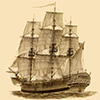 Mariner (generic)
References
| Primary Source | New South Wales, Australia, Certificates of Freedom |
Claims
No one has claimed Michael Flynn yet.
Photos
No photos have been added for Michael Flynn.
Convict Notes
Irish Convict Database, by Peter Mayberry. Michael Flinn, alias Flynn, age on arrival, 21, per Mariner (3) 1827, Tried Tipperary 1826, 7 years for Murder. DOB, 1806, Native place, Cork. Single. Labourer farmers dairyman gardener. Religion, Catholic. Norfolk Island. ---------------------------------------------------------------- Michael Flinn (a soldier of the 15th Regiment) was indicted for that he, on the 26th May, at Nenagh, did feloniously and maliciously kill and murder William Carrington, by giving him with his hand a blow on the head; of which he languished till the 20th, when he died. Enoch Evans (a soldier)—Knew deceased, who came by his death from a beating he received from the prisoner on the night of the 26th of May; was sentry on the Barrack gate that night, when, shortly after hearing some noise in the street, between twelve and one o'clock, he saw the prisoner enter the Barrack from the direction whence he heard the noise, and running into the guardroom, strip off his side-arms and white jacket, and tuck up the sleeves of his shirt; he then made an effort to go out into the street, which he (witness) resisted, and enquired what he was about, in reply to which the prisoner told him Foyle had insulted him, and that on giving him a blow for it Carrington said he might as well strike him as Foyle, for which he gave him a blow between the two eyes, and was then going to beat him again; when relieved told the corporal of the guard he thought he had heard Carrington in the street and would go look for him; went and near the ruins of an old house found the deceased lying in the street and besmeared with puddle; brought him home on his shoulder, and on entering the room with him the prisoner asked was that Carrington, to which he (witness) replied in the affirmative, the prisoner immediately ran over and made a blow at him ; they had all been drinking that night, and the deceased to such excess that he did know in the morning who beat him, he was so drunk the night before. James Foyle (a soldier) being sworn, proved that the prisoner, deceased, and he went to a public-house to drink, and after he and the prisoner had taken some porter and the deceased some whiskey, the prisoner began to quarrel with the people of the house, so that they were going to beat him, but said that if witness and deceased, whom they considered very good company, would | take him away they would not do so ; did take him out, and on the way had a dispute with him in consequence of which he knocked him (witness) down; as also the deceased subsequently, on his saying that he might as well strike him as Foyle ; prisoner had nothing in his hand when he struck him, and before that he and before that he and deceased were on good terms. Three other witnesses (James Peacock, Ben. Berk, and Mathew Hayes) corroborated the testimony of the first, after which, Mr. Silcock, the Surgeon who attended the deceased, being sworn, described the nature of the wound he received, which he had no doubt was the cause of his death, but could not have been inflicted by a hand. but might by a fall on a sharp stove, or by a kick with the sharp toe of a shoe having nails in it. After a short deliberation the Jury returned a verdict acquitting the prisoner of murder, but finding him guilty of manslaughter. Limerick Chronicle, 29 July 1826.
1842 - Ticket of Leave. 42/1234. 16 July 1842