
Summary
Personal Information
Voyage
Transportation
Edward Greenbank was transported on the Elizabeth, departing 3rd Oct 1831 and arriving 14th Feb 1832 with 220 passengers.
1828 - Elizabeth arrived from Ireland with Female Irish Convicts. Total No Embarked; 194. Drowned on voyage; 1 Died on Board; 1. Total mustered 192 on arrival at Sydney Cove 12 January 1828. 16 Children on Board Walter Cock - Commander Joseph H Hughes - Surgeon Superintendent.
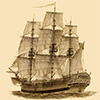 Elizabeth (generic)
References
| Primary Source | Australian Joint Copying Project. Microfilm Roll 89, Class and Piece Number HO11/8, Page Number 192 |
| Source Description | This record is one of the entries in the British convict transportation registers 1787-1867 database compiled by State Library of Queensland from British Home Office (HO) records which are available on microfilm as part of the Australian Joint Copying Pro |
| Original Source | Great Britain. Home Office |
| Compiled By | State Library of Queensland |
| Database Source | British convict transportation registers 1787-1867 database |
Claims
No one has claimed Edward Greenbank yet.
Photos
No photos have been added for Edward Greenbank.
Convict Notes

1834 - APPLICATION TO BRING OUT FAMILY - CSO1-1-377/CSO1-1-377-8578 No; 819. Constable Police, Hobart Town Wife & 3 children Remarks; A constable and is recommended by the Chief Police Magistrate APPROVED
https://stors.tas.gov.au/CON31-1-16$init=CON31-1-16P85 Tasmanian Conduct Record. Edward Greenbank. Per Elizabeth 14 Feb 1832. Tried Tork 19 March 1831, Life. Transported for uttering forged notes. Gaol report, Connected with a gang of very bad characters. Hulk report, Orderly. Married, 3 children. I expect her to come out free. Conditional Pardon, No 1745, 28 June 1838 Free Pardon No 101, 28 July 1842. -------------------------------------------------- GOVERNMENT NOTICE.-The Lieutenant Governor has been pleased to extend to the following convicts the indulgences stated after their names respectively, as a reward for meritorious conduct in connection with the pursuit and subsequent conviction of the Bushranger Regan and his gang :-To Edward Greenbank, per Elizabeth, a conditional pardon ; John Westly, per Layton, ditto ; John Hurst, per Georgiana, Ticket-of-leave ; James Harkins, per Roslyn Castle, ditto ; John Taylor, per Atlas, ditto ; James Shalvey, per Admiral Cockburn, ditto; John Bell, per Lady Ridley, ditto ; Hugh Taylor, Atlas, ditto. By His Excellency's Command, JOHN MONTAGU. Colonial Times, 3 July 1838. --------------------------------------------------- TRIAL OF THE BUSHRANGERS. We are indebted to the Colonial Times for the report of which the following is an abstract, of the trial of the bushrangers, Regan and Atterell and their accomplices. The two unfortunate men named were brought before the Court on Saturday last. The Jury having been sworn, the Attorney-General addressed the members of it, imploring them to divest their minds of all prejudices arising out of reports abroad connected with the men to appear before them, and solicited that they would confine their attention to, and give their judgment, solely on, the facts brought before them. The witnesses in the case were shortly after called. William Thornell deposed to the fact of the murder of the man Robert Morley, at the Baldfaced Stag Inn, Epping Forest; he could not recognise the countenance of the murderer; Morley was sober at the time. Robert Rhodes, a ticket-of-leave man, and a stonemason, residing at Thornell's Inn, deposed as follows :— " he was in bed when three armed men came to the house : one of the men came into the room, where he was in bed, and ordered him to get up : he did so, and was ordered to come into the kitchen. Having reached the kitchen, the bushranger said ; "You are Paddy Flynn, the constable: I'll shoot you!'' A man, named Greenbank, was leaning, with his face to the wall, and said—" No; that is not Flynn ; you are mistaken in the man." The bushranger was armed with a pistol, and a double barrelled piece. Upon Greenbank saying witness was not Paddy Flynn, the bushranger marched him into the front tap-room, —another armed man going before,—and the man, who mistook him for Paddy Flynn following behind. On going into the tap-room, witness was tied, with some other persons who were there, and ordered to sit down on a sofa. There was a third armed man in the tap-room when witness entered. Morley, the man who was shot, was there ; a man, named Gunton called in soon after Greenbank entered with witness. Bonnett and Smith were also in the tap-room : Alexander Ram came in afterwards, who tied the others, by the command of the bushrangers. One of the bushrangers went into the bar, the others stood "protecting" the men, tied in the tap-room. One of the bushrangers now brought in some spirits, of which witness drank a little, Morley drank, also, as did Gunton and Smith, Greenbank likewise drank, but very little. Greenbank went with one of the bushrangers to the stables, to look out for some horses; he was absent about 15 minutes; on his return, one of the bushrangers was in the bar, and one in the kitchen, while the third was guarding Greenbank backwards and forwards from the stables. Gunton was sitting alongside Morley, handcuffed, and with a knapsack on bis back, and much intoxicated ; Morley said, that Gunton was apt to be smothered, if the handcuffs were not taken off. The bushrangers were in the room at the time, and one of them told Morley to hold his tongue ; Regan then asked the other armed man for the keys of the handcuffs, which he had got in his pocket. The bushranger, thus addressed, came into the tap-room, and taking the keys from his pocket, unlocked the handcuffs. During the whole of this time, the deceased, Morley, was very impatient, and kept urging the necessity of removing the handcuffs from Gunton, exclaiming, " Why don't you take the handcuffs off this man, before he is smothered." Morley kept aggravating the bushrangers, and did not see that the handcuffs were removed; he could not see, as he kept his head down, with his hat over his eyes. Again, the bushranger told Morley to hold his tongue, or he would shoot him. Morley then replied, " I've seen men like you, before to-day—you are not the men you pretend to be." The tallest of the bushrangers (Palmer) then levelled his pistol at Morley's bead, but Morley could not see him, as he had his head down in his hat. On repeating the same remarks, Palmer shot Morley through the head, the ball going in at the crown of his bat, and coming out at the side of his head. Morley lifted his head up gradually from the table, and fell back dead, instantly, on the sofa. Three armed men were in the room at that time; they all presented their pieces at once, and exclaimed, " If any man moves, he shall be served all alike." Witness has never since seen, dead or alive, the man, who shot Morley. Witness was on Morley's inquest, but not on that of the bushranger, who was shot at Ellenthorp. Morley was shot by the tallest of the three bushrangers; they had all blackened faces. Some further evidence was adduced, relating chiefly, to the attitudes of the prisoners, as regarded their identification. Regan's attitude was particularly referred to, and especially some remarkable appearance about his nose. On his cross-examination by Mr. Stewart, the witness Rhodes stated, that he recognized the prisoners, not from what he had heard about them, but from his own recollection of their persons. Neither of the men at the bar, were the perpetrators of Morley's murder : the weapon, by which Morley was shot, was brought by the man who shot him. This witness further testified, that Morley kept aggravating Palmer, before he shot him; " keeping on," as the witness said, " aggravating him." The bushranger then snatched up a pistol, and shot him instantly. It was done very quickly, as if the bushranger was in a passion ; it might have been so quickly, as not to have prevented any person interfering." Captain Forth next deposed to the fact of the inquest upon Palmer, who was shot; he identified Palmer when the dead body was shown him. Edward Greenbank gave his evidence to the following effect :-—" He was employed in charge of Mr. Thornell's stables, at the time of the bushrangers' visit, in April last; he was in the kitchen on that evening, when a man came in, with his face blackened, and with a double-barrelled gun in his hand ; there were two more men in the kitchen at the time, whom the armed man told to stand ; he (the bushranger) then ordered the inmates to turn themselves round, with their faces to the wall, and to kneel down—they did so. The bushranger then went into another room, and asked, who was there? He then asked for a light, and got one. Witness now looked over his shoulder, and saw the bushranger pulling a pistol from the pocket of his shooting coat. There was a man of the name of Rhodes, in bed in the room at the time; he was ordered to get up, and he (the bushranger) said he would blow the roof of his head off. An axe was now asked for—and, after some difficulty, a tomahawk was obtained, and placed at the bar-door. After this, the bushrangers ordered a man, named Ram, to tie the men in the house, and he (Ram) took each man's handkerchief from his neck, and bound him accordingly. Ham was told, that if he did not tie the men securely, he must himself "look out." The men who were tied, were then ordered to have plenty to drink, and rum, brandy, and gin were brought to them, for that purpose. A little boy, who was in the house, was ordered to supply the people with such drink as they would take—they being unable, from their their hands being bound, to help themselves. Witness at this time heard a great deal of bustling in the bar—and a piece go off, about a quarter of an hour after he had been in the house. The bushrangers now consulted about taking some things away; they wanted some horses, and asked who had charge of the stables? Some one said that witness (Greenbank) had this charge, and on being asked, he said there were seven or eight horses in the stables. The bushrangers hesitated awhile, but at length agreed to take the horses, and chance it. Witness was then asked, how many saddles and bridles he had? He answered, two of each,—when he went to the stable with one of the armed men, and then heard a piece go off. The armed man remarked, that when witness went back again, he was not to be alarmed, if he found one of his mates shot. Witness returned to the tap-room, and found there some of the people he had left. [He now corroborated the testimony of Rhodes, as to the shooting of Morley, by Palmer; he described also, with much accuracy, the relative positions of the three bushrangers, at the moment Morley was shot;—one was about two feet distant from Palmer, and the other about the same distance from the second. The bushrangers remained about twenty minutes in the house, after Morley was shot.] The witness recollected seeing Palmer (when dead) at the inquest at Ellenthorp Hall, and positively identified the prisoners, as being two of the three armed men, who had been present at Mr. Thornell's. In answer to a question from the Judge, the witness replied, that he had seen Palmer at Campbell Town before, more than four or five times ; but the last time be saw him was 18 or 20 months ago. In his cross-examination by Mr. Stewart, Greenbank did not swerve from his testimony. He stated, however, that when Palmer had shot Morley, he said, he had a d—d good mind to serve them all alike; but that Regan replied, there was no necessity for that; he stated, also, that he heard Regan. say, he would rather have lost £100, than that this man (Morley) should have been shot. In answer to some questions by the Judge, this witness stated, that Morley, when shot, was much intoxicated, having drank a quantity of raw spirits; the men, who were tied, were not forced to drink, but much liquor was taken to them. He said, also, that, although the bushrangers were very particular at first, not to let their faces be seen, they became less careful afterwards; and witness, from his situation, had abundant opportunity of scrutinizing them. A leaden ball was found the next morning, under the sofa, on which Morley sat; it was flattened on one side, and blood-stained. This witness also testified to the dress of Regan and Palmer, which he minutely described." Several other witnesses corroborated the above evidence. The case for the prosecution having ended, Mr. Stewart addressed the Jury on behalf of the prisoners very briefly, and left the decision in the hands of the Jury. His Honor the Chief Justice having summed up the evidence with much care, the Jury retired for some time, and returned to pronounce a verdict of Guilty against both prisoners, who were immediately taken from the bar. The Tasmanian, 15 Jun 1838.