
Summary
Personal Information
Voyage
Transportation
Edward Harris was transported on the Barwell, departing 31st Aug 1797 and arriving 18th May 1798 with 309 passengers.
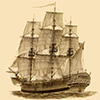 Barwell (generic)
References
| Primary Source | Australian Joint Copying Project. Microfilm Roll 87, Class and Piece Number HO11/1, Page Number 231 (116) |
| Source Description | This record is one of the entries in the British convict transportation registers 1787-1867 database compiled by State Library of Queensland from British Home Office (HO) records which are available on microfilm as part of the Australian Joint Copying Pro |
| Original Source | Great Britain. Home Office |
| Compiled By | State Library of Queensland |
| Database Source | British convict transportation registers 1787-1867 database |
Claims
No one has claimed Edward Harris yet.
Photos
No photos have been added for Edward Harris.
Convict Notes


Old Bailey Online EDWARD HARRIS. Theft; theft from a specified place. 14th September 1796 Text type Trial account Defendants EDWARD HARRIS Offences Theft > Theft from place Session Date 14th September 1796 Reference Number t17960914-99 Verdicts Guilty > Theft under 40s Punishments Transportation 556. EDWARD HARRIS was indicted for feloniously stealing, on the 19th of July , seven chaldrons of coals, value 10l. the property of William Pearson , in a barge upon the navigable river . (The case was opened by Mr. Knapp.) WILLIAM PEARSON sworn. Examined by Mr. Knapp. I am a coal-merchant ; On the 18th of July, about nine o'clock at night, I made my barge fast to Mr. Lum's craft, at his wharf, Standgate, Lambeth , there were seven chaldrons of coals in it at the stern and together, except six or seven bushels of great coals, which, for fear the barge should be robbed I put at the bottom at the other end; I came down to the water-side the next morning about seven or eight o'clock, the barge was gone and the coals too; I then went to look for the barge, and found her athwart a lighter adrift near King's Arms stairs, about half a mile nearer Blackfriars-bridge, from where she was fastened the night before; when the tide turned I fetched the lighter away; the round coals at the bottom of the fore-room were gone, all but about a hat full; about six bushels were gone, the other coals were in the barge. Q. When did you see the prisoner? - A. Not till, the next morning at the Magistrate's. Cross-examined by Mr. Ally. Q. Are you a light erman? - A. Yes. Q. At nine o'clock in the evening you left this barge fastened at Lambeth? - A. Yes. Q. Is not that in the county of Surry? - A. Yes; but the barge was found in the county of Middlesex, lying about the middle of the river rather nearer the Surry shore. Q. Then that is in the county of Surry also? - A. Yes. Q. Does it not often happen that barges break from their mornings? - A. It is impossible that she could, because there is not any tide nor mud there to strain the ropes; nor could she drive right over the water, where she was found. Court. Q. You found her on the same side of the river that you fastened her? - A. Yes. Mr. Alley. Q. Do you mean to say there is no tide where you left the barge? - A. No. Q. By what means did you get the barge to the wharf then, if the tide did not run with it? - A. There is a wharf above it, that stops it in the stood; and the wharf below stops it in the ebb. Q. Would not the mere force of the water carry away the barge if the was not fastened? - A. She might drive, but the could not be carried right over the water; the ropes were cast off, I am sure of it; the headfast was run over, and the sternfast too; the sternfast was run round a pole, and the headfast round the bits of a barge; she was what we call moored fore and aft; she could not swing. Q. Suppose your barge was moored to another person's barge, as frequently happens, might not the proprietor of that other barge unfasten it? - A. The man that belongs to the other barge that my barge was moored to, knows me very well, and would not have done any such thing, besides his barge was there in the morning. Q. You missed but six bushels? - A. Yes. Q. They are not worth forty shillings? - A. No. Mr. Knapp. Q. Was this barge moored with as much safety as it could possibly be moored? - A. Yes. Q. If I understand you right the barge had been moored half a mile with all the other coals? - A. Yes; the barge had been carried almost to the Westminster side with all their coals. JOHN-BOSCUTT sworn. Examined by Mr. Knapp. I am a lighterman: I know the prisoner, I saw him upon the river on the 19th of July, just off Westminster-hall; the barge was more of the Westminster side than the officer. Q. You know the mid-stream; was it between the mid-stream and the Westminster side, or in are the Surry side? - A. Between the mid-stream and the Westminster side. Q. Where was the prisoner at this time? - A. In the barge. Q. Was there any body with him? - A. Yes. Q. Had they any boat with them? - A. Yes. I saw them both heaving coals out of the barge into their boat. Q. Do you know of your own knowledge to whom the boat belonged? - A. No. Q. What time was this? - A. In the morning between half after two and three o'clock. Q. Was the barge at that time fastened to any thing, or floating? - A. It was driving. Q. What quantity of coals might they take out of the barg, and put into the boat? - A. There might be about six or seven bushels, to the best of my knowledge. Q. Did you observe whether there were any other coals in the barge besides these they had put into the boat? - A. Yes. Q. At what part of the barge were the other coals? - A. In the stern room; Goddard and I were in another barge upon the river when we first saw them, and we got into our own boat and went to the barge; when we got; close to the barge they got into their boat and rowed away, and we rowed after them, and came up to them just through Westminster-bridge, about the middle of the river; Harris, the prisoner, then jumped off the well that he was sitting upon; it was a fishing boat; he jumped up, and asked us what we wanted; we told them we wanted to know who they were, and how they came to let the barge go adrift; I think it was Armstrong then answered, that we were no poor man's friend; we told them that did not dignity any thing, but we would see the barge made fast in safety, upon which Harris wanted to fight with us, we told him we should do no such thing, but we would bring them back, after a few words, they were agreeable to come back with us, and rowed back to the barge again, it was just high-water, the barge was driving; I went on board the barge and looked at her name, I saw her name was Grace, and at the stern of the barge, was W. Pearson, Lambeth; Harris and Armstrong then took the barge in tow, to row her ashore with their boat, and then we went to our own barge again; as we were going to our own barge, a gentleman rowed off to us, Mr. Honey. Q. In consequence of any conversation with him, what did you do next? - A. We went to our down barge; I saw this Mr. Honey, we went him a hand to tow the barge on shore, this was on the Tuesday morning, the same morning. Q. How soon after? - A. Directly; we told Mr. Honey there was a barge with the name of Pearson, her name was Grace; the prisoner was close by, Mr. Honey said, he knew the man very well, and he would lend a hand to tow her on shore; Armstrong and Harris towed her in one boat, and Mr. Honey in the other; upon which, there were a few words happened between Mr. Honey and the two men, I did not hear what it was; I then observed the boat with Harris and Armstrong rowing away, upon which Mr. Honey crime out for help; I got into the boat from my barge, Goddard was not with me then, I rowed athwart the bow of their boat, Harris got up, with a stick, and swore he would knock me down if I did not turn my boat off; I returned to my barge, and fetched Goddard to my assistance; we then got into our boat again, and pursued; them, and as we were coming up with them, Armstrong was rowing, and Harris, the prisoner, threw coals at us, we got along-side of them, there were some coals as big as my head, we told them, we would bring them back, Harris said, damn you, it is life for life, and then took up his staff that laid in the boat, and beat Goddard over the head; Goddard could not, at first, recover the blow, his head bled terribly, and upon that, Harris up with his staff again, and made a second blow at him, and happened to miss him; the staff broke in two upon the boat's gun-whale; Armstrong, the man I was fighting with, struck at me with a stick they used for a stretcher, about five feet long, he missed me, and, with the force of the blow, could not recover himself; I got the stick out of his hand, I struck him several times over the ribs as he lay, he then said, for God's sake, don't murder me, and then I left off; now Harris jumped out of the boat into the water. Court. Q. How near to the shore? - A. Rather upon the Westminster side; he jumped into the water, and got hold of a wherry that had heard the noise, and came to see what was the matter, and he made an attempt to wrest the sculls out of the waterman's hands. Q. Did you at that time call to the wherry? - A. Yes; we told him, he should not take the man away; we took the prisoner out of the wherry; we were forced then to go and take care of our own barge, and I left Harris under care of Mr. Honey and Goddard, in Mr. Honey's boat; Armstrong got away, we had not strength enough to take them both, and he got away in the fishing-boat; I was before the Magistrates the Friday following; I could not go the next day, and he was committed. Q. This was between two and three o'clock in the morning? - A. Within a quarter of three. Q. Was it day-light? - A. It was break of day. Q. Are you sure it was the same barge that you had seen first? - A. She was never out of our sight. Q. Had you ever seen the prisoner at the bar before? - A. Never, to my remembrance. Q. Are you sure he was the same man? - A. Yes. Cross-examined by Mr. Ally. Q. You are a lighterman? - A. Yes. Q. The prisoner was a drudger in a fisherman's boat ? - A. He was in a Peter-boat. Q. They sometimes sleep in the boat? - A. If he is a drudgerman, they never do sleep in the boat, fishermen do. Q. The tide was carrying the barge up towards Lambeth? - A. Yes; if any thing, it was the top of high-water. Q. Do you know Lum's wharf? - A. Yes. Q. Was the tide carrying it towards Lum's-wharf? - A. Rather the contrary way, but it was the top of high-water, the tide runs up after it has made its mark, and there was a strong wind to the southward. Q. You first saw her off Westminster-abbey? - A. Yes. Q. And where is Lum's wharf? - A. About 150 yards above the bridge. Q. Is it not usual, upon seeing a barge coming down the river, particularly at that time, to be anxious to keep at a distance from that other barge? - A. Only just to clear her. Q. I suppose, then, you have made observations enough in your passage up the river, that it is extremely difficult to ascertain the situation of a barge when that barge is in motion as well as your own? - A. No, there is no difficulty at all. Q. Not a greater difficulty in making an observation upon a barge in which you are not, though that barge is in motion as well as your own, than when your own is not in motion? - A. No; just the same. Court. Q. If you are coming down, and see a barge before you, cannot you tell whether it is nearer the Lambeth side or Westminster side? - A. Yes. Mr. Ally. Q. Do not you know that this is a capital indictment, by which the man's life is affected? - A. I can say no more than the truth. Court. What has that to do with it. Mr. Ally. Q. Will you undertake to swear, knowing that, that it was not as near the Lambeth shore as the Westminster side? - A. I can undertake to swear it was on the Middlesex side. Q. Will you undertake to swear that, under all these circumstances? - A. Yes. Court. Q. About what distance from the Westminster shore? - A. It was almost two parts out of three, on the Westminster side. Mr. Knapp. Q. The wind was south? - A. Yes. Q. It would blow on to the Westminster side? - A. It would make a barge strand over to the Westminster side. Court. Q. Would the current carry it to the Westminster side? - A. No; the wind would take it over; there is a sand bank in the middle of the river, but it was high water. Mr. Knapp. Q. Was your barge in such a situation as to enable you see clearly what you have described? - A. Yes. Court. Q. They were not working the barge? - A. No; that made us make the observation first; we saw them heaving the coals out, she was almost still; if any thing, going up. Court. Q. Where was their boat? - A. Along side the starboard side of the barge. Court. Q. Was their boat fastened to the barge? - A. I cannot say, but by the lee-way that the barge makes through the water, it would make the boat lie along side. JAMES HONEY sworn. Examined by Mr. Knapp. I am a boat-builder; I saw the prisoner and Armstrong in a boat, I don't know whose boat it was, there were a great quantity of large round coals in the boat; they were nearly about the middle of the river, near the barge. Q. You were present when the prisoner was apprehended? - A. Yes; I was there from the time that they reached the barge that they were towing till they were taken; we rowed the prisoner up shore, with a view to deliver him to the watchman on the bridge; there was nobody there; and we took him to St. Margaret's watch-house; they were towing the barge towards the Surry side, when I first saw her, she was then much about the middle, and they had been towing her very near half an hour before I saw her. THOMAS GODDARD sworn. Examined by Mr. Knapp. Q. When you first saw the prisoner and Armstrong putting the coals into their boat, whereabouts were they? - A. A great deal nearer to the Westminster side than the Surry side. Q. Was it between the middle and the Westminster shore? - A. Yes. Q. You had a great deal of conversation with the prisoner? - A. A great deal. Q. Have you any doubt about his person? - A. I knew his person perfectly well from that time; I said he would not have minded taking my life; away; he said, no, he should not; nor we should not have taken him, if other people had not come. Court. Q. He had beat you? - A. Yes; he cut my head open. Mr. Ally. Q. You had no great friendship for the prisoner then of course? - A. He had no friendship for me; at the same time that he struck me, I told him, I did not want to hurt him. Prisoner's defence. When I first saw the barge, she was adrift; we went towards her with an intention to secure her, to prevent her coming to any hurt; I stepped into the barge to take her headfast into our boat, and I saw the had got coals in; I saw a boat, and I saw she had got coals in; I saw a boat coming, and I said may be they would think we had been taking coals out of her, as we had some in our boat that we had been drudging for; they rowed after us, and kept calling out, we have got you, we will do you; and I thought as I had a pair of silver buckles and a watch, that they meant to rob us, and we would not let them come along side; and they stood up with their sculls, I thought they were going to strike us; I threw a piece of coal or two at them.(The prisoner called three witnesses, who gave him a good character). GUILTY of stealing, to the value of 5s. Transported for seven years .