Summary
Personal Information
Voyage
Transportation
Martin Hogan was transported on the Hougoumont, departing 10th Oct 1867 and arriving 9th Jan 1868 with 281 passengers.
875 ton ship was built at Moulmein in 1852. http://www.australiangeographic.com.au/journal/on-this-day-in-history-australias-last-convict-ship-docks.htm ---------------------------- Incorrect Image ....This is a four masted steel hulled Barque in the drawing , im surprised Australian Geo didn't do a bit more research on this .......The Hougoumont was a works ship on the Forth Bridge Project in 1885 ....the one potrayed as a drawing in Aust Geo is the later version of this ship.....the photograph i have attached is the correct and original convict vessel. --00-- 1867 "The hired convict ship Hougoumont, which has been taken up by the Government for the conveyance of a numerous party of convicts to Freemantle, Western Australia, left the Nore on October 1, and proceeded down Channel, after receiving on board 150 convicts from the establishments at Chatham and Millbank. The convicts from the Chatham establishment, at St. Mary's, embarked from the dockyard on board the paddle-wheel steamer Adder, Mr. W. J. Blakely, and were in charge of a numerous party of convict guards and wardens, all heavily armed. Among the convicts shipped were a party of fifteen Fenians, who were engaged in the late conspiracy in Ireland, together with the officers and crew convicted of scuttling the ship Severn, and some others who have achieved notoriety from their crimes. The Fenian convicts, like the remainder of the prisoners, were chained together in gangs, but it was observed that they were kept apart from the other convicts in a portion of the vessel by themselves. The steamer Petrel also took down a number of convicts from the establishment at Millbank for shipment on board the Hougoumont, in charge of a strong escort and convict guard. On Tuesday, October 8th, the Hougoumont arrived in Portland roads. Shortly before midday ninety convicts were marched down to the Government pier at Portland under a strong escort of the 12th Light Infantry. The party included twenty-three Fenian convicts, among whom it was said, was Moriarty. The Government steamer employed in the breakwater service was used for conveying the convicts on board the Hougoumont transport ship. The convicts were chained together on embarking, and on board the steamer a strong guard of marines from her Majesty's ship St. George was formed, and saw the convicts safely placed on board the Hougoumont. The Governor of the penal settlement at Freemantle, Captain Young, is on board the Hougoumont, and returns in that ship to his sphere of duty after paying a visit to his native land." Source: Sydney Morning Herald, Thu 19 Dec 1867, p4, English Shipping, available on Trove at https://trove.nla.gov.au/newspaper/article/28608271?searchTerm=hougoumont.
 Hougoumont
References
| Primary Source | Australian Joint Copying Project. Microfilm Roll 93, Class and Piece Number HO11/19, Page Number 265 (135) |
| Source Description | This record is one of the entries in the British convict transportation registers 1787-1867 database compiled by State Library of Queensland from British Home Office (HO) records which are available on microfilm as part of the Australian Joint Copying Pro |
| Original Source | Great Britain. Home Office |
| Compiled By | State Library of Queensland |
| Database Source | British convict transportation registers 1787-1867 database |
Claims
No one has claimed Martin Hogan yet.
Photos
No photos have been added for Martin Hogan.
Convict Notes

VERDICT - Newspaper coverage: 1. 1866, 3 November: From the Pilot, Boston, Vol 29, No 44, p3: “The Recent Courts-Martial—The Sentences. At half-past two o’clock on Tuesday the 92nd Highlanders, the 83rd Regiment, and the 5th Dragoon Guards were paraded in full dress in the Royal-square, Royal Barracks, for the purpose of hearing read the sentence of ten men convicted by the recent courts-martial. They formed three sides of a square. Brigadier-General McMurdo, C. B., commanding. Brigade-Major Knipe read the sentences. Six of the prisoners belonged to the 5th Dragoon Guards, two to the 24th Regiment, one to the 61st, and one to the 60th Rifles. The sentence upon Privates Patrick Keatinge, James Wilson, and Martin Hogan, of the 5th Dragoon Guards, and Private Hassett, of the 24th Regiment, is imprisonment for life; Drummer McCoy, of the 61st Regiment, to 15 years’ penal servitude; Private Thomas Delany, of the 5th Dragoon Guards, to 10 years’ penal servitude; Private Giles, of the 60th Rifles, to 10 years; and Privates Lynch and Foley, 5th Dragoon Guards, and Maloney, 24th Regiment, to five years’ imprisonment. The sentences having been read, the prisoners were removed to the military prison, Arbour hill, where they were dressed in the convict clothes. They were afterwards conveyed to Mountjoy Convict Prison in the van." (https://newspapers.bc.edu/) and 2. 1867, 9 January: From the Brisbane Courier, p3: “The suppression of Fenianism in the army.—The sentences upon the ten men convicted at the late courts-martial in Dublin have been promulgated. The sentence upon privates Patrick Keatinge, James Wilson, and Martin Hogan, of the 5th Dragoon Guards, and private [Thomas] Hassett, of the 24th Regiment, is imprisonment for life; drummer [James] McCoy, of the 61st Regiment, to fifteen years' penal servitude; private Thomas Delany, of the 5th Dragoon Guards, to ten years' penal servitude; private Giles, of the 60th Rifles, to ten years; and privates Lynch and Foley, 5th Dragoon Guards, and Maloney, 24th Regiment, to five years' imprisonment. The sentences having been read, the prisoners were removed to the military prison, Arbour- hill, where they were dressed in the convict clothes. They were afterwards conveyed to Mountjoy Convict-prison in the van, which was escorted by a troop of the 5th Dragoon Guards… – Dublin Cor. of the Times.” Note: Arbour Hill prison, on a small site north of the River Liffy and near the site of the old Provost prison, was built in 1845-1848 as a military detention centre (PD O’Donnell, in the Dublin Historical Record, Vol 25, No 4, p145).
Unlike that very brief account above in the Irish Times, Pease (pp35-38) devotes almost three pages to Private Hogan’s court martial, in particular an incident “illustrating the arbitrary manner of the Court toward the prisoners”. Private Foley [the informer, Private Patrick Foley, 5th Dragoon Guards], who also gave evidence in the courts martial of Privates William Foley and James Wilson, “was under examination, and testified to meeting Hogan at various public houses in Dublin, where the prisoner's conversation was of a treasonable and seditious character. At one meeting an American guerrilla officer, who had served under Confederate General Morgan, discussed plans with them for mounting the men on colts, arming them with rifles, and as to the best means of carrying off their horses out of the barracks. Plans of action for the Fenian soldiers were also discussed, the prisoner being present and occasionally taking part in them. Mr. McMechan cross-examined the witness, and the examination was proceeding, when the counsel requested that the witness be required to speak in a louder and more distinct tone, and placed nearer to the prisoner in order that his remarks might be taken down. The president ordered the witness to move to within two or three yards of the table at which counsel and prisoner were sitting, and to speak as loud as he could. This was done, but with no more satisfactory result to counsel for the prisoner, and a request to move nearer and speak louder was repeated. The president said the witness had spoken loud enough for any man with even ordinary faculties to hear, and if these were not possessed by counsel, someone who possessed them ought to be procured. Counsel then handed in a statement to the effect that he did not hear the witness, nor had he heard anything distinctly that day. He was not deaf, and was possessed of ordinary faculties. He had no wish to obstruct or delay the Court, and, that he might not do so, he had asked that the witness be directed to stand nearer. The observations made by the president tended to unfit him for the discharge of his duties, and he requested that they would be withdrawn. Subsequently Mr. McMechan sent in the following and stood waiting a reply. ‘Sir,—Having remonstrated with you for what you said, and you not noticing it, I now beg to withdraw.' The president read the first communication and said, ‘I am sorry that my remarks should tend to unfit counsel from attending to his duty, but I refuse to withdraw them.' Mr. McMechan immediately left the court. The president directed Mr. Lawless, the prisoner's solicitor, to be sent for. On Mr. Lawless entering the court, the president said that Mr. McMechan had withdrawn from the case, and he wished to tell him that he would give half an hour, or any reasonable time, to provide another counsel if he thought proper. Mr. Lawless said he was very sorry for what had occurred between Mr. McMechan and the Court, but as he was senior counsel in all the court-martial cases, he could not, according to the etiquette of the profession, withdraw the case from him, nor was he at all inclined to do so, as he had full confidence in whatever course he (Mr. McMechan) thought right to adopt. The President. Have you any application to make on behalf of the prisoner? Mr. Lawless said he had no application to make. The President. Under these circumstances the trial must proceed without counsel. Colonel, the Hon. S.J.G. Calthorpe, 5th Dragoon Guards, was examined to prove that the prisoner had not given him notice of an intended mutiny in her Majesty's forces in Ireland. Sergeant Alsopp and Sergeant Miller of the 5th Dragoon Guards were examined to prove the desertion of the prisoner, and the making away with regimental necessaries. The prisoner was placed on his defense, and stated that his counsel having left him, he did not know what to do; he could get no other counsel now, and felt inclined to throw himself on the mercy of the Court. The president said he would receive his defense in the morning, and adjourned the further hearing of the case in order to give the prisoner time to prepare it. The trial of Martin Hogan was resumed. Mr. Lawless was present, and handed in a written statement to the president. The President: Before reading this, I am anxious to say, that I most emphatically disclaim any intention whatever of having said anything disrespectful, or that I intended annoying the prisoner's counsel; and I wish to say that if I should at any time - Mr. Lawless: The prisoner's counsel is outside sir. Will you allow him to be present? President: Certainly. Mr. McMechan then entered the room, when the president said, ‘I will repeat the words I have just said, which were these: That I desire most emphatically to disclaim any intention whatever of saying anything disrespectful to the prisoner's counsel, or any other person engaged in this court. If at any time I imagined I did so, I should be very sorry for it. I would be the last to offend anyone.' Mr. McMechan: I am perfectly satisfied, sir. Mr. Lawless: We will withdraw that statement, sir. The statement was handed back, and Mr. McMechan, instructed by Mr. Lawless, remained to defend the prisoner. The prosecution was then closed." --0--
COURT MARTIAL: 1866, 21 August: From the Irish Times, Dublin, p3: “Courts Martial at the Royal Barracks... Trial of Private Hogan, 5th Dragoon Guards At the sitting of the court martial yesterday, under the presidency of Colonel Sawyer, the trial of Private Martin Hogan was proceeded with in the Officers’ Mess of the 3rd Buffs. Major Swinfen, who had been in command of the 5th Dragoon Guards for a short time during the commencement of the present year, was examined, and deposed that the prisoner had not given him any notice of any intended mutiny during that period. The prisoner was then called on for his defence, but the written defence not being altogether ready, witnesses were called. The court was then occupied for a considerable length of time listening to an irrelevant cross examination, at the conclusion of which the case was adjourned till the defence should be properly written out…” --0--
1833, 11 November: Martin Joseph Hogan was born in Limerick. He had been a carriage painter before enlisting in the English artillery, Pease (p12) writes, but with his discharge secured in 1857 he joined the 5th (Princess Charlotte of Wales) Dragoon Guards. His 1861 record lists him as both a Private and a Trooper, service no.32 (forces-war-records.co.uk). “In the army he was considered a superior swordsman and … a good recruiter for the cause” (Fennell & King, 2006, p81). Peter FitzSimons (2019, pxl) also refers to Martin Hogan’s recruiting skills, working in tandem with Private James Wilson – another of the “Catalpa” six – the pair “first signing up their immediate circle of friends to the wider circle of Fenians, and expanding from there. Wilson is… Seamus McNally, who had… assumed an English name to enlist and now applies himself to revolution with particular passion, eager to avenge all those of his family and friends he had seen die of starvation. His friend Martin Hogan is the unofficial swordsman supreme of the British Army, capable of cutting an iron bar hanging from a barrack-room ceiling with a single mighty blow. Clearly he has taken at least one mighty blow himself, as attested by the huge scar on his left cheek. Still, as deep as the scar is – courtesy of an Afghani’s scimitar during his service there – Hogan never fails to point out to those who stare a little too long at its cruel contours that they should see the other fellow!" Martin Hogan and James Wilson were key Fenians in the 5th Dragoon Guards when they deserted in November 1865 to be ready to take part in the contemplated rising and to avoid arrest (Fennell & King, 2006). “As the British authorities will be actively looking for them, both Hogan and Wilson do their best to change their appearance, while living quietly together in Dublin” (FitzSimons, 2019). Their plan failed. Both were surprised in their sleep and arrested on 10 February, 1866, taken to Chancery Lane Station and charged (McDermott, 1988). Seven months later – in Dublin – they were court martialled. --0--
Martin Hogan was among 17 Irish soldiers serving in, or deserters from, the British Army who were transported to WA aboard the Hougoumont. Of these so-called military Fenians (Irish Republican Brotherhood/IRB prisoners), eight – including Private Hogan – had been given life sentences. In 1869, all of the military Fenians from the Hougoumont were ignored when the House of Commons granted free pardons to Fenian convicts in WA, England and Ireland. But, in 1876, six Fenian “lifers” in jail at Fremantle were dramatically rescued and taken to freedom in America aboard the whaling barque Catalpa. They were: Sergeant Thomas Darragh and Privates Robert Cranston, Michael Harrington, Thomas Hassett, Martin Hogan and James McNally Wilson. Thousands of words have been written about their escape, including the 1897 account, “The Catalpa Expedition”, by Zephaniah Walter Pease; “The Fenians and Australia c1865-1880”, a PhD thesis by Keith Amos (1987); Eamon McDermott’s (1988) article “Martin Hogan and the Catalpa Rescue”, in The Old Limerick Journal, Vol 23, pp112-124; Thomas Keneally’s (1999) book “The Great Shame”; “John Devoy’s Catalpa Expedition”, edited by Philip Fennell & Marie King (2006); and Peter FitzSimons’s (2019) book “The Catalpa Rescue”. With so much of the life of Martin Hogan already on public record, only a few key dates and details are listed below, drawing from prison records, books, newspaper reports and various linked online sites. --00--
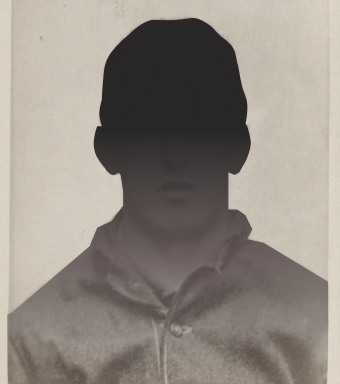
PHOTO of MARTIN HOGAN: Taken in 1866 while he was an inmate of Mounjoy Prison, Dublin, and labelled Image ID 1111434, the photo is available online at https://digitalcollections.nypl.org/items/510d47dc-975f-a3d9-e040-e00a18064a99 (see The New York Public Library Digital Collections, 1866).

The Great Australian Escape https://en.wikipedia.org/wiki/Catalpa_rescue Well documented ,published and promoted escape of the Militant Fenian band of convicts from Perth