
Summary
Personal Information
Voyage
Transportation
Martha Hughes was transported on the Wanstead, departing 31st Jul 1813 and arriving 9th Jan 1814 with 120 passengers.
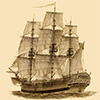 Wanstead (generic)
References
| Primary Source | Australian Joint Copying Project. Microfilm Roll 87, Class and Piece Number HO11/2, Page Number 106; Lancaster Gazette, Sat 20 March 1813 p.3; Prisoners' Letters to the Bank of England" edited by Deidre Palk; |
| Source Description | This record is one of the entries in the British convict transportation registers 1787-1867 database compiled by State Library of Queensland from British Home Office (HO) records which are available on microfilm as part of the Australian Joint Copying Pro |
| Original Source | Great Britain. Home Office |
| Compiled By | State Library of Queensland |
| Database Source | British convict transportation registers 1787-1867 database |
Claims
No one has claimed Martha Hughes yet.
Photos
No photos have been added for Martha Hughes.
Convict Notes

Colonial Secretary Index HUGHES, Martha. Per "Wanstead", 1814. 1814 Jan 13 On list of women prisoners from the "Wanstead" sent to Parramatta (Reel 6004; 4/3493 p.12) 1815 Jan 9 On list of prisoners to be sent to Newcastle per "Lady Nelson" (Reel 6004; 4/3493 pp.416-7) 1821 Mar 5 Re permission to marry in the Roman Catholic Church at Sydney (Reel 6007; 4/3503 p.152)

There were two women named Martha Hughes on board “Wanstead”. This one was a 34 yr old married woman tried at Lancaster Assizes for uttering forged notes. [The other one was only 17 yrs old, tried at the Old Bailey (Middlesex Gaol Delivery) for stealing jewelry from a shop]. Martha appeared to work with Elizabeth Dewhurst, tried also for uttering, at the same Lancaster Assizes commencing 20 March 1813. Both were found guilty, and sentenced to death, and both sailed a few months later on “Wanstead”, departing in August 1813, arriving in NSW in January 1814. Martha wrote in a letter before departure that she had five children who she was leaving behind. Elizabeth Dewhurst had prior form, having been acquitted during 1812 of a charge of uttering. It’s very likely that she and Martha were part of a network of forgers, the women being used to pass the notes at fairs and in shops. Lancaster Gazette, Sat 20 March 1813 p.3 “Lancaster Assizes “The Calendar of Prisoners who are to take their trials at our assizes, which commence this day, before the Hon. Baron Thomason and the Hon Justice Le Blanc, we are sorry to say, contains no less than seventy-three offenders, many of whom are charged with capital offences. They are as follows: “MARTHA HUGHES charged with having uttered to James Platt, at Salford, three forged 2 pound Bank of England notes “ELIZ. DEWHURST charged with having put off to James Platt, at Manchester, five forged notes. James Platt may have been grocer/druggist at Bolton-le-Moors in Lancaster, who was made bankrupt in March 1813 (London Gazette – Whitehall March 9 1813 – Bankrupts). Salford, where Martha was arrested is at Manchester. The assizes were at Lancaster. SEEKING HELP from THE BANK OF ENGLAND By the 9 July 1813, the women had been placed on board the “Wanstead”. This was the date of a letter Martha wrote from the ship as it was moored at Deptford, to the Bank of England seeking some financial assistance before she sailed. She claimed that no forged notes had been found on her. The Bank of England would provide a small amount of assistance to female prisoners who the bank had successfully prosecuted for forging or uttering. The women had to write to request this assistance. This was given because women often remained in the local gaol for a long time until they were transported, but also would face very hard times with no means of support, and frequently had children to support. Many in gaol were destitute. The letter under Martha’s name would have been written by someone else on her behalf. There re several other letters from “Wanstead” convicts written at Deptford which are almost identical in words and format. 631. [F25/11/20] "Martha Hughes, Wanstead transport ship, Deptford, 8 July 1813 Worthey Sir I have to inform you that I am now on board of the Ship Going to Botaney Bay and I have not trouble you yet so I hope your Goodness will be kind enough to think of me now I shall be humbly oblidge to you as I have 5 small Children to Leave behind me and myself very much distressed for Cloaths indeed I was taken at Manchester and tryed at Lancaster Likewise Last March assizes and not any thing of bad notes found on me so I hope your Goodness will not forget me I am Sir your Most Humble Servant Martha Hughes" [From "Prisoners' Letters to the Bank of England" edited by Deidre Palk] _________________________________________