
Summary
Personal Information
Crime
Voyage
Transportation
William Kettleband was transported on the Blundell, departing 13th Mar 1844 and arriving 12th Jul 1844 with 210 passengers.
 Blundell (generic)
References
| Primary Source | Australian Joint Copying Project. Microfilm Roll 91, Class and Piece Number HO11/14, Page Number 27 (15) |
| Source Description | This record is one of the entries in the British convict transportation registers 1787-1867 database compiled by State Library of Queensland from British Home Office (HO) records which are available on microfilm as part of the Australian Joint Copying Pro |
| Original Source | Great Britain. Home Office |
| Compiled By | State Library of Queensland |
| Database Source | British convict transportation registers 1787-1867 database |
Claims
No one has claimed William Kettleband yet.
Photos
No photos have been added for William Kettleband.
Convict Notes

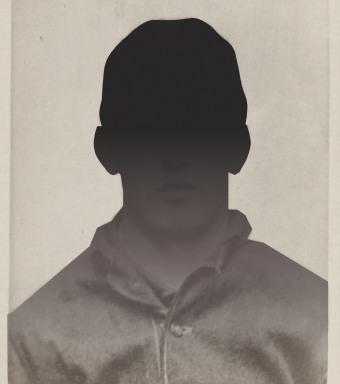
William Kettleband was 41 years old on arrival in VDL and was transported for the manslaughter of his 10 year old son. The Times, Saturday 3 June 1843 Wilful Murder On Friday, May 10, a lad named Isaac Kettleband, aged 10 years, son of William Kettleband, of Wysall, labourer, was missing. On the Tuesday following his body was found in a horse-pond, on the farm of Mr. Henry Hebb, situated near to a barn and a stable, at which the deceased and his father usually worked. An inquest was held on the body the same evening before Mr. C. Swann, coroner, and no evidence to the contrary being adduced, a verdict of “Accidentally drowned” was returned. On the same evening and during the next day, the village gossips, in talking the affair over, began to think it possible that foul play might have been used, as the father of the deceased was known to be a violent and passionate man, and it was notorious that he had always most shamefully and brutally maltreated the boy. Mr. Browne, of Wymeswold, surgeon, was sent for to examine the body, and he at once discovered that the neck was dislocated, and gave it as his most decided opinion that it was broken before the body reached the water. The pond in which deceased was found is about 10 ½ yards by 4, and a yard and a half or two yards deep in some parts; it is, except at one corner, surrounded by a dead fence, about 4 feet high, and is so situate that the boy could not possibly have broken his neck in falling in accidentally. These circumstances, connected with the anxiety the father exhibited to have the corpse interred before any surgical examination took place, excited such suspicions that the deceased had been unfairly “done to death,” that a second inquest was decreed indispensable. Accordingly a notice was sent to the coroner, and Kettleband was taken into custody. Mr. Swann consequently commenced a most rigid inquiry on Thursday, the 25th, which was at the close of the day adjourned until Monday last, the 29th. Mr. Hebb, in whose employ the deceased and his father were, has three farms – one at each of the villages of Wysall, Keyworth, and Stanton – and there is no residence on the farms at Wysall. The farm buildings are situate about a mile from the village, and stand the width of a very large field from the road; they consist of a barn and stables at right angles to each other, and the pond spoken of is not more than 25 or 30 yards distant. On Thursday a jury assembled at the Plough Inn, Wysall, before whom Mr. Swann commenced his inquiry, and a verdict was returned of “Wilful murder against some person or persons unknown.” The prisoner was then discharged out of custody.[5] William Kettleband was subsequently tried for his son's murder at the Winter Assizes, Midland Circuit, Nottingham on Tuesday 19 December 1843. Astonishingly, the jury acquitted him of the murder despite evidence that the boy had suffered much abuse at the hands of his father, and despite evidence that the father had clearly attempted to cover up the crime by riding horses through the pond in an effort to make it look as though the injuries had been caused by the horses. Instead, he was convicted of manslaughter and sentenced to penal transportation for life. William was 5’5” tall, Swarthy complexion, black hair and whiskers, dark eyes, scar on left leg from kick of a horse, scar from a broken jaw under right ear, can read and write. Married with 2 children. Probation: Sent to Norfolk Island for 4 years. 1847: Back to VDL 18/1854: TOL 18/10/1859: Recommended for a CP 24/4/1860: CP 1862: Was a stock rider in the Ouse district. 9/1/1894: William died at the Newtown Charitable Institution, aged 90, and died of senile debility. He was buried at the Cornelian Bay Cemetery, Pauper’s Section. Listed as William KETTLEMAN.