
Summary
Personal Information
Voyage
Transportation
Frederick Lahrbush was transported on the Mariner, departing 19th Jan 1827 and arriving 23rd May 1827 with 161 passengers.
The 1825 Journey. The ship Mariner, Captain Fotherley, arrived from Ireland with female prisoners, on Sunday evening. She left the Cove of Cork, the 12th of March, and brings 112 female prisoners, having lost only one on the passage. A few passengers also came per this opportunity. Surgeon Superintendent Dr. Cochrane, R. N. Sydney Gazette, 14 July 1825.
 Mariner (generic)
References
| Primary Source | Irish Convict Database, by Peter Mayberry. |
Claims
No one has claimed Frederick Lahrbush yet.
Photos
No photos have been added for Frederick Lahrbush.
Convict Notes

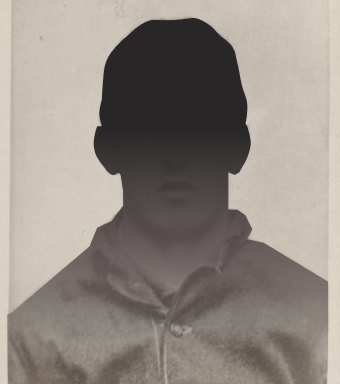
The most Remarkable Man Alive. THE Evening News of June 26th says:— In reference to an account published in this journal on the 24th instant, of the celebration in New York, on the 9th March last, of the 105 birthday of Captain Lahrbush, who states that he was formerly a colonist of New South Wales, and our expressed desire to be informed if any of our correspondents recollected such a man — we have received the following letter, which appears to confirm the venerable captain in the account he gives of his extraordinary age, and, as far as it goes, the truthfulness of the remarkable narrative of the adventures and vicissitudes of his eventful career. "Cottage Inn, O'Connell-street, "Parramatta, 26th June, 1871. "SIR,— I read in the Evening News of Saturday last, the celebration of the 105th birthday, of a Mr Lahrbush, who once resided at Bathurst, New South Wales. I beg to inform you, that forty years ago I lived at Bathurst, and knew a Mr Lahrbush quite well. I always understood that he once held a commission in the army, but whether in the British army or not, I am not sure. At the time I knew him, he was overseer in the lumber yard at Bathurst, I also knew him some years afterwards at Windsor. At the time I speak of, forty years ago, I should think he was over sixty years old, probably sixty-four or sixty-five. He was a thin man, and about five feet high. Shoalhaven News, 22 July 1871.
A MILITARY HERO AND A CENTENARIAN. (FROM THE NEW YORK HERALD.) A long and eventful life succumbed to the inevitable master when Captain Frederick Lahrbush breathed his last mortal breath yesterday afternoon, at the dwelling of his friend, Mr. M'Grath, No. 513, Third avenue, in this city. Captain Lahrbush was born on March 9, 1766, and consequently celebrated the one hundred and eleventh anniversary of his birthday only a few days ago, which event was noticed in the 'Herald' at the time. Captain Lahrbush contracted his fatal illness about two months ago, when he went out one raw and bitter morning for the purpose of making a call on Mrs. A. T. Stewart. He was urged not to go, but replied that he had not seen Mrs. Stewart since the death of her husband, and declined to be prevailed upon to forego his intent. On his return from that visit he was stricken down with illness that caused him to take to his bed, from which he never rose again. During his recent sickness he appreciated his critical condition, and had expressed himself as being aware that the tide of his long existence had at last reached the last of its ebb. He seemed loth to leave the earth that had borne him for such a length of time, and in which he had been a witness to the fluctuations in the fortunes of men and nations. Up to a few years ago the anniversary of the birthday of this remarkable centenarian was celebrated by a dinner party, given in his honour by General Jno. Watts de Peyster, and which was usually attended by a large number of distinguished people. The most prominent men of New York, Thurlow Weed, A. T. Stewart, and many others, have taken pleasure in doing him honour, and it has been stated that he has received for a long time a pension from a wealthy citizen, interested in his extraordinary history. While living on the second floor of a plain brick house on Third avenue, near Twenty-fourth-street, he would very often breakfast at the residences of some of his wealthy friends on Fifth avenue, who always delighted in hearing him recount the interesting episodes of his chequered career, touching the members of a generation who had been sleeping their last sleep for half a century. Some doubts have been raised as to Captain Lahrbush's veracity concerning his age, but nearly all the prominent men who have investigated the matter and made enquiries at the British war office proclaim their faith in his claim to have been one of the oldest men in the world. It is no easy task, even for one who has read a sketch of Lahrbush's life, and who is familiar with the date of his birth, to realise the matter-of-fact significance of his wondrous age. Is it not difficult to realise that this man was born three years before Napoleon I., who has been dead these fifty-six years; that at his birth Louis XV. ruled in long-suffering France ; that Maria Theresa and Frederick the Great swayed the sceptres of Austria and Prussia, and William Pitt was only a boy of seven, and that Madame de Stael was born in the same year. We may think of these things by an effort of memory, but who can call that time vividly before the mind and associate it with the life of one who, a few weeks ago, took his meals regularly, and might be seen riding down town in a Third avenue car any fine day, a hale and hearty old man? The dim and faded historical past seemed to spring into life and flesh in the presence of this living remnant of an epoch long, long gone by. It seems almost impossible to believe that this man was a friend of Blucher, knew Marshal Key, Eugene, Yictor, and Lefevre; that he fought under Sir Arthur Wellesley in the Peninsular war, and kept guard at Napoleon's prison on St. Helena sixty long eventful years ago. His strange history would fill a thrilling chapter of romance. Entering the British army at an early age, fighting against Napoleon's heroes during the most memorable years of the eighteenth and nineteenth centuries, retiring finally at fifty-two from active service, and marrying the wife of his bosom, then suffering shipwreck and losing both wife and fortune—the latter the savings of a whole life—and finally living to be revered by the members of a generation who looked upon him as some monumental robe of antiquity. Surely this is no ordinary career, and it becomes even more astonishing when the perilous scenes through which he passed unharmed are remembered. It almost seems as though he bore a charmed life, and as though a special Providence had watched over him in order to preserve him to us as one of the greatest centenarians of the age. The Armidale Express, 29 June 1877.
Court Martial.—At a General Court Martial held at the Cape of Hope, the 26th of January, and continued adjournments to the 4th of February following, Lieut. F. Lahrbusch, the Ist Battalion the 60th Regiment, was arraigned, for having obtained goods on credit, at the public vendues, and from several Merchants in Cape Town to an amount beyond any means he had, or was in expectation of having, to defray such purchases ; and also defrauding, divers persons in Cape Town in having obtained goods credit, stated in the first Charge, and immediately after disposing of the same below their Value, and applying the proceeds to Iris own use. Of which charges the Court were of opinion that Guilty, and did sentence him to be Cashiered. The Prince Regent has been pleased to approve the sentence of the Court, and the Commander-in-Chief directs that the foregoing charges, together with the sentence, be entered in the General Order Book, and read at the head of every Regiment in his Majesty's service. Public Ledger, 25 July 1818.
War Office Records: Register of Courts Martial. Lieut. Lahrbusch, 1st BN 60th Regt. Tried at Cape of Good Hope, 26 Jan 1818. Proceedings laid before the Prince Regent. 28 May 1818. Offence: Swindling in various ways. Sentence: Cashiered.
Authenticating a Lock of Napoleon’s Hair.- The Bizarre and Dubious Career of Frederick Lahrbush. By David Andrew Robert and Kathleen Roussac. This paper looks at his claim to have a lock of Napoleon’s hair, examining his personal history and the possibility of his having a lock of Napoleon’s hair. Personal history as set out in the above paper: It seemed Frederick Lahrbush was in the Prussian army, and he claimed he was badly wounded in 186 at the Battle of Jena. He defected to the British army and was ordered into the 5/60th not long before the Battle of Busaco in 1810. Soon after the battle of Salmanca, he was ordered to the Cape Colony and served there in the army in South Africa until 1818. In February 1818, he was court martialled for fraud, for swindling merchants at Cape Town, and was cashiered on 28 Sept 1818. He married a 15 year old Capetown girl, Maria Wanneburg in 1824, but had many debts. He forged a £25 note, for which he was tried and sentenced to be transported for 14 years. On arrival in New South Wales, he was sent to Wellington Valley, but after a year, was ordered to return to Sydney to give evidence at the trial of an overseer, who had shot an Aboriginal girl on the Wellington settlement. He remained some time in Sydney before being sent back to Wellington Valley in 1830. He eventually received his Certificate of Freedom on 1840, and disappeared from the Colony. He arrived in New York in 1848, and gained a reputation as an eccentric war hero. He was perhaps delusional and prone to exaggeration. He died on 4 April 1877, in New York, allegedly 111 years old. Cemetery records and his obituary maintained he was an Englishman and a centenarian.
Irish Convict Database, by Peter Mayberry. Frederick Lahrbush, alias Lehrbush, Lehrbuch, age on arrival, 51, per Mariner (3) 1827, Tried Cape of Good Hope, South Africa, 1826, 14 years for Forgery. DOB, 1776, Native place, Berlin Germany. Married. Soldier army officer. Religion, Lutheran.