
Summary
Personal Information
Voyage
Transportation
Edward Levers was transported on the St Vincent, departing 28th Dec 1852 and arriving 26th May 1853 with 214 passengers.
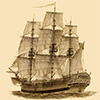 St Vincent (generic)
References
| Primary Source | Australian Joint Copying Project. Microfilm Roll 92, Class and Piece Number HO11/17, Page Number 620. --0-- Roscoe, Katy (2018), “Convicts and the Sea: the naval influence on Gibraltar Convict Establishment” at https://staffblogs.le.ac.uk/. --0-- Cornwall, England, Bodmin Gaol Records, 1821-1899 |
| Source Description | This record is one of the entries in the British convict transportation registers 1787-1867 database compiled by State Library of Queensland from British Home Office (HO) records which are available on microfilm as part of the Australian Joint Copying Pro |
| Original Source | Great Britain. Home Office |
| Compiled By | State Library of Queensland |
| Database Source | British convict transportation registers 1787-1867 database |
Claims
No one has claimed Edward Levers yet.
Photos
No photos have been added for Edward Levers.
Convict Notes

OTHER: 13 December, 1853: He was granted a Ticket of Leave. 17 December, 1853: “TICKETS - OF - LEAVE GRANTED — William Ash, St. Vincent… Edward Levers, ditto…” (Cornwall Chronicle, p8, at https://trove.nla.gov.au/newspaper/article/65712224). -- 1 September, 1857: ToL revoked. He was listed as “absent” (https://stors.tas.gov.au/CON33-1-115$init=CON33-1-115p117). --00--
IN VDL: 26 May, 1853: On arrival in VDL, Edward Levers, convict #27961, was listed as a farm labourer; 25 years old, 5’4” tall with black hair, brown eyes and a dark complexion. He was single, Protestant and literate. Native place: Bodmin. He said he had been transported for “stealing a mare”, prosecutor at Truro; first conviction. Gibraltar report – “very good” (https://stors.tas.gov.au/CON33-1-115$init=CON33-1-115p117). Family: Father Edmund; brother William; and sister Jane – all at Bodmin (http://foundersandsurvivors.org/pubsearch/convict/chain/ai42397). --0--
On Gibraltar, EDWARD LEVERS was described as 21 years old, sentenced to 9 years for stealing a bay mare; first conviction; born at Whitbridge (Wadebridge), Cornwall; Church of England; dark brown hair, blue eyes and a fair complexion, 5’4¾” tall; semi-literate; labourer; single; relatives/family – parents at Whitbridge (UK, Prison Commission Records, 1770-1951; Misc.; Register of Prisoners; 1810-1822 [mislabelled]). -- 3 February, 1853: He was sent aboard the St Vincent for transportation to VDL. --00--
Gibraltar and Bermuda were listed public works stations (and the second stage in the penal process). On Gibraltar, as “convicts worked together with free men on the dockyards, lines between them became blurred. Convicts, like seamen, were ‘easily recognised’ by ‘their swarthy, weather beaten complexions…[and] muscular well-knit frames’. The discipline on the penal settlement was also influenced by the naval department, who superintended part of the works. In the 1840s, for example, convicts were provided ‘a half gill of rum’ at 11am and 5pm, which they drank from a trough. This mirrored the daily allowance of diluted rum, known as grog, to Royal Naval seamen in the Victorian era. Convicts were also allowed to use part of their earnings, to buy goods, usually tobacco, which they were allowed to smoke in the evening in the barracks. Though official correspondence cited health reasons for grog allowance, it seems likely that the convict authorities feared insubordination if they were banned from drinking and smoking, which were provided to the sappers and dockyard workers whom they worked alongside… In 1854, the acting overseer stated that “half of the offences were committed when the men were excited by rum”. For more serious offences, convicts were flogged with a ‘cat o’nine tails’ whip against the ‘flogging mast’, and during an investigation Dr William Baly concluded that the whip which was used was an old naval cat, which was ‘much heavier than any now used in the government prison and hulks at home, or in the army.’” (Roscoe, Katy (2018), “Convicts and the Sea: the naval influence on Gibraltar Convict Establishment” at https://staffblogs.le.ac.uk/). --
TO GIBRALTAR: 7 November, 1849: LEVERS, Edward, #1374, arrived on Gibraltar from England per Hercules. He was held on the Europa hulk (UK, Prison Commission Records, 1770-1951; Misc.; Register of Prisoners; 1810-1822 [mislabelled]). --
JAIL: Name: Edward Levers Age: 21 Marital Status: Single Occupation: Husbandman Birth Year: abt 1828 Abode or Birth Place: Bodmin, late Wadebridge, Cornwall Discharged Date: 1849 Prison: Bodmin Gaol Notes: * Transported 9 years Registration Number: 9116 Volume Number: AD 1676/4/3 (Cornwall, England, Bodmin Gaol Records, 1821-1899). --00--
NEWSPAPER REPORT OF TRIAL: 30 March, 1849: “Cornwall Lent Assizes… Horse stealing: Edward Levers, 21, convicted of stealing a bay mare from James Randall the elder, of Lanlivery, was sentenced to nine years' transportation.” (Exeter and Plymouth Gazette, p4; Royal Cornwall Gazette, p5 at https://www.britishnewspaperarchive.co.uk/) --00--
TRIAL: 26 March, 1849: EDWARD LEVERS was tried and convicted at the County Assizes, Bodmin, and sentenced to 9 years’ transportation for horse stealing [stealing a bay mare from Mr Stocks at Truro] (England & Wales, Criminal Registers, 1791-1892 for Edward Levers; England; Cornwall; 1849; and http://foundersandsurvivors.org/pubsearch/convict/chain/ai42397). --00—