
Summary
Personal Information
Voyage
Transportation
John Levers was transported on the St Vincent, departing 28th Dec 1852 and arriving 26th May 1853 with 214 passengers.
 St Vincent (generic)
References
| Primary Source | Australian Joint Copying Project. Microfilm Roll 92, Class and Piece Number HO11/17, Page Number 617 (311). --00-- London, England, Newgate Calendar of Prisoners, 1785-1853; Piece 54: 1847. --0-- Roscoe, Katy (2018), “Convicts and the Sea: the naval influence on Gibraltar Convict Establishment” at https://staffblogs.le.ac.uk/ |
| Source Description | This record is one of the entries in the British convict transportation registers 1787-1867 database compiled by State Library of Queensland from British Home Office (HO) records which are available on microfilm as part of the Australian Joint Copying Pro |
| Original Source | Great Britain. Home Office |
| Compiled By | State Library of Queensland |
| Database Source | British convict transportation registers 1787-1867 database |
Claims
No one has claimed John Levers yet.
Photos
No photos have been added for John Levers.
Convict Notes

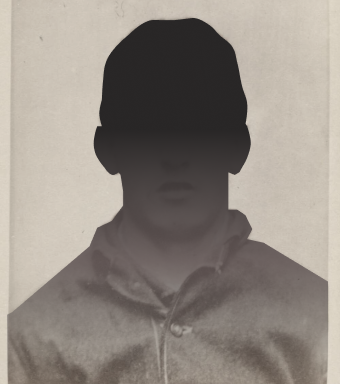
Return of Person convicted to the H M Gaols, Hobart & Launceston, week ending 20 Jan 1872. John Lever's (Levers) alias Johnston alias Peg Leg, per St Vincent, F.S., tried at George Town, for larceny, received 3 months, native place is Manchester, age 39 yrs, 5 feet 7 inches high, prior conviction Mar 1865, resides at Launceston. Tasmania Police Gazette, 26th Jan 1872, p15. Prisoner discharged from Gaol, week ending 20 & 24 April 1872. From George Town, John Levers alias Johnston alias Peg Leg, per St Vincent, F.S., tried at George Town, for larceny, served 3 months, native place is London, age 39 yrs, 5 feet 7 1/2 inches high, light brown hair, lost left leg, J.R.L. anchor and wreath round, half moon & stars right arm. Tasmania Police Gazette, 26th Apr 1872, p71.

A later notation says he was again convicted, and gives a partly legible reference number … Misc 10/6527? (https://stors.tas.gov.au/CON33-1-115$init=CON33-1-115p115). --0-- COLONIAL TRIAL & SENTENCE: 9 March & 22 March, 1867: In the Recorder’s Court at Launceston, John Lever [sic] was convicted on his own confession of larceny [stealing a cheque for £5] and sentenced to 2 years’ imprisonment (Cornwall Chronicle, 23 March, p3, at https://trove.nla.gov.au/newspaper/article/72184081). -- From the Prosecutions Project: Name: Lever, John Record Type: Court Status: Free by servitude Trial date: 9 Mar 1867 Place of trial: Launceston Offense: Stealing from the person Verdict: Guilty Prosecutions Project ID: 109943 Record ID: NAME_INDEXES:1523164 Resource: AB693-1-1 1867 (https://stors.tas.gov.au/AB693-1-1$init=AB693-1-1_083). --00--
OTHER: 28 March, 1854: He was granted a Ticket of Leave. 29 March, 1862: Convicted at Launceston and sentenced to 6 months’ hard labour for stealing 7/6. --
TO VDL: 26 May, 1853: On arrival in VDL, John Levers, convict #27959, was listed as a farm labourer; 25 years old, 5’6” tall with dark brown hair, brown eyes and a fresh complexion. He was single, Protestant and literate. Native place: Manchester. He said he had been transported for “stealing money”, prosecutor at Kensington; prior conviction for stealing, 2 months’ jail.Gibraltar report – “good” (https://stors.tas.gov.au/CON33-1-115$init=CON33-1-115p115). Family: Father John at Knightsbridge. (http://foundersandsurvivors.org/pubsearch/convict/chain/om8228). --0--
3 February, 1853: He was sent aboard the St Vincent for transportation to VDL. --00--
On Gibraltar, JOHN LEVERS was described as 20 years old, sentenced to 10 years for burglary, before convicted of felony; born at Manchester; Church of England; light brown hair, hazel eyes and a fair complexion, 5’6” tall; semi-literate; labourer; single; relatives/family – friends at Knightsbridge, London (UK, Prison Commission Records, 1770-1951; Misc.; Register of Prisoners; 1810-1822 [mislabelled]). --
Gibraltar and Bermuda were listed public works stations (and the second stage in the penal process). On Gibraltar, as “convicts worked together with free men on the dockyards, lines between them became blurred. Convicts, like seamen, were ‘easily recognised’ by ‘their swarthy, weather beaten complexions…[and] muscular well-knit frames’. The discipline on the penal settlement was also influenced by the naval department, who superintended part of the works. In the 1840s, for example, convicts were provided ‘a half gill of rum’ at 11am and 5pm, which they drank from a trough. This mirrored the daily allowance of diluted rum, known as grog, to Royal Naval seamen in the Victorian era. Convicts were also allowed to use part of their earnings, to buy goods, usually tobacco, which they were allowed to smoke in the evening in the barracks. Though official correspondence cited health reasons for grog allowance, it seems likely that the convict authorities feared insubordination if they were banned from drinking and smoking, which were provided to the sappers and dockyard workers whom they worked alongside… In 1854, the acting overseer stated that “half of the offences were committed when the men were excited by rum”. For more serious offences, convicts were flogged with a ‘cat o’nine tails’ whip against the ‘flogging mast’, and during an investigation Dr William Baly concluded that the whip which was used was an old naval cat, which was ‘much heavier than any now used in the government prison and hulks at home, or in the army.’” (Roscoe, Katy (2018), “Convicts and the Sea: the naval influence on Gibraltar Convict Establishment” at https://staffblogs.le.ac.uk/). --
TO GIBRALTAR: 24 July, 1848: LEVERS, JOHN #1214, arrived on Gibraltar from England per Enterpe. Held on the Europa hulk (UK, Prison Commission Records, 1770-1951; Misc.; Register of Prisoners; 1810-1822 [mislabelled]). --
October, 1847: He was held at Millbank prison, Pimlico, London. The Millbank Prison Act 1843 converted the penitentiary into a prison – “to serve as a depot for receiving newly convicted felons before dispatching them to other convict prisons, hulks or transport ships to serve their sentences.” In 1849, Millbank began to be used for male convicts “serving the first (probationary) part of their sentence in separate confinement as well as for those who were in need of another period of separate confinement after misbehaviour at public works prisons (i.e. penal class).” (https://www.prisonhistory.org/prison/millbank-prison/). --00--
JAIL: NAME: John Levers AGE: 20 BIRTH DATE: 1827 ARREST PLACE: Middlesex TRIAL OR COMMITTAL DATE: 30 Oct 1847, before Justice Creswell [Committal 20 Oct by T Paynter, Esq.] TRIAL OR COMMITTAL PLACE: London, London, England JAIL: Newgate CHARGE: Housebreaking SENTENCE: Transported OCCUPATION: Labourer (London, England, Newgate Calendar of Prisoners, 1785-1853 for John Levers; Piece 54: 1847). --00--