
Summary
Personal Information
Transportation
Patrick Lysaght was transported on the Mangles, departing 21st Jun 1822 and arriving 8th Nov 1822 with 190 passengers.
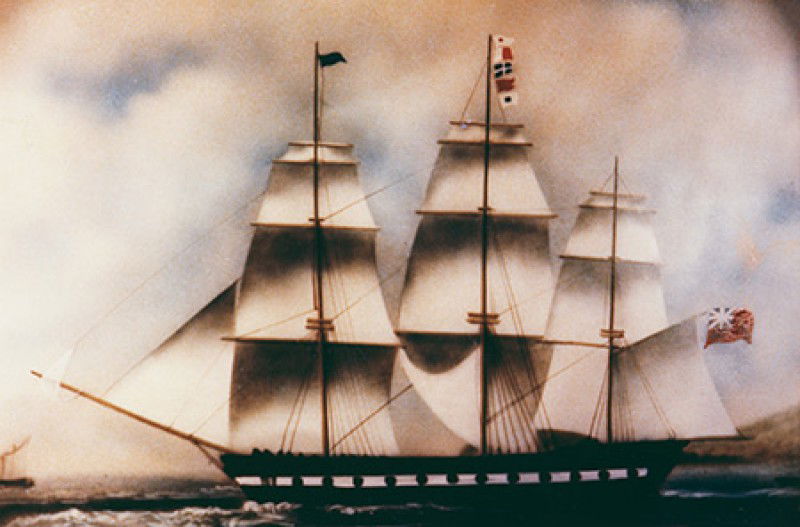 Mangles
References
| Primary Source | Irish Convict Database, by Peter Mayberry. SRNSW ref:, Convict Indents Ship source: Mangles, Year: 1822; Vol. number 4/4008, Entry no: 180 Freemans Journal (Ireland), 12 March 1822, p.3 - Leinster Journal, 16 March 1822, page 1. - NSW Colonial Secretary’s papers, 1825 |
Claims
No one has claimed Patrick Lysaght yet.
Photos
No photos have been added for Patrick Lysaght.
Convict Notes

DETAILS OF PATRICK LYSAUGHT VIEWS When Patrick was found out after 9pm in Shanagolden, he was lodged in the guardhouse n. Evidence was given at his trial by a soldier stationed at Shanagolden and who was then in the Guardhouse, of things that Patrick Lysaught said to another prisoner lodged there at the time. A serjeant of the same regiment also overheard Patrick speaking The details were laid out in the trial report in the Leinster Journal, 16 March 1822, page 1 His words indicated strongly that he was a member of the Rockite agrarian militant movement - in his referring to Captain Rock and Lady Rock. Captain Rock was a mythical concept, an avenger of agrarian wrongs. The court did not get to the bottom of why Patrick was out at the hour he was, but it considered that the expressions he used were “indicative of a bad person” and did nothing to recommend him as a person “laudably engaged”. The things he said were: That the other person ought not to have paid any rent and that in doing so he did wrong, to which the other replied that he would pay to the last Farthing as long as he was able. The prisoner then said that he did wrong, for that Lady Rock (who is now the heroine of insurrection, her rebel spouse having gone on a cruise to another country, Lady Rock is all the ton now) would not allow any rent to be paid. He also said that the cutting of the wood at Old Abbey was right, for the owner of it was a robber. That burning the corn at Foyne’s was a good act and would prevent holding it up and would be a warning; that Mr James Curtin, who had got soldiers into his house lately, had better take care for he would not always have them (Mr Curtin had lately been attacked). that ‘Big-headed O’Brien’, the farmer, was turned out of his farm for a matter which occurred 44 years back, [i.e. 1778] and that the Whiteboys now took satisfaction. He further observed that no one should be allowed to hold more than one farm; to which witness said that it is reasonable, but not lawful; when prisoner replied, it is Captain Rock’s orders. when interrogated why the Whiteboys flog people, “Oh! It is better to shoot than flog them, for they never tell stories,” and that Captain Rock was to have all his men in Macroom on 17th March. Lady Rock is now acting in this county, the captain not being there at present himself.
Patrick Lysaght, aged 23, occupation: ploughman; was 5ft 8 &1/2 inches tall, with dark hair, hazel eyes, born at Co. Limerick (from ship’s Indent) and was tried at a Special Session at Rathkeale in Co Limerick in March 1822. In an 1824 petition in NSW while he was still a convict, he said his father was a respectable farmer, and he wished to re-join both his parents who were still alive in Ireland. Special Sessions were held solely to try prisoners under the Insurrection Act of 1820. The Insurrection Act could be proclaimed to be in force in a County where the local Justices of the Peace considered their County to be in a state of disturbance, or in danger of becoming so. ‘Disturbance’ covered such activities of the local people as swearing false oaths, threatening evictions, attacking homes (“assaulting habitations”), attacking stock such as houghing cattle, holding night meetings of secret societies which planned and ordered these activities, etc. “Patrick Lysaght, for having been found out after the time prescribed by the Act, in Shanagolden on the first of March. – Guilty.” – Freemans Journal (Ireland), 12 March 1822, p.3 In NSW: OVERVIEW - Lysaght showed he had ‘get up and go’. Eighteen months after arrival in NSW he petitioned the Governor for a pardon, even though 7-year termers were not given pardons. After being knocked back, he followed up by organising the support of two local Gentlemen for a petition for a Ticket of Leave, which he was granted after writing another follow-up to his request. After his 7 year term expired, he was free in 1829 and married Johanna Elliott, daughter of a Limerick born Irishman (Edmund Elliott) transported under the Insurrection Act for administering false oaths. Next, he acquired a 60 acre lot at Fairy Meadow near Wollongong. His potential was cut short however in 1836, when he was aboard a boat taking farming products to Sydney disappeared with all 17 people on board. He left a young family of four children (3 girls, one boy). His son Andrew, and his future grandson, Andrew jnr, would go on to become pillars of the Wollongong and Illawarra community. DOCUMENTRAY RECORDS: • On list of convicts mustered in the service of Robert Crawford from 1823-25. He remained with Crawford for the whole seven years of his sentence, although in June 1825 he’d written another letter to the Governor asking to be transferred from Crawford’s private service into a government position – he was refused. Another convict from the same ship ‘Mangles’, one of the John Collins on board, who’d been tried at Tipperary, was also in Robert Crawford’s service with Patrick – per Nov 1825 letter from Crawford to the Col Sec listing the 34 convicts assigned to him. The letter states that John Collins died by suicide during this time, an event which must have affected his ex-shipmate Patrick Lysaght. • Robert Crawford arrived in 1821 as a 22 year old who’d not yet completed his solicitor’s articles, travelling on the ship with the new Governor, Sir Thomas Brisbane, as a friend of Brisbane’s family, because Crawford’s father, Hugh, was Brisbane’s solicitor in Glasgow. Through this patronage, Rob’t Crawford very quickly received two land grants – one of 200 acres at the Cowpastures, and one of 800 acres at Prospect. He named the Prospect land ‘Hillend’ after his family home & property on the banks of the Clyde, at Glasgow. In the 1822 Muster he had 25 convicts assigned to him, 23 were clearing the Prospect land. This is where Patrick Lysaght was sent. Crawford also had 200 acres at the CowPastures. Crawford did not live at either property, but was early appointed Principal Clerk to the Colonial Secretary (Robert Campbell) and lived in Sydney, building “ClydeBank” House in 1825 at Cockle Bay, which still stands. See ‘Australiana’ Vol 24, no 4. Nov 2002 at p.100 ‘Clyde Bank’ by John Hawkins). (Also, Pictorial History, Blacktown and District. Alan Sharpe, 2000) PETITIONS FOR PARDON and a TICKET OF LEAVE Aug 1824 – Patrck Lysaght Petition for pardon. In this petition, written by an educated person with knowledge of bureaucratic language, and lovely flowing writing - “is the son of a respectable farmer in Ireland … the crime for which he was transported is well known to your Excellency, namely for being out after hours for which he was tried and convicted under the white boy act … that the whole circumstances of the petitioners unfortunate case having been fully detailed to your Excellency by the honourable H G Bennet, in a letter from that statesman on behalf of your petitioner … has been with one master since his arrival and has never been brought before a magistrate for any impropriety of conduct … That he has left a father and mother behind and being anxious to join them again impose your Excellency to granting [my] pardon, and in duty bound your petitioner will every Pray – Patrick “Lycete” 1 Sept 1824 – Colonial Secretary saying in reply to his letter to the Governor “it would be contrary to practice to grant you a pardon.” • Convict Muster of Sept 1825 – Convict, 7 yrs, Residing at Parramatta as Government Servant to Robert Crawford. • 1825 Petition for a ticket of Leave, saying he has been a servant of Robert Crawford ever since his arrival and hopes from his good conduct and “some recommendatory letters Your Excellency received on [his] behalf …from Sir Henry Grey Bennet” that he will be granted a T’L. Robert Crawford supported this in consequence of Lycett’s “uniformly good conduct” since his arrival. Testimony by Crawford as to Lysaght’s character for a ticket of leave. NOTE: Henry Grey Bennet lived in England where he was the Member for Shrewsbury. He was known to take part “in all the discussions in parliament, particularly on the criminal code, and the green bag question. His humanity has led him to visit prisons and to relieve the oppressed ; his ear is ever open to a tale of distress.” (The Sydney Gaette, 2 June 1825, p .4 ‘Biography’). Patrick’s parents must have written to seek support of Bennett to write a letter in his cause to the Governor of NSW. • Letter 28 May 1825 – A follow-up letter seeking consideration of his case was written out by someone else who had a lesser grasp of written grammar and uncertain, shaky handwriting – possibly written by Patrick himself, or by a fellow convict: “To his Excellency “I am Paddy Lycett and Your Excellency has some letters on my behalf and good ones [xxx] I am still with the same master. Still he is very good to me but he will not give me a Pass to see Your Honour again. I have never been before a magistrate at all and all you promised that if I behaved well that you do something for me. I hope that you will be as good as your word forever your humble servant. Paddy Lycet, 28 May 1825, Ship Mangles” • In 1825 he wrote to the Governor again, this time wanting employment with the government and not with Crawford. The Col Secretary, F Goulburn, writes in reply: “ … the governor is not aware that any government situation is vacant that is likely to suit you.” • 1825, 3 November – granted Ticket of Leave Number: 25/0545; Allowed to remain in the District of Prospect. • 1828 Census, Patrick Lysaght, age 28, 7 yrs per Mangles, Roman Catholic, Ticket of Leave. Employed as a labourer. He is resident as the householder at Pitt Street, Sydney. • 1829 – Received a Certificate of Freedom. On this was noted that he “had a TL 545/2019 dated 3 Nov 1825, of which he was lately deprived by the Sydney Bench”. Paddy must have done something to incur their ire. FARMING AND FAMILY from 1829 - 1836 1829 or 1830 - Patrick Lysaght Married Johanna Elliot/Eliot who arrived free aged 18 per ‘City of Edinburgh’ under the family reunion program, with her mother and one brother, Edward jnr, aged 13. Her second brother Alexander Elliott, arrived 1829, free on ‘Eliza II’. They travelled with wives and children of convicts. Her father was convict Edward Elliott who’d been a dancing master in Ireland (https://www.historicaldance.au/edward-elliott/) Patrick established his family at the Illawarra and bought 60 acres of land at Fairy Meadow from Thomas Martin. Patrick’s claim to the Deed of Grant for that land was approved by the Commissioners of Claims to Grants of Land in late 1835/early 1836 (Sydney Herald, 7 January 1836, p.30. Note this process may have taken some time and he was probably already on the land when he had a convict assigned to him in 1833. In 1833, received an English convict laborer– Thomas Kendrick, per ‘Hadlow’ in 1818 –at the Illawarra. Kendrick had been a convict for 15 years (arr. Aged 18) when assigned to Paddy. Kendrick eventually got a Ticket of leave in 1841 to remain in the Illawarra area. Patrick and Johanna had four children: (1) Baptised 1830, Ellen Licett, Birth Registration No 1649/1830; V18301649 125. Died aged 18 in Nov 1848, of scarlatina (SMH, 2 Nov 1848) (2) Baptised 1831, Jane Licett, Birth Registration No 2128/1831; V18312128 127. Married 28 Feb 1859 to John Larkin of Bong Bong. Her father was already deceased. (Illawarra Mercury, 3 March 1859, p.3) (3) Born 1833, 27 Oct, at Fairy Meadow Andrew Licett. Baptised at ILLAWARRA (Roman Catholic) on 11 Feb 1834, with sponsors James Condon and Mary Condon (nee Murphy). Baptism registration Number - 346/1833; V1833346 129 Death 3 Sept 1906, Andrew Lysaght aged 73 at residence at Fairy Meadow, near Wollongong, son of Patrick & Johanna Lysaght. (4) born 1835, 28 Oct Mary Lycett. Baptised at Wollongong (Roman Catholic) on 11 Nov 1835, Sponsors Thomas Dillon & Ann Smith. Baptism registration Number - 668/1835; V1835668 129. Married William Richardson, Died DEATH and AFTERWARDS Patrick died in 1836 when the “Black Swan” ship sailing to Sydney from Wollongong went down. See 'The History of Illawarra and its Pioneers" by Frank McCaffery. His wife Johanna was left to raise four children under the age of six. However, her own family had established themselves in the Illawarra and her two brothers, Andrew and Edward Elliott, were publicans there. Her father died in 1838 but her mother lived until 1858, and so would have helped johanna raise her children. Convict Patrick’s son, Andrew, lived at the father’s Fairy Meadow property, being engaged as a hotel keeper there (Lysaght’s Fairy Meadow Inn), and later at the Queen’s Hotel in Wollongong. He became a staunch pillar of the Wollongong community AND was also a representative in the NSW parliament. He was involved in the local horse races, often as one of the stewards or judges, and acquired the Queen’s Hotel in Wollongong. Andrew represented Illawarra in the NSW Legislative Assembly in 1885-87 and in 1891. He’d married in 1860 to an Irishwoman – also named Johanna (Carroll) like his mother, and had seven children. Two daughters became nuns. Patrick’s grandson, Andrew Augustus Lysaght, born 1873, became a barrister and represented miners at the Royal Commission into the 1902 Mt Kembla Colliery Disaster. He became a Labor Party politician and, just over 100 years after his grandfather was transported to Australia for politically-related agrarian activity, Andrew jnr was elected to the NSW parliament representing Wollondilly. He later became Attorney General under J T Lang. For detail of Andrew Lysaght and Andrew Jun, see Australian Dictionary of Biography.
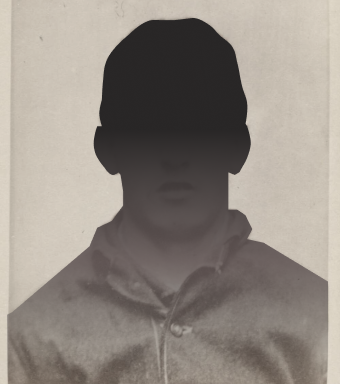
Irish Convict Database, by Peter Mayberry. Patrick Lysaght, age on arrival, 23, per Mangles (2) 1822, Tried at Limerick Co., 1822, 7 years. DOB, 1799, Native place, Limerick Co. Trade, Ploughman.