Summary
Personal Information
Crime
Voyage
Transportation
Mary Mccue was transported on the Margaret, departing 24th Jan 1837 and arriving 30th May 1837 with 39 passengers.
Built 1829 at Chepstow. 365 tons. Female prisoners were transported to New South Wales on the 'Margaret' in 1837, 1839 and 1840. The 'Margaret' was the last convict ship to transport female prisoners to New South Wales. Another voyage to Van Diemen's Land in 1843. The 1840 sailing also carried 17 free female passengers and one male. The registers of persons is not yet complete on this web site, so please note this if researching. (A work in progress.)
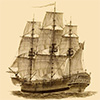 Margaret (generic)
References
| Primary Source | Convict Indents & Ship Musters, 1832, 1834, 1835, 1836, 1837 |
Claims
No one has claimed Mary Mccue yet.
Photos
No photos have been added for Mary Mccue.
Convict Notes
COF 44/1055; Dated 12 Jul 1844
the voyage of "MARGARET" The Margaret was the next convict ship to leave Ireland after the departure of the St. Vincent in September 1836. The Margaret departed Cork on 24th January 1837 bringing 153 female prisoners, 28 children and 35 free women and children, the families of convicts in the Colony of New South Wales. Henry Kelsall kept a Medical Journal from 10 November 1836 to 10 June 1837 His previous voyage as surgeon on the Andromeda in 1834 which also brought female prisoners from Ireland, was a very different experience to this voyage of the Margaret. The women of the Andromeda were embarked in a clean condition and were healthy and in good spirits for most of the voyage. In contrast the prisoners of the Margaret disgusted him by their offensive habits and reluctance to keep clean. His antipathy towards the women was evident from the time they were first embarked. He remarked in his journal that the women were all sent on board in a very filthy state from the Cork Penitentiary - with a small supply of spare clothing (linen). A great number were infected with psora as well as with influenza which was prevalent at the time in England and Ireland. A number of the crew were also affected. Bilious fever became a problem when the ship reached the warmer climate. The surgeon also mentioned that most of the convicts if permitted passed the whole of the day in bed and collected all kinds of rubbish about them. He was appalled with another filthy habit of the convicts which he found difficult to stop - that of washing their linen in putrid urine which they would hang up to dry in the prison. Two convicts and five of their children died on the voyage out. He was no less scathing of the Irish free women and children of which he thought there were too many in the ship. He found them incorrigibly and almost incredibly filthy. Most of these people were embarked in rags without a change of clothes of any description; and loaded with vermin - some of them mendicants by profession. The Margaret arrived in Port Jackson on 30 May 1837 and the women were landed at the Dockyard on 10th June 1837. Passengers Mr Benson, Paymaster of the 28th Regiment, Mrs. Benson and Thomas Benson; also twenty-five emigrants in the steerage. Mary Tobin aged 24, a free girl, was employed as servant to Mrs. Benson.
1844 applied for permission to marry Thomas Harding; Age: 48 years Arrived per ship: Camden (1); Sentence: 7 years; Current Status: Free; Clergyman: Rusden; East Maitland; - marriage did not go ahead He married Catherine McCoull in 1844.
Mary McUe, Arr Margaret 30 May 1837 Sydney NSW; Age: 25 years; Education: None; Religion: Roman Catholic; Single; Born at County Cork [COR IRL]; Employment: Country servant; Trial Crime: Stealing bills, Trial Court: Limerick City, Jul 1836,Sentence 7 years; Previous convictions: None- Height 5' 5" Complexion: Dark and pockpitted; Hair: Brown; Eyes: Dark hazel; 1842 TOL 42/2710 Allowed to remain in the District of Maitland; 29 NOV 1843 Nov moved to female factory Colonial Secretary Index of Letters to Sheriff