
Summary
Personal Information
Voyage
Transportation
Eliza Matenot was transported on the Woodbridge, departing 20th Aug 1843 and arriving 25th Dec 1843 with 205 passengers.
 Woodbridge (generic)
References
| Primary Source | Australian Joint Copying Project. Microfilm Roll 91, Class and Piece Number HO11/13, Page Number 382 |
| Source Description | This record is one of the entries in the British convict transportation registers 1787-1867 database compiled by State Library of Queensland from British Home Office (HO) records which are available on microfilm as part of the Australian Joint Copying Pro |
| Original Source | Great Britain. Home Office |
| Compiled By | State Library of Queensland |
| Database Source | British convict transportation registers 1787-1867 database |
Claims
No one has claimed Eliza Matenot yet.
Photos
No photos have been added for Eliza Matenot.
Convict Notes

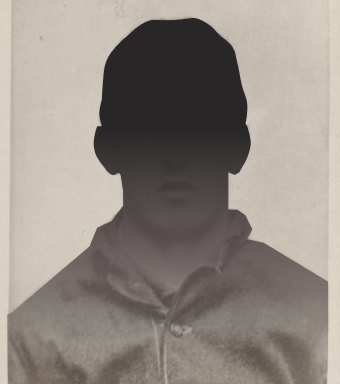
Residence 25 Oct 1841 - Middlesex, England Catherine Windover - Age: 16years. On 25 October 1841 Catherine was found guilty of stealing 26lbs cheese and sentenced to 3 months gaol. Imprisonment for 3 months. rial and Sentence of Transportation 30 Jan 1843 - Old Bailey, London, Middlesex, England ELIZA MATENOT and MARY ANN JOHNSON were indicted for stealing, on the 28th of Jan., 2 hams, value 15s., the goods of John Taylor; and that they had been before convicted of felony. GUILTY. Sentenced to 7years transportation. Departure - 18yrs 26 Aug 1843 - London, Middlesex, England Name:Eliza Matenot Vessel: Woodbridge Convicted Date:30 Jan 1843 Voyage Date:26 Aug 1843 Colony:Tasmania (Van Diemen's Land) Place of Conviction:Old Bailey, London Arrival 25 Dec 1843 - Hobart, Tasmania, Australia Name: Eliza Matenot Arrival Date: 1843 Vessel: Woodbridge Province: Tasmania Title: Ledger Returns S - Z Year(s): 1846 Place of Conviction: C C CT Permission to marry - 21yrs Oct 1846 - Hobart, Tasmania, Australia TANNER, William (free) - MATENOT, Eliza per Woodbridge - 00 OCT 1846 - CON52/1/2 p205 RGD37/5 : 1846/501 Marriage 03 Nov 1846 - Campbelltown, Tasmania, Australia Marriage William Tanner and Eliza Matenot Marriage on 03 Nov 1846 at Campbell Town, Tasmania: William Tanner was described as an Overseer. Registration Number: 501/1846 Marriage - 43yrs Abt. 1868 - Hobart, Tasmania, Australia No record found for Catherine’s 2nd marriage to William Hadley. However on her NSW 1886 death cert she was recorded with 2 marriages in Hobart1.William Tanner & 2. William Hadley. Upon her death in Surry Hills NSW Catherine had been living in Sydney Catherine relocated from Hobart to Sydney Abt. 1869 - Sydney, New South Wales, Australia Catherine Hadley relocated to Sydney abt 1869 according to information on her February 1886 death certificate. Death 14 Feb 1886 - 173 Goulburn Street, Surry Hills, New South Wales, Australia NSW BDM: 298/1886. Catherine Hadley died on 14 Feb 1886 of Chronic Brights which had plagued her for 6 months. Her Medical Attendant was Dr Marshall who visited her last on 13 Feb 1886. Catherine died at the age of 61yrs at her home 173 Golburn Street. Burial 15 Feb 1886 - Rookwood Anglican cemetery, Rookwood, New South Wales, Australia Undertaker was Reuben W Thomas. Witnesses were sons John Tanner and Henry Tanner.

Catherine Windover was also known as Eliza Matenot and Eliza Male Knott. Her birth name was registered as Eliza Male Knott. She was known in the female convicts ship database as coming out as Eliza Matenot. http://www.femaleconvicts.org.au/images/pdfs/ConvictsInDatabase.pdf Her native place was Regent's Park, London, England. She arrived on the ship 'Woodbridge' on 25 December, 1843. Convict Ship 'Woodbridge: (Pages 366, 393 - The Convict Ships 1787-1868 by Charles Bateson). Built at Calcutta in 1809, 516 tons, Class AE1. The Master was Wm. B. Dobson. The Surgeon was Jason Lardner. She sailed on 3 September 1843 from London and took 113 days to arrive in Hobart. She departed with 204 female convicts, 24 children and 4 male and 15 female warders and arrived with the same. Height: 5' 1" Age: 19 years Status: Single Tried At: Central Criminal Court, (The Old Bailey) London, 30 January 1843. Offence: Larcency She had been convicted before and Eliza stated this offence was for stealing, she was tried with an A. Johnston, also on board. She had been 5 months on the town (prostitution). She had been tried before for stealing cheese and sentenced to 3 months, Catherine was with her sister Harriet when she committed her first offence of stealing cheese. The second offfence was for stealing hams. Her sentence was transportation for 7 years. The surgeons report aboard the ship stated that she was good. Record of Eliza Matenot on "Woodbridge": Page 209 http://search.archives.tas.gov.au/ImageViewer/image_viewer.htm?CON19-1-2,231,209,S,33 Surgeon's Report: Folio 27: A nosological synopsis of the sick book kept during the period of this journal, in conformity with the 30th article of the Surgeon's Instructions. Folios 28-30: Surgeon's general remarks. In letter form, addressed to Sir W A Burnett, MD.Between 4 and 11 August 1843, 204 female convicts, 24 children and 4 male and 15 female warders were embarked. Many of the convicts were debilitated but none had to be refused. They were washed and issued with clothing, their own clothing being taken away. Although there were a great many cases on the list, most were trivial. The synochus cases were mostly slight symptomatic affections, arising from 'suppression of some accustomed evacuation'. None of the vaccinations were successful although two or three trials were made. The unsuccessful atrophy and hydrocephalous cases occurred to very young weakly children at the breast, there was plenty of food for infants. The diarrhoea cases arose from change of food or cold, of the two sent to the hospital, one arose from disordered digestion and had suckled her child the whole voyage. The other was more serious and due to her previously dissipated life. Scurvy appeared after passing the Cape, the nitre mixture recommended by Dr Cameron was given and every symptom disappeared and six weeks after landing they all remained free from disease. The debility cases were generally from long sea sickness. The employment of the prisoners during the voyage had the best effects on health and discipline. The surgeon recommends all female convict vessels to be provided with means of employing the prisoners, such as shirt making, with women appointed to cutting out and supervising to prevent wanton waste and destruction of the materials. More than 1100 shirts were made on board during the voyage, the women making on average one shirt a day. Those employed at needlework in the morning read in the afternoons and vice versa. http://www.nationalarchives.gov.uk/catalogue/displaycataloguedetails.asp?CATLN=7&CATID=-5870429&SearchInit=4&SearchType=6&CATREF=adm+101/75/3/5 Sentences while serving her time: On 3 July 1844, she became a second class pass holder and a third class on 7 January 1845. She was a House and Nursemaid. Eliza was Church of England and she could read but not write. Her father's name was Robert. He was at the time of her sentencing at Chatam. He was transported (sentenced) with her but was left behind at Woolwich, England, later dying in England. Eliza had one brother, Charles, and one sister, Harriet at her native place. Her proper name was Catherine Windover. On the indent of Harriet's, further information on the family revealed that she was from Marylibone in London. Catherine was also registered on her criminal record as having been delivered of an illegitimate child, Daniel Knott born in Launceston, Tasmania on the 6 August 1846 (or 1 Sep 1846), 3 months before she married William Tanner. Fate of the child is unknown. She married William Tanner (an overseer, aged 35 years) on the 3 November 1846 at St. Lukes Church at Campbell Town (as Eliza Matenot). Her age was 21 years. She made an x on the wedding certificate as her mark as she could not write. One of the witnesses to the marriage was a Harriet Windover, (Eliza/Catherine's sister) At the time of her death the death notices said she was the wife of William Hadley of 173 Goulburn Street, Surrey Hills, NSW. Burial - Early Sydney cemeteries When the earliest European settlers in Sydney died, they were most often buried within a mile of their place of arrival. As the number of deaths rose after the arrival of the second fleet, a suitable cemetery site was needed at a distance from the settlement. "At the establishment of the Colony for a long time no piece of ground was set apart for a Burial place. Persons buried their dead in one place and some in another... Prisoners who had no friends were buried without coffins.... Rev. Samuel Marsden, letter to Archdeacon Scott, November 1827. Around Sydney, Indigenous Australians followed traditional burial practices until the 1820s. Some people were buried, and others were cremated and then buried. Several burial places were identified by Governor Phillip soon after the arrival of the first fleet. In the early days of Sydney's settlement, most European settlers died and were buried within a mile of their place of arrival. The exact location of these first burial grounds is unknown. The large number of deaths after the arrival of the second fleet in 1790 made finding a suitable site at a distance from the settlement a matter of urgency. In September 1792 a public cemetery was established at Cathedral Close, now the site of Sydney's Town Hall. Most people who died in Sydney Town were buried here - convicts as well as prominent citizens. The Old Burial Ground was officially closed in 1820, and a cemetery was established at the Brickfields, and commonly known as the Sandhills or Devonshire Street Cemetery. It is now the location of Central Railway Station. By the early 1840s it was clear Sydney had outgrown this cemetery also. Not until 1862 was land purchased at Haslem's Creek, for what became known as the Rookwood Necropolis. The Old Burial Ground In 1869 most of the Old Burial Ground site was cleared to prepare for the building of the Town Hall, and some remains were re-interred at Rookwood Necropolis. Only a handful of headstones from the Old Burial Ground survive. Since then, coffins and remains have been discovered on this site during various building works. In 1991, four coffins and a headstone were discovered during restoration work on the Town Hall. Rookwood Necropolis The grandest of Australia's nineteenth century garden cemeteries, the Necropolis ('city of the dead') was a popular site for recreation. In 1861 the Acting Surveyor-General had suggested that 'the spot chosen should be capable of being cultured and beautiful, as is frequently the case in other cemeteries.' In 1862 the government purchased 200 acres of land 'near Homebush on the Railway Line…' - what was to become the Rookwood Necropolis - for use as a general cemetery. The first registered burial took place at the Rookwood Necropolis in 1867 . Originally marked out for nine denominations, the cemetery now caters for around 80 religions in an area of 283 hectares. There are 650,000 burials and 200, 000 ashes interments at Rookwood, the largest cemetery in the Southern Hemisphere. - See more at: http://australianmuseum.net.au/Burial-Early-Sydney-cemeteries#sthash.lresB1Te.dpuf