
Summary
Personal Information
Voyage
Transportation
Francis Maxfield was transported on the Marquis Of Hastings, departing 16th Mar 1839 and arriving 23rd Jul 1839 with 241 passengers.
 Marquis Of Hastings (generic)
References
| Primary Source | Australian Joint Copying Project. Microfilm Roll 91, Class and Piece Number HO11/12, Page Number 9 (6) |
| Source Description | This record is one of the entries in the British convict transportation registers 1787-1867 database compiled by State Library of Queensland from British Home Office (HO) records which are available on microfilm as part of the Australian Joint Copying Pro |
| Original Source | Great Britain. Home Office |
| Compiled By | State Library of Queensland |
| Database Source | British convict transportation registers 1787-1867 database |
Claims
No one has claimed Francis Maxfield yet.
Photos
No photos have been added for Francis Maxfield.
Convict Notes

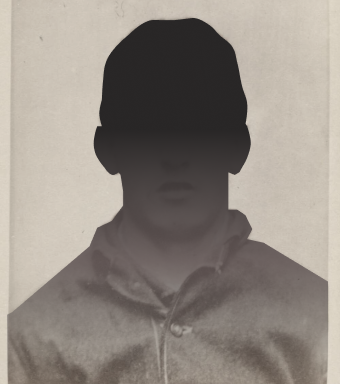
Crime for transportation: horse stealing TAHO record: https://libraries.tas.gov.au/Digital/CON31-1-32/CON31-1-32P83
The Courier. Sat 26 Jul 1845. Page 2. HOBART TOWN SUPREME COURT. TTEMPT AT MURDER AT PORT ARTHUR. Francis Maxfield was then placed at the bar, Charged with cutting and wounding Joseph Ellis, with intent to kill and murder him. 'The case was particularly short and clear against the prisoner. Ellis, who is a prisoner of the crown, was sub-overseer to the crime class at Port Arthur. He had been out with the gang on the 8th July the only thing that occurred particular in the course of the day was a complaint made by the prisoner that his load was too heavy ; Ellis said it was not, and the prisoner then went off' with the load. The gang, about sixty in number, came home about four o'clock in the afternoon. The principal overseer, Fossett, ordered his gang lo fall in, and the sub-overseer, Ellis, was directed to see the tools collected. Soon after this Mr. Fossett saw the prisoner with an axe in his hand, following Ellis, and 'strike him several times with the axe as Ellis tried to escape ; the axe turned in the prisoners, hand as he made the first attempt, so that Ellis only received a hard blow on the back of the head, the axe slipping round and cutting him under the jaw ; to use the words-of Mr. Fossett, the blow " bothered" Ellis,he stuggeled forward, and the prisoner then made the two other cuts at him, one of which cut his great coat and jacket through. Mr, Fossett immediately secured the prisoner and handed him over to the soldiers. Several witnesses gave testimony to the prisoner, after he was apprehended, saying he " wished he had cut his head off; that he was a --dog, and not fit to live among men." And one of the gang deposed to prisoner having said to him, as he passed when following Ellis, "side over Harry, I'll kill that -- if I can." His Honor merely explained to the jury that, to find the prisoner guilty under the indictment, they must not only believe that the prisoner was the man who struck the blow, but they must be convinced of the prisoner's intention to kill. The jury, without retiring, returned a verdict of Guilty. The defence of the prisoner confined itself to stating that Mr. Fossett had sworn false at Port Arthur, and that the principal witness had been convicted of an unnatural crime. He said, as he had been found Guilty, with God's help he must put up with it. His Honor then addressed the prisoner. The evidence, he said, was of the clearest nature. If Mr. Fossett had sworn false, and the testimony of the other witness was impugned, what had the prisoner to say to the evidence of the two soldiers? Not long ago a doubt upon the minds of the jury had convicted the prisoner of the offence of manslaughter, when, in His Honor's opinion, the crime was nothing short of deliberate murder. The case now before His Honor called for no comment, and it was His Honor's wish to say as little as possible to men in the prisoner's situation. His Honor then dwelt upon the horrible frequency of such murderous crimes at Port Arthur, stating his belief that it was scarcely possible that these misguided men entertained any belief of the cer- tainly of their lives paying forfeit for such offences. For the sake of example, His Honor said, if it rested with him, he would sentence the prisoner to be hanged in chains at Port Arthur, and considering the character of the men at Port Arthur His Honor believed that the ends of justice, mercy, and charity would be answered by carry- ing out the law in its most severe form, as it seemed that if the law was to have any effect it was only by the hor- rors of its ultimate sentence being perpetually in the recollection of these wretched men. Upon the prisoner asking for time, His Honor remarked that he would have time ; that many days would elapse before his execution ; much more time than he would have allowed the victim of his assault if his blows had taken effect. His Honor concluded a most feeling and appropriate address with an exhortation to the pri- soner to avail himself in a proper manner of the short space of lime that was left of mercy in this world he might not entertain the slightest hope. Sentence of Death was then passed in the usual form.
Place of origin: Yorkshire 1842 - Offense: Willful murder of William Sheffield at Port Arthur. Verdict: Guilty of manslaughter EXECUTED AT HOBART - 9 August 1845 Vide Memo; 17 August 1845 1845 - Trial date: 21 Jul 1845. Offense: Feloniously cutting and wounding Joseph Ellis with intent to kill and murder. Verdict: Guilty