
Summary
Personal Information
Crime
Voyage
Transportation
Francis Mccallum was transported on the Minerva, departing 25th May 1838 and arriving 28th Sep 1838 with 161 passengers.
The Minerva was built at Lancaster, England in 1804. 4 voyages bringing convict transportees to Australia.
 Minerva (generic)
References
| Primary Source | Australian Joint Copying Project. Microfilm Roll 90, Class and Piece Number HO11/11, Page Number 279 (141) |
| Source Description | This record is one of the entries in the British convict transportation registers 1787-1867 database compiled by State Library of Queensland from British Home Office (HO) records which are available on microfilm as part of the Australian Joint Copying Pro |
| Original Source | Great Britain. Home Office |
| Compiled By | State Library of Queensland |
| Database Source | British convict transportation registers 1787-1867 database |
Claims
No one has claimed Francis Mccallum yet.
Photos
No photos have been added for Francis Mccallum.
Convict Notes

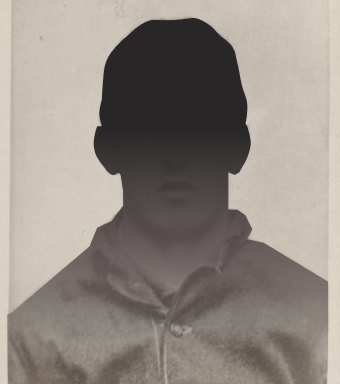
FRANCIS MELVILLE BUSHRANGER Francis Melville bushranger, was born probably Francis McNeiss McNiel McCallum in Inverness, Scotland. He had some schooling but about 12 became a thief. In the Perth Court of Justiciary he admitted to serving four sentences totalling twenty-two months before 3 October 1836 when at 15 he was sentenced to seven years' transportation for housebreaking. As Edward Melville (Mulvell) he served for twenty months in English gaols and was then sent to Hobart Town in the Minerva. He arrived on 29 September 1838 and in October was placed at Port Arthur in the Point Puer institution for juvenile convicts. In 1839-48 he came before the police magistrate twenty-five times. In 1841 his sentence was extended by two years for felony in February and to life for burglary in July; in September he was sent to Port Arthur for five years. Recommended in 1846 for a year's probation, he absconded and lived with the Aboriginals for a year. After recapture he was given nine months' hard labour in chains, an experience repeated in January and August 1850. Calling himself Captain Francis Melville and posing as a gentleman, he reached Victoria about October 1851 and by December had turned bushranger. He claimed leadership of the Mount Macedon gang that waylaid travellers in the Black Forest. In 1852 he held up Alfred Joyce at Norwood station and watched for travellers along the western track from the central goldfields across the Wimmera. Legend claims that police almost trapped him near Mount Arapiles where he had a cave. During shearing at Wonwondah he ordered and paid in lordly fashion for having his lost horse found and breakfast prepared. Charles Carter and his sons, travelling with drays on Fiery Creek Plains, encountered Melville and two companions 'with hard-set faces like hawks ready to pounce on their quarry'; the bushrangers found the Carters' weapons too much to stomach and rode off. They later held up teamsters at Rokewood. In early November Melville trailed a digger to Maryvale station where he robbed him and captured the manager. Early in December Melville moved into the Western District. At Marida Yallock he ordered the Mackinnon girls to entertain him; he sang and played the piano before leaving. On the 18th with William Roberts he held up sixteen men in Woady Yallock shearing shed and robbed the owner and three others. Next day at Bruce's Creek the bushrangers robbed Thomas Warren and William Madden of £37 but gave them £10 for travelling expenses. On the 24th they held up two bush workers at Fyansford. In Geelong they put up at Christy's inn, dined and visited a brothel. Melville's boasting and £100 reward for his capture induced a woman to warn the police. Alerted, Melville smashed a window and climbed into the street. He knocked down a policeman, ran toward the Ballarat Road but was met by Henry Guy on a fine horse. As he tossed Guy from the saddle the horse escaped; Guy grappled with him until two policemen arrived. Roberts had already been arrested and the bushrangers spent Christmas in South Geelong gaol. Captain Foster Fyans committed them on 3 January 1853 for trial before Judge Redmond Barry on 3 February. On charges of highway robbery, horse stealing and assault and robbery, Melville was sentenced to a total of 32 years' hard labour. Imprisoned in the hulk President, Melville attempted on 4 June to bite off a sergeant's nose; he was beaten by the warders' 'neddies' and given twenty days' solitary. On 20 January 1854 he had another month solitary for 'inciting the prisoners to mutiny'. In mid-year John Price had him transferred to the hulk Success and allowed him to work ashore in the Point Gellibrand quarry. Melville behaved and was allowed to spend three days a week allegedly translating the Bible into the Aboriginal language; in fact he was planning with a former ship's captain, Billy Stevens, to seize a cutter and sail to Gippsland; their eight accomplices included Harry Power. They captured the tow boat, took Constable Owens as hostage and rowed down Hobson's Bay with Melville yelling 'Goodbye at last to Victoria'. As the water police and guard boats closed in Stevens smashed Owens's skull and leapt into the sea to his death. When captured Melville is credited with saying: 'I would sooner die than suffer what I have been subjected to in these hulks in the past four years'. A Citizens' Committee engaged Dr Mackay to plead the convicts' case but Melville conducted his own defence before Judge Robert Molesworth on 19 November 1855. He was charged as Thomas Smith, alias Frank McCallum, alias Captain Melville and in cross-examination upset police claims that he had murdered Owens but Molesworth ruled that all were guilty when a man died while attempting to escape custody. Melville argued that he had been charged as Thomas Smith (a name he had never used), that he was sentenced to work on the roads not imprisoned in a hulk, that a warrant for custody in a hulk did not extend to a quarry and that treatment in the hulks was degrading. He and two other conspirators were sentenced to death but the case was referred to the Full Court. For the trials the Citizens' Committee briefed R. D. Ireland, who called the three condemned men as witnesses and secured acquittal of the six. At a public meeting the committee demanded an inquiry into the Penal Department and Melville's acquittal. On 4 December the Full Court concluded that the Crown had not produced a warrant for Melville's transfer from the President to the Success and thus failed to prove that he had tried to escape from legal custody; the death sentence was respited. The Melville case made legal history; in 1964 Sir John Barry asserted that it was 'good law'. Melville was transferred to Melbourne gaol where he had outbursts of fury and warders were warned not to excite him. At dawn on 12 August 1857 a warder found him strangled by a red-spotted blue scarf; whether he committed suicide or was murdered has never been decided. Melville created a legend of the cultured gentleman of good address and scholarship turned highwayman, considerate to those whom he robbed, courteous and charming to women, and a nineteenth-century Robin Hood. Yet he was a swaggerer courageous behind a brace of pistols and a skilful confidence man destroyed by the penal system and his unbalanced character.