Summary
Personal Information
Voyage
Transportation
Alexander James Petty Menzies was transported on the Pyrenees, departing 14th Mar 1851 and arriving 28th Jun 1851 with 295 passengers.
 Pyrenees (generic)
References
| Primary Source | Australian Joint Copying Project. Microfilm Roll 92, Class and Piece Number HO11/17, Page Number 110 Letter of 18 December 1848 from R.J. Moxey, Edinburgh Police to Marcus Lothian, Procurator Fiscal. http://members.iinet.net.au/~perthdps/convicts/con-wa.html, Dead Persons Society, Perth, Western Australia; and correspondence with Danny Holness, August 21, 2008 which included data from Convict Shipping and Descriptions List, Western Australia, ACJP Reels, Reel: 5987 Piece: 2/134 and Dictionary o |
| Source Description | This record is one of the entries in the British convict transportation registers 1787-1867 database compiled by State Library of Queensland from British Home Office (HO) records which are available on microfilm as part of the Australian Joint Copying Pro |
| Original Source | Great Britain. Home Office |
| Compiled By | State Library of Queensland |
| Database Source | British convict transportation registers 1787-1867 database |
Claims
No one has claimed Alexander James Petty Menzies yet.
Photos
No photos have been added for Alexander James Petty Menzies.
Convict Notes

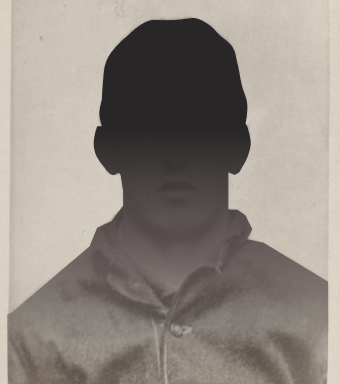
Alexander James Petty Menzies was born on 12 November 1825 in Kirkcaldy, Fife to Robert Menzies, an advocate and the Procurator Fiscal for Perthshire, and Ann Livingstone Campbell. Alexander’s mother died young possibly in childbirth. The Sheriff of Perthshire during Menzies’ term as Procurator Fiscal was Duncan McNeill. Robert and Duncan were obviously well known to each other and probably good friends. When Menzies died prematurely in 1834, I think that Duncan took Alexander under his wing. The situation was complicated by Duncan’s appointment in the same year at Solicitor General for Scotland so Duncan and Alexander had to move to Edinburgh where Alexander was introduced to and perhaps lived with the children of Duncan’s brother Malcolm. Malcolm was an officer in the Madras Cavalry who, with his wife Emily, followed custom for East India Company (EIC), sent their children back home to school in the United Kingdom. Four of Malcolm children were living in Edinburgh. Hester, six months older than Alexander, and three younger siblings. I get the feeling that Hester, at least, resented being abandoned by her parents, particularly by her mother, and developed a love for Edinburgh and some of her McNeill relatives. As they grew older some romantic attachment seems to have grown up between Hester and Alexander as we will see from subsequent events. I do not know how long Alexander stayed with Duncan but he did eventually send him to live with his Uncle James Menzies in the London area. Life for Alexander was not the same with Uncle James as it was with the McNeills. The 1841 Census of England and Wales shows the Menzies living at the Westminster Union Workhouse. When Hester’s parents arrived back in the United Kingdom in 1841 on furlough and to take the children back to India, I believe that Emily, and perhaps Malcolm, met Alexander Menzies and sensed that he was not suitable material to be the husband of a Colonel’s daughter for he was certainly poor and, at the time of their arrival in England, was working as a shop boy for Ann Rochfort, a groom in the Royal Opera Arcade adjacent to the Her Majesty’s Theatre in the Haymarket. Emily must have been very happy to take Hester back to India and to marry her off to a suitable prospect. She was successful in her effort for she had Hester married soon after the family returned to Madras. Five weeks before she left India, Emily likely met John Robert Pringle when he visited Madras on furlough in January 1841. Emily may already have had Pringle in mind as a suitable husband for Hester. He was both an administrator in the EIC and a factor. His father Sir John Pringle was a baronet with land on the Scottish border and his step-mother was sister to the 2nd Marquess of Breadalbane with connections to the young Queen Victoria. Marriage of Hester to Pringle would sure surely be a coup for the daughter of an officer in a line regiment and wife of an EIC Colonel. Three years later and just ten weeks after Hester’s return to Madras on 2 August 1844, John Robert and Hester were married. Shortly before Hester’s wedding, Malcolm had been appointed Governor of Vellore and Military Commandant of Arcot, small towns a few miles east of Madras so his first daughter’s wedding was no doubt expected to be a fashionable and expensive affair. Hester’s first child, a daughter Emily Elizabeth Steele was born in 1845. John and Hester’s second child, a son John was born in Madras on 17 July 1847. Usually after completing ten to twelve years’ service, East India Company officers took a leave of absence in the United Kingdom for perhaps two years or more. This John apparently planned to do on 27 July 1847 when he boarded the Mary Ann for London via the Cape with Hester, his young daughter Emily and 10-day-old baby John. It does seem strange that Pringle would risk a long ocean voyage of three or more months under sail so soon after his son was born. On 5 September 1847, John, possibly an invalid, died at sea, cause unknown. It could be that he was ailing from one of the many diseases that struck down Europeans in India and was advised to leave urgently. It could also be that a severe storm caused injury to Pringle that led to his death. So Hester arrived in London on 7 November 1847, a widow aged 23 with Emily, a toddler and John, a babe in arms. My guess is that Hester’s first contact on arrival in England was with the family of her uncle Forbes McNeill whom she knew from her previous stay. Although Forbes had died two years earlier, his wife Beatrice and children Forbes and Hester, whom Hester had likely met while at school in England, were living at 4 Belgrave Villas, Barrington Road, Brixton. Was this when Hester renewed her relationship with Alexander Menzies? From November 1847 until the early summer of 1848, we lose touch with Hester but we know that she was living alone at 17 Bath Street Portobello, a suburb of Edinburgh in July 1848. She must have made the difficult trip north to Stichill to meet her in-laws and have left her children with Sir John and Lady Elizabeth Pringle while she went to Edinburgh alone. Hester, aged 23 with two very small children and no close relatives nearby may have been quite overcome by this most unhappy homecoming but did she? If my theory, that she had a romantic connection to Alexander Menzies and that her marriage to Pringle was arranged, is correct she may have sought out Alexander soon after her return and arranged to meet him in Edinburgh perhaps giving the Pringles the excuse that she wanted to visit her McNeill relatives. We are told in Hester’s daughter Emily’s obituary that she and her brother were brought up by her Pringle grandparents. I don’t think that Hester intended to abandon her children but the law at that time may have left their father’s estate to Sir John except for a small annuity to Hester. Subsequent events may have forced abandonment on her as we shall see. Hester’s relatives in Edinburgh were very respectable. Duncan, whom we have already met, was born in 1794, was educated at St. Andrews and Edinburgh Universities and became an advocate in 1816. In 1824 Duncan was appointed Sheriff of Perthshire where he served until his first appointment as Solicitor General for Scotland from 1834-5. He was again appointed Solicitor General in 1841 becoming Lord Advocate in 1842. When Hester returned to Scotland, he was Member of Parliament for Argyllshire and was later appointed Senator of the College of Justice as Lord Colonsay. He still shared the home at 73 Great King Street with his brother Archie, sister-in-law Christina and their four children. Archie was the Principal Clerk of Sessions and Director of Chancery in the Scottish Courts. Why then did she live in Portobello on the other side of town from her relatives? Did she prefer that they did not know she was there? By now her parents had heard of her husband’s death and she must have been told that her mother had booked passage “Home” on the EIC ship Lady Flora to help with the children and/or to make sure that she did not renew her friendship with Alexander Menzies. At about the same time that Hester arrived in Edinburgh, Alexander Menzies took up residence at Tait’s New Royal Hotel on Princes Street. Did he arrange Hester’s accommodations in Portobello well away from Central Edinburgh? Contemporary records describe Alexander as 5 feet 5½ inches tall, slightly built with no distinguishing marks, with dark brown hair, dark eyes, oval face and dark complexion. Family stories say Alexander was initially apprenticed to a publisher, later becoming a law student but in fact his life took an entirely different turn. Between July 23 and September 3, 1848 he paid several visits to the premises of George Vallance, breeches-maker on Register Street where he identified himself as Lockhart Menzies, a member of the Menzies family of Castle Menzies in Perthshire and an officer in the 3rd Light Dragoons. He obtained from Vallance clothing and other furnishings to the value of £27. 19s. 6d. for which he did not pay. He also visited the jeweler Moritz Cohnert in Leith Street, where on the morning of 21st August he brought a watch for repair and ordered a ring. He paid for these but later in the day returned, chose a number of items worth about £20 which he managed to get 'on tick', telling the jeweler to address the bill to G. (Granville) A. Lockhart, 78th Highlanders at Tait's Hotel. Moritz agreed to this, having checked that the name was on the Army List. Menzies said that he was in a hurry as he had an engagement with a lady who was coming from Portobello. One must assume this was Hester. Alexander visited Meyer and Mortimer, Army and Navy Contractors of George Street several times. On the 11th of September he ordered clothing in the name of Lieutenant Lockhart including a riding habit for a lady whom he called his wife. The lady was to be measured for the garment at 17 Bath Street, Portobello. The riding habit was made and delivered. When the account was not paid, Mr. Mortimer called in at Portobello but was told by a servant that Alexander was not home, nor was the lady available. That afternoon a servant called at the George Street premises and requested Mrs. Pringle's account for the riding habit. When told that Meyer and Mortimer had a riding habit for Mrs. Lockhart not Mrs. Pringle, the servant said it was a mistake. The account was made out as directed and it was paid next day. The prompt payment for the riding habit may have come from Hester’s funds and she may not have been aware of Alexander’s deceptions but Mortimer was becoming suspicious by this time. However, on 13th September, Mortimer's assistant, Donald Munro, fell for Alexander’s tale that he needed money to go to Doncaster to collect £100 won in a bet, and parted with £4 in exchange for an IOU drawn on Cox & Co, a London bank and again signed G.A. Lockhart. The IOU was returned. The ledger clerk at Cox & Co, one John Porter, was familiar with the genuine G.A. Lockhart's signature and picked up the forgery. Archibald Alexander, surgeon to the 78th (Highland) Regiment of Foot, on leave and residing at 14 Bath Street, Portobello just across the street from Hester, was able to testify Lieutenant Graham Alexander Lockhart was in the East Indies with his regiment at that time and that Menzies was a different person. It was now clear that Alexander was never an officer and a gentleman, but, in the vernacular of the time, was a true bounder and an infernal cad! The purchase of the riding habit for Hester just a day or two before he checked out of Tait’s hotel suggests that Alexander was aware that his cover stories were unraveling and that he planned to leave Edinburgh with her. On leaving the hotel on September 14th he gave the owner/manager, Mr. James Tait, a bill in the sum of £49 drawn on Cox & Co. signing it Lockhart Menzies. Alexander had his luggage labeled with the same name, to go to the residence of Sir Hugh Campbell in North Berwick, but the porter followed his instructions to take it to Ross's Inn at the head of Bath Street in Portobello instead. The bill of course bounced but by then Alexander had gone. He and Hester took off for the southwest and the English border probably on horseback, as the purchase of a riding habit would suggest. Alexander had ridden in races for a Captain Roebuck in Plymouth and Hester was the daughter of a cavalry officer so they were both experienced riders. Hester and Alexander had arrived at Gretna by the 19th of September, for on that day Menzies, giving his forenames as Lockhart Alexander and his home as Market Harborough, Leicestershire married Hester Pringle of Portobello at Gretna Hall. By the 9th of October, they had reached Scarborough, Yorkshire where they stayed at the Black Bull Hotel until the 25th of that month when Alexander prevailed on the headwaiter, Richard Wong, to lend him £5, in acknowledgement of which gave him an I.O.U. representing himself as an Officer of the 1st Royal Dragoon Guards. From here the Menzies moved on to Hull where Alexander was arrested with the help of “Electric Telegraph Communication” and returned to Edinburgh. It was reported that a woman accompanied him, Hester, no doubt. Alexander was returned to Edinburgh and placed on remand in Calton Gaol to await trial. While there, he refused to answer questions as to whether he was married or not, perhaps to protect Hester. It was during the investigation of Alexander’s history prior to his trial that R.J. Moxey, a detective with the Edinburgh Police found out about Alexander’s unsavory past. He discovered that Alexander had been a shop boy to a Mrs. or Miss Rochfort of 10 Opera Colonade, London. The 1841 Census shows an Ann Rochfort and a Mary Watts as grooms in the Royal Opera Arcade beside Her Majesty’s Theatre that fronted on Haymarket. In the same census, a 15-year-old Alexander Menzies was recorded as staying at the Westminster Union together with a James Menzies aged 45, probably his uncle whose bankruptcy is the likely cause for this fate. It is reasonable to assume that Alexander found work with Rochfort and that it was while working for her he learned to ride well. His later history of riding at the Plymouth and Tavistock races and his posing as a cavalry officer would require a thorough knowledge of horses. Rochfort wrote Moxey that, at the time Alexander went to work for her, he was in great distress and had no friends except herself – confirmation perhaps that he had indeed been unfortunate enough to seek shelter in the workhouse. She continued that from her shop Alexander went to work for a Mr. Miller, a solicitor with offices on Abchurch Street in the City of London. I wonder if Forbes McNeill was instrumental in finding Alexander a position with a solicitor in the City. Rochfort then wrote that “…during the railway mania he (Alexander) suddenly became a very great man.” This certainly agrees to some extent with the family belief that he was apprenticed and then became a law student. “In great distress” means, I think, he was penniless in Rochfort’s eyes and “…during the railway mania he suddenly became a very great man,” means he made money from investment in railway stock and, perhaps, was contemptuous of her? “Railway Mania” was the term given to the speculative frenzy in Britain in the 1840s generated by the formation of a great number of railway companies proposing lines all over the country. It followed a common pattern: as the price of railway shares increased, speculators poured more and more money in, until the inevitable collapse. Alexander must have bought and sold railway shares on credit making money, learning of man’s gullibility and becoming a little too big for his breeches. When the Railway bubble burst in 1846, Alexander had to find another source of income and seems to have turned to fraud using lessons learned during the mania. Rochfort then claimed that since Alexander became “a very great man” she had seldom or ever seen him. In a letter to Marcus Lothian, the Procurator Fiscal in Edinburgh, Moxey wrote that he has in his possession four or five letters from Rochfort regarding Alexander in one of which she said: “I never heard of any of his relations except one uncle (presumably James), whose address is so difficult to obtain that about 12 or 18 months ago, there was an advertisement in most of the papers offering £100 for his apprehension.” Did the uncle start him on his road to crime? In another letter, Rochfort alludes to Menzies having been guilty of forgery, and of having an accomplice by the name of Proby. Moxey also corresponded with a number of Alexander’s previous victims and reported the following swindles perpetrated by Menzies and Proby to Lothian. Samuel Isaacs, Army Contractor, St. James Street, London, said that Menzies, a consummate and impudent swindler cheated him of £100 and his friend Proby, had also swindled him, at the recommendation of Menzies, of the same amount. Menzies obtained goods to the extent of £47. 9. 0. from Landon and Morland, Clothiers, Jermyn Street, London, on false pretenses. They told Moxey that Lieutenant Singleton of the Royal Artillery recommended him to them. Menzies subsequently obtained blank acceptances from Singleton which Singleton’s father was obliged to pay. Menzies also defrauded Lieut. Maycock of the Junior United Services Club, Mrs. Waters of 4 Lower Southwick Street, Oxford Square, London and Mrs. Fleming of Wellington Street, Woolwich. In May 1848, Menzies was renting lodgings at a Yacht Club in Plymouth where he succeeded, as he subsequently did in Edinburgh, in introducing himself into respectable society. He was resident for some time in the same lodgings with a Capt. F.A.O. Roebuck with whom he became friendly and for whom he rode horses at the races at Plymouth and Tavistock. On the 12 May, Menzies forged Roebuck’s name on a bill for £100, cashed by Mr. Edward W. Cole, Music Seller, Stonehouse, near Plymouth. This bill was drawn by Menzies (in the name of Alexr Menzies) upon and ampled by “Lieut. G.L. Proby, 74 Regt, Dublin.” After Menzies had committed the forgery on Capt. Roebuck, he left Plymouth and disappeared until he showed up in Edinburgh in June. A few days after his departure, a letter was delivered, through the post, addressed to him at the Yacht Club. As the forgery had been discovered, the police opened the letter written on the 17th or 18th of May and found it to be from Rochfort, saying: “My Dear Alexr, Let me entreat you to send me some money. The children are all ill and I am in the greatest distress, Yrs. Etc.” From this line in the letter Moxey concluded that it was probable that Rochfort knew more of Menzies than it appears from her letters to him contrary to her claim that since his becoming “a great man” she had little knowledge of Alexander. The reference to children suggests that Ann Rochfort may have had a relationship with Alexander, about ten years her junior, which lasted until at least 1846, the Railway bubble collapse, and led to offspring. In the 1851 census, Ann Rochfort is recorded as a widowed tobacconist living at 15 Guildall Street, Lincoln with three childrenall born in St. James, London. There is no record of a marriage and the children were born after Emily McNeill’s return to England in 1841. I believe that Emily broke up Hester’s relationship with Alexander and that he turned his attention to Ann Rochfort until Hester returned to Britain as a widow. Menzies was tried on 5 February 1849 in the High Court in Edinburgh for falsehood, fraud, willful imposition, forgery and uttering forged documents. The jury unanimously found him guilty as charged. He was sentenced to seven years’ transportation. During the short period between their marriage and Menzies’ arrest, Hester had become pregnant. She also learned that her mother had died at sea on July 12 1848 while en route to England on the Lady Flora. Did Emily intend to help Hester with her children or did she intend to prevent an association with Menzies? In the summer of 1849, Hester gave birth to a son, Ashurst James Everard in the Lambeth Registration District that includes Brixton so we can assume that Hester was staying with Beatrice, widow of her uncle Forbes. The family story goes that, after Ashurst’s birth, Alexander abandoned Hester and went to Australia to become a sheep farmer. The true story, of course, is that on 10 March 1851 he boarded the prison ship Pyrennes for Western Australia that finally left Torbay, England on 30 March 1851 arriving in Freemantle on 28 June 1851. He was granted a Ticket of Leave immediately on arrival and on 6 August 1853, just over four and a half years after his conviction, was granted a Conditional Pardon. In 1857 with Julius du Boulay he purchased
I have written the story of A.J.P.Menzies' life as part of a longer unpublished work. You can contact me at kentatmenifee@msn.com
I have prepared a 20-page monograph about Alexander J.P. Menzies. His story is very complicated and requires some study. I am happy to discuss his life with anyone interested. you have my e-mail address.