
Summary
Personal Information
Transportation
Alexander Naughten was transported on the Eliza, departing 19th Jul 1827 and arriving 8th Nov 1827 with 194 passengers.
The Eliza was a 511-ton (later 538 ton) merchant ship built in British India in 1806. She made five voyages transporting convicts from England and Ireland to Australia.
 Eliza (generic)
References
| Primary Source | Irish Convict Database, by Peter Mayberry. |
Claims
No one has claimed Alexander Naughten yet.
Photos
No photos have been added for Alexander Naughten.
Convict Notes

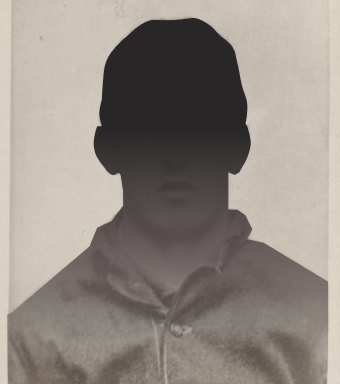
Alexander Naughten alias Owens, Michael Hogan, and Patrick Fallon, were capitally indicted for a highway robbery on the person of Mary Martin, by taking from her £2’2 in money and goods, the property of her husband, Wm. Martin, on the I9th December. Mary Martin sworn—Hired an ass and car from the prisoner Fallon, on a Friday and early the morning of the following Tuesday she set off in the car with him, having her infant and box with her in the car; she was going from her residence in Nenagh to a place named Eyrecourt to purchase some goods; had got about two miles down the road, when four men passed ; previous to this time, Fallon had driven the ass as slowly as he could ; subsequently he pressed on as quick as possible ; had not proceeded more than a mile when the car was stopped by these men, one of whom, Hogan, held the head of the ass ; she was when the car was stopped by these men, one of whom, Hogan, held the head of the ass ; she was then beaten and knocked down by Naughten, whose face was blackened; he took her infant from her arms and threw it over the hedge ; they then broke open the box and robbed it of £22 in money and notes. Fallon walked along with, and spoke to, these men, when passing the first time ; Naughten’s face was not then blackened; was very much hurt; immediately swore informations before Mr. Brereton; had known Naughten very well before ; did not know Hogan at that time by name, but by person and occupation. Michael Sweeney, police constable, arrested the prisoner, Alexander Naughten, in his own house, early on the morning of the 19th December ; examined his shoes, found them dry; they appeared to be recently cleaned, as if on the feet; examined prisoner’s outside coat, which was damp on the outside and dry on the inside ; prisoner demanded of witness for what he was arrested ; told him, for robbing Mary Martin ; this he denied, and said that he had not been out of his house since about seven or eight o’clock on the evening before; the morning had been damp and foggy- John Luwig, sub-constable, took prisoner Michael Hogan to Mary Martin; before introducing him into the room, witness said to her that friend was come to see her; upon this, Hogan came into the room, and when Mary Martin saw him, she called out with horror, Take him away, take him away Thomas Brereton, Esq. said, when he took Mary Martin’ s evidence, she appeared perfectly collected and sound in her mind ; at that time she did not expect to recover; she told him so. John Tucker, nailor, saw a tall woman sitting in an ass’s car, driven by Patt Fallon, pass his door on the morning of 19th December, about four o'clock. Mary Martin was recalled and said, when the prisoner Nanghten was beating her, the prisoner Hogan cried out, Oh fie!, fie!” Here the case for the prosecution closed. Francis Farrell, lives in Nenagh ; lived there in Dec. last; had been in the habit of sleeping with prisoner Naughten regularly for some time previous; heard that he was charged with Mary Martin s robbery on the next morning; swears positively that prisoner Naughten slept with him the night of the robbery, and did not out till next morning about seven o’clock, when witness accompanied him for a while. The prisoner, Michael Hogan, produced John Logan Grace Esq. John Cantwell, Esq. and Thos. Brereton, Esq, from each of whom he received an excellent character The prisoner Naughten, alias Owens, brought forward Messrs. O’Brien, Moylan, and Broderick, each of those persons said that they knew him to be a well-conducted and industrious man. All three Guilty. Sentence of death was passed, but day fixed ; they were recommended to mercy. Previous to passing sentence on the prisoners, his lordship addressed them to the following effect: Alter a most patient and diligent enquiry into your case by the jury, and after having been granted an extraordinary and unusual indulgence (that of examining witnesses in your own behalf after I had charged the Jury,) they have come to the decision that you are guilty of this horrid outrage. I particularly drew the attention of the Jury to your case, and pointed out to them such circumstances as had appeared to have been favourable to you. This unfortunate woman whom you have grossly illused, on a journey to purchase such things as would procure her the means of life, makes known her intention before hand to one of you. He basely betrayed his trust, hatched this robbery, and with the assistance of others carried his plans into effect. He vainly thought by not actively participating in the crime, that he should escape with impunity. But he was mistaken ; and from circumstantial evidence not to be resisted, there was no doubt of ms being the person who planned the robbery.— such is the prisoner Fallon’s case. What is Naughten’s case ?—He as a coward assails an unprotected woman, he drags the infant from the arms of its mother, and with savage barbarity he dashes it to the ground. Was it necessary to do this to perpetrate robbery ? Were the blows on the unfortunate female necessary ? No. But he considered that she must know him, and therefore thought to deprive her of life or sense, in order to prevent her ever appearing as a witness against him. From the most shameful manner in which he had used this poor woman, he had nearly added the guilt of murder to his other transgressions. His is an aggravated case, and man such as he is convicted of a crime of this nature, is to be considered in the light of a murderer, even though his hand was not stained with the warm blood of his victim. The prisoner Hogan appears to be less guilty than the other two. He was not the man who offered brutal violence to a mother or her child, but he was the man who shuddered at it, and cried out fie! fie! The Jury, on account of the good characters formerly supported by the prisoners, have recommended all of them to mercy. This has been accompanied by the prayer of the prosecutrix to the same effect. Yes, this woman sought it for those who gave her none. I shall forward those. Tipperary Free Press, 7 April 1827.
Irish Convict Database, by Peter Mayberry. Alexander Naughten, alias Owens, Naughton, Norton, age on arrival, 30, per Eliza II (1), 1827. Tried Clonmel Tipperary Co, 1827, Life, for Highway robbery. DOB, 1797, Native place, Tipperary. Catholic. Single, Labourer gardeners porter.