
Summary
Personal Information
Crime
Voyage
References
| Primary Source | https://linctas.ent.sirsidynix.net.au/client/en_AU/all/search |
Claims
No one has claimed Patrick O'donoghue yet.
Photos
No photos have been added for Patrick O'donoghue.
Convict Notes
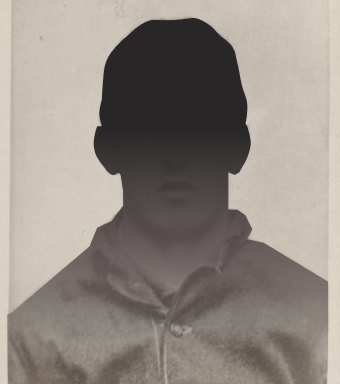
O'Donoghue a Law Clerk became a member of the Young Irelander Rebellion of 1848, joining the Irish Confederation, a group of Irish rebels who tried to overturn the Act of Union with Great Britain in what became known as the Young Irelander Rebellion in Ballingarry, County Tipperary. After the revolution failed he and three other conspirators were tried at Clonmel on the 22nd October 1848 for High Treason: O'Donoghue, Terence Bellew McManus, William Smith O'Brien and Thomas Francis Meagher were sentenced to be hanged drawn and quartered. Due to public pressure the sentence was commuted to life transportation in 1849 to Van Diemen's Land, Tasmania on board the Swift. In 1852 MacManus and Meagher escaped making their way to San Francisco, California, where MacManus settled, O'Brien's attempt at escape was thwarted, then in 1854, he was released on the condition of exile from Ireland, he lived in Brussels for two years then finally in 1856, O'Brien was pardoned and returned to Ireland, dying on the 18th June in 1864. O'Donoghue became a thorn in the side of the Governor of Van Diemen's Land, Sir William Denison, publishing a weekly newspaper "The Irish Exile" in Hobart Town describing his life and punishments in great detail it is considered to be the first Irish Nationalist paper to be published in Australia. Although the newspaper was not illegal Denison suppressed publication by charging O'Donoghue of having left his district sentencing him to 1 year of hard labour in a chain-gang. In March 1851 he was released and taken back to Hobart Town. He immediately restarted the paper this time with an account of his year spent with the chain gang. The governor again sentenced him to the chain gang, this time further away at the Cascades Penal Station. Three months later the governor ordered him released from there and sent to Launceston, on the way he escaped with the help of fellow convicts, first to Port Phillip in 1851 aboard the Yarra Yarra and from there he joined the others in America, dying in 1854 on the 22nd January in New York City.