
Summary
Personal Information
Voyage
Transportation
Jeremiah O'donovan was transported on the Hougoumont, departing 10th Oct 1867 and arriving 9th Jan 1868 with 281 passengers.
875 ton ship was built at Moulmein in 1852. http://www.australiangeographic.com.au/journal/on-this-day-in-history-australias-last-convict-ship-docks.htm ---------------------------- Incorrect Image ....This is a four masted steel hulled Barque in the drawing , im surprised Australian Geo didn't do a bit more research on this .......The Hougoumont was a works ship on the Forth Bridge Project in 1885 ....the one potrayed as a drawing in Aust Geo is the later version of this ship.....the photograph i have attached is the correct and original convict vessel. --00-- 1867 "The hired convict ship Hougoumont, which has been taken up by the Government for the conveyance of a numerous party of convicts to Freemantle, Western Australia, left the Nore on October 1, and proceeded down Channel, after receiving on board 150 convicts from the establishments at Chatham and Millbank. The convicts from the Chatham establishment, at St. Mary's, embarked from the dockyard on board the paddle-wheel steamer Adder, Mr. W. J. Blakely, and were in charge of a numerous party of convict guards and wardens, all heavily armed. Among the convicts shipped were a party of fifteen Fenians, who were engaged in the late conspiracy in Ireland, together with the officers and crew convicted of scuttling the ship Severn, and some others who have achieved notoriety from their crimes. The Fenian convicts, like the remainder of the prisoners, were chained together in gangs, but it was observed that they were kept apart from the other convicts in a portion of the vessel by themselves. The steamer Petrel also took down a number of convicts from the establishment at Millbank for shipment on board the Hougoumont, in charge of a strong escort and convict guard. On Tuesday, October 8th, the Hougoumont arrived in Portland roads. Shortly before midday ninety convicts were marched down to the Government pier at Portland under a strong escort of the 12th Light Infantry. The party included twenty-three Fenian convicts, among whom it was said, was Moriarty. The Government steamer employed in the breakwater service was used for conveying the convicts on board the Hougoumont transport ship. The convicts were chained together on embarking, and on board the steamer a strong guard of marines from her Majesty's ship St. George was formed, and saw the convicts safely placed on board the Hougoumont. The Governor of the penal settlement at Freemantle, Captain Young, is on board the Hougoumont, and returns in that ship to his sphere of duty after paying a visit to his native land." Source: Sydney Morning Herald, Thu 19 Dec 1867, p4, English Shipping, available on Trove at https://trove.nla.gov.au/newspaper/article/28608271?searchTerm=hougoumont.
 Hougoumont
References
| Primary Source | Western Australia Convict Record (Reel No.FCN39, Ref.No.ACC 128/1-32). "Swan Guilford Historical Society: Fenians in the Swan River Colony: (https://www.swanguildfordhistoricalsociety.org.au/fenians-in-the-swan-river-colony/) |
| Source Description | This record is one of the entries in the British convict transportation registers 1787-1867 database compiled by State Library of Queensland from British Home Office (HO) records which are available on microfilm as part of the Australian Joint Copying Pro |
| Original Source | Great Britain. Home Office |
| Compiled By | State Library of Queensland |
| Database Source | British convict transportation registers 1787-1867 database |
Claims
No one has claimed Jeremiah O'donovan yet.
Photos
No photos have been added for Jeremiah O'donovan.
Convict Notes


CORK AT LAST! 1870, 21 May: From the Freeman’s Journal, p7: “ARRIVAL OF THE IRISH STATE PRISONERS AT CORK. GREAT EXCITEMENT. (From the Cork Herald.) The excitement which the expected arrival of the Fenian prisoners aroused in this city, and which the anxious waiting for them only intensified, culminated last evening when Messrs. Eugene Lombard, J. C. O’DONOVAN [my emphasis], Simon Downey, Morgan McSwiney, and Thomas Culhuane [Cochrane], of Ballymacoda, reached the city by the eight o’clock train. As on the previous evenings during the past week crowds assembled at the railway station, but their wonted enthusiasm reached a pitch of almost frantic joy when it became definitely known that the late prisoners were on their way to Cork. Around the station the people surged, seeking every means of obtaining a place on the platform; but from an early hour the doors were barred, and every soul who approached them was excluded. Through King street the people were thronging fast, and the bands of the city were approaching, when a body of over one hundred police, under Messrs. Macleod, R.M., Starkie, R.M., Gunri, S.I, and Egan, S.I., drew up across King-street, at the corner of Harley-street and barred the passage effectually. The people still kept moving on, until a crowd had gathered where the police blocked the way, and one of the bands, with whom a large body of workmen walked, pushed up to reach the station, but the police fixed their bayonets and ordered them to halt. The command was obeyed, and though the people were told that they could pass along the Quay, they took no heed of the intimation, but held their place beside the police, while the bandsmen continued their music unconcernedly. At the station the crowd kept swelling to great proportions, as large bodies passed on by Penrose-quay, and joined those who had sought the place at an early hour. Inconvenience was felt by all, and there was severe crushing around the gates, until the arrival of the train brought the excitement and pressure to the climax. Through some unpardonable piece of stupidity one half of one door was thrown open; and as the multitude forced in there was no inconsiderable danger from the crushing. The crowd poured along the platform, scrambled over carriages, jostled porters, and other employees about in a most undignified manner, and cheered wildly and loudly while the released prisoners stepped out of the train. For ten minutes fully the crowd rolled around the group of men who were the recipients of this affecting welcome, and again and again gave proofs of their joy, in shouting and shaking hands. Through the still thronging masses the prisoners at length made their way, but the pressure behind them was so dreadful that many of the crowd were knocked down, and trampled and received slight injuries. The first cheers, which were caught up by the immense crowd that choked King-street in swaying masses, and again and again passed through the vast multitude, having subsided, the objects of this reception got into cars and drove through the crowd, as far as Harley- street, their progress being one continued ovation. At the corner of Harley street, however, the police, who had received information of the departure from Dublin, and acted under orders from the Castle, impeded the progress of cars any further in that direction, and directed them down Harley-street. By this means the bands, which were behind the line of constables, were deprived of the opportunity of playing the released prisoners to their destinations. Mr. Lombard and Mr. McSwiney drove to their homes, on the Coal quay and in Henry-street respectively, while Mr. DONOVAN [O'DONOVAN] and Mr. Downey, proceeded to the Italian Hotel. They had been only a few minutes in the hotel when the band arrived, accompanied by an immense multitude, who cheered vociferously. The bands played several national airs, including ‘God Save Ireland,’ which was sung in chorus by hundreds of voices. In order to avoid display, as far as in them lay, Mr. DONOVAN [O'DONOVAN] and Mr. Downey, quitted the hotel almost unobserved and betook themselves to quieter quarters. The bands then proceeded to the residences of Mr. Lombard and Mr. Downey, stopping opposite the house of each and playing favourite airs. Mr. Lombard addressed a few words to the bands and the attendant crowds counselling them to observe the peace, and at all hazards to avoid a collision with the police, as any disturbance would only fasten the chains on the men in prison. The horrors of their incarceration, he said, should not be prolonged by any acts of their fellow-countrymen, who, when they had their heads in the lion’s mouth, should act with caution and good sense. These remarks were loudly cheered. The bands soon after retired to their rooms, and the city assumed its wonted air of quietude. The ex-prisoners will be entertained at a public dinner on Thursday night. At every station on the line the arrival of the train was awaited by large crowds of persons who welcomed the exiles with the heartiest manifestations of sympathy. At the Mallow Junction, where Mr. J. S. Casey (the Galtee Boy) alighted from the train, but especially at Kilmallock, where Messrs. T. Daly, Riordan [Reardon], and M. Noonan parted company with their companions, their reception amounted to a frenzied ovation, but, as far as we could ascertain, the demonstrations in their honour were nowhere attended with disorder.” --00--
JEREMIAH O'DONOVAN is named in this republished letter, written by one of his fellow Fenians who received a free pardon but went to America, per the Baringa, in 1879 (see the Freeman’s Journal, Sydney, Sat 2 Jul 1870, p13): -- NEWS OF THE RELEASED IRISH POLITICAL PRISONERS. The Boston Pilot — per favour of Mr. John Boyle O’Reilly, the military political prisoner who escaped from Western Australia — publishes the following letter received by that gentleman. We regret the want of success which met those [15 men who went to America aboard the Baringa] who expected to find happy homes in California: “34, Minna street, between 1st and 2nd streets, San Francisco, Cal., March 9, 1870. MY DEAR O’REILLY,— It was more by chance than good luck I happened to hear of your being in New York, and so I write to be one of the first to congratulate you on your escape from Western Australia. Of course we were aware of your escape, but did not know in what quarter of the world you were. The majority of us thought you were soldiering down in South America, but I am very glad to find you are better off. Before we left Western Australia we visited the boys in prison; they all seemed to be in pretty good health — that is as far as health in a prison goes — and spirits. I give you, on the other side, the names of those here with me, those in prison in Fremantle, those gone home, those free in Western Australia, and of our soldier friends still prisoners in bush parties, and out on a ticket- of -leave. I am afraid there is but very little chance of their getting out. On the road up from Perth to King George’s Sound we met a few of our military friends, stationed in different bush parties on the road; they all seemed to be in good health and spirits, except [James] Wilson. He looked like a man that had to put up with a great deal of annoyance, as I believe he has, from his warder, who is continually reporting him for the slightest cause. Martin Hogan is up in the Champion Bay district. I did not see [Patrick] Keating, neither do I know where he is; but I heard that he and [Patrick] Killeen were working in different parties on the York road. [Michael] Harrington is somewhere about Northam; Keeley [James Keily/Kiely] is in some other quarter. With the exception of those, I have seen all the others. Although we had a police escort, we managed to speak to the boys ‘for a’ that.’ We had rather hard times after getting out of prison; some of us had to go miles away into the infernal bush, where I suppose we would be now, only for the noble-hearted Irishmen and women in the Australian colonies. You would not believe how kind they were to us. I could not find words enough in the dictionary to express their goodness; where-ever we went we found them the same… Had we stayed in Sydney we would have all got first-class situations from the wealthy Irishmen there; but like fools, as we were, nothing would do us only to come out to this place, where we are loafing about for the last six or seven weeks, and can’t get employment. Were it not for the money we got in Australia we would be ‘hard up’ indeed; some of us would be off soldiering for Uncle Sam — perhaps down in Arizona, or some other place — by this time. There are only five or six out of the fifteen of us at work. Since I made out the list, I have learned from a letter received by Denis Hennessy from Western Australia, that Hugh F. Brophy was to start for home the following mail, and that James Flood was about going to New Zealand. That is all the news from that benighted land. Send all the news from home, as I have not had a letter from any one since last August. We do not know how the wind blows in that quarter. Letter from M. Cody yesterday. Father Lynch gone home to Ireland for twelve months. Father McCabe, of Bunbury, in his place. Hoping soon to hear from you, I am yours, very sincerely, JOHN B. WALSH.” LIST… In San Francisco, California: John Keneally, Patrick Doran, Denis B. Cashman, Patrick Dunne, Denis Hennessy, Thomas Fogarty, Eugene Geary, David Cummins, Michael Moore, David Joyce, Patrick Leahy, John Sheehan, Maurice Fitzgibbon, John B. Walsh, Patrick Wall. In Prison in Fremantle, West Australia: John Flood, 15 years, Corn. D Keane, 10 years, J. Edward Kelly, life imprisonment, Daniel J. Bradley, 10 years, Michael Cody, 20 years, Thos. Baines, 10 years, Thos. Fennell, 10 years, James Kearney, 7 years, Geo. Connelly, 15 years. Gone Back to Ireland: Thomas Daly, Morgan McSwiney, JEREMIAH O’DONOVAN [my emphasis], Michael Noonan, John S. Casey, Thomas Cullinane (alias Bowler) Eugene Lombard, Patrick Riordon, Simon Downey, Robert May. Free in Western Australia: Hugh F. Brophy, Cornelius O’Mahony, Joseph Noonan, Jeremiah Aher, James O’Reilly, John Goulding, Thomas Duggan, Laurence Fulham, James Flood, Luke Fulham. Our Military Friends Prisoners in different Bush Parties, and on Ticket of Leave in Western Australia: Sergeant Major [Thomas] Darragh, life, 11th Regiment. James Wilson, life, 5th Dragoon Guards. Martin Hogan, life, 6th Dragoon Guards. James Mecoy, 15 years, 61st Regiment. Patrick Keating, life, 5th Dragoon Guards. Thomas Delaney, 15 years, 5th Dragoon Guards John Foley, 7 years, Royal Horse Artillery. Thos. Hassett, life, 24th Regiment. J. [John] Shine, 20 years, 60th Rifles. Patrick Killeen, 7 years, Royal Horse Artillery. Michael Harrington, life, 61st Regiment. Robert Cranston, life, 61st Regiment. — Keely [James M. Kiely], life, 53rd Regiment. On Ticket of Leave: William Foley, 5th Dragoon Guards. John Lynch, 5th Dragoon Guards. John Donoughue, 24th Regiment. --00--
1869, 21 September: Jeremiah O'Donovan sailed on the SS Rangatira from Albany for Sydney, via Melbourne (see Western Australia, Australia, Crew and Passenger Lists, 1852-1930; Albany, 1872). 1869, 5 October: The SS Rangatira’s arrival in Sydney was reported in the Freeman’s Journal, on 9 October, p2: “ARRIVAL OF THE LIBERATED IRISH STATE PRISONERS IN SYDNEY. The Rangatira, with twenty five of the Amnestied State Prisoners on board, left Melbourne at about half-past four o’clock on last Saturday afternoon, but did not arrive in Sydney until some short time after eight on Tuesday morning. This detention was caused by a strong northerly breeze and head sea which the vessel encountered immediately on rounding Cape Howe. The Sub Committee appointed by the Central Committee of Sydney had secured apartments for them at the Italian Hotel, in north George street, and were at their post at the hour when the steamer was due. It had first, on the report of apprehended disturbance on the part of the Orangemen, been arranged that the subcommittee should engage a small steamer and take their friends off the Rangatira somewhere below Port Denison. This intention was abandoned because it might be subsequently alleged, by people who have shown some anxiety to misrepresent the real state of affairs, that the patriots were smuggled ashore. Accordingly the gentlemen deputed to receive the guests took their station on the wharf as soon as they learned that the steamer was coming up the harbour and awaited their arrival. The news of the arrival of “the Fenians” spread with astonishing rapidity in the vicinity, and crowds were immediately rushing to the water’s side to catch a glimpse of the much dreaded revolutionists. By the time time the men had disembarked there were some hundreds on the wharf. There was not even the semblance of a demonstration on either side, not a voice was raised not a gesture made. Indeed save and except the numbers present not the least difference could be noticed between the landing of the ex-prisoners and the landing of an equal number of ordinary immigrants from the neighbouring colonies. The men then marched four abreast to the carriages waiting for them and were driven off to the hotel abovementioned. None of them seemed much the worse for their imprisonment, and all of them declared that bad as penal servitude in Western Australia was, it was infinitely preferable to incarceration in any of the English prisons. They are chiefly from Cork and Limerick, with a few from Dublin, as will be seen by the annexed list. They are very favourable specimens of the young and intelligent Irishmen of the present day, and are evidently imbued with a manly and patriotic spirit. We understand that none of them care about remaining in the colony; the great majority of them will return home to Ireland, and the remainder of them will proceed by the first opportunity to San Francisco. We were highly pleased to see that they were accorded a genuine Irish “Cead mille failthe” without the slightest pretext being given to certain parties, who shall be nameless for the present, at all events, to cry out that a “Fenian demonstration” was taking place, or that “old sores”, whatever kind of wounds they may happen to be, were being ripped open once more. A constant tide of friends and sympathisers, anxious to clasp the hands of the patriots and to congratulate them on their release from their unmerited suffering, flowed through the rooms and threatened occasionally to become a decided nuisance to our gallant young countrymen. It must have been a great relief to them when the hand shaking terminated and they were allowed to retire and rest themselves after their protracted and disagreeable passage from the Sound. On one occasion two members of the detective force mingled with the throng in the room, and although they were instantly recognized there was no more notice taken of their presence than if they had been but a couple of cur dogs that followed the crowd. We regret that we are quite unable to say whether they were able to report anything important to their highly respected, intelligent, and efficient chief. Our friends are by no means confined in their movements, they ramble freely about the city, and so far as we can hear, they have been subjected to no unfriendly molestation or interference of any kind. Their quiet unostentatious and gentlemanly manner has favourably impressed both friends and foes, who have come in contact with them. We append a list of their names, place of birth, where convicted, and nature of sentence, which we make no doubt will prove interesting to many of our readers as by this means they can tell whether they have been acquainted in the old country with the prisoners, or their families:— 1. Mr. John Kenealy [sic], born at Newmarket, county Cork; convicted at Cork, December 1865; sentence, 10 years penal servitude. 2. Mr. JEREMIAH O’DONOVAN [my emphasis], born at Blarney, county Cork; convicted at Cork, December 1865; sentence, 5 years penal servitude. 3. Mr. John S. Casey, born at Mitchelstown, county Cork; convicted at Cork, December 1865; sentence, 5 years penal servitude. 4. Mr. Michael Moore, born at Dublin; convicted at Dublin, December 1865; sentence, 10 years penal servitude. 5. Mr. Patrick Dunne, born at Dublin; convicted at Dublin, December 1865; sentence, 5 years penal servitude. 6. Mr. Denis B. Cashman, born at Waterford; convicted at Dublin, January 1866; sentence, 7 years penal servitude. 7. Mr. John B. Walsh, born at Dublin; convicted at Dublin, January 1866; sentence, 7 years penal servitude. 8. Mr. Patrick Doran, born at Dublin; convicted at Dublin, April 1867; sentence, hanged, drawn and quartered. 9. Mr. Eugene Lombard, born at Cork; convicted at Cork, May 1867; sentence, 7 years penal servitude. 10. Mr. Eugene Geary, born at Cork; convicted at Cork, May 1867; sentence, 5 years penal servitude. 11. Mr. David Joyce, born at Ballamacoda, county Cork; convicted at Cork, May 1867; sentence, hanged, drawn and quartered. 12. Mr. Thomas Cullinane, born at Ballamacoda, county Cork; convicted at Cork, May 1867; sentence, hanged, drawn and quartered. 13. Mr. Simon Downey, born at Cork; convicted at Cork, May 1867; sentence, 7 years penal servitude. 14. Mr. Morgan McSweeny, born at Cork; convicted at Cork, May 1867; sentence, 7 years penal servitude. 15. Mr. Denis Hennessy, born at Kilmallock, county Limerick; convicted at Cork, May 1867; sentence, 7 years penal servitude. 16. Mr. Maurice Fitzgibbon, born at Kilmallock, county Limerick; convicted at Cork, May 1867; sentence, 5 years penal servitude. 17. Mr. Thomas Daly, born at Kilmallock, county Limerick; convicted at Cork, May 1867; sentence, 15 years penal servitude. 18. Mr. John Sheehan, born at Kilmallock, county Limerick; convicted at Cork, May 1867; sentence, 7 years penal servitude. 19. Mr. David Cummins, born at Youghal, county Cork; convicted at Cork, May 1867; sentence, 7 years penal servitude. 20. Mr Michael Noonan, born at Kilmallock; convicted at Cork, May 1867; sentence, 5 years penal servitude. 21. Mr. Patrick Riordan, born at Kilmallock; convicted at Cork, May 1867; sentence, 7 years penal servitude. 22. Mr. Patrick Leahy, born at Thurles, county Tipperary; convicted at Cork [incorrect; Nenagh], May 1867 incorrect; 29/7/1867]; sentence, 5 years penal servitude. 23. Mr. Thomas Fogarty, Kilfeacle, county Tipperary; convicted at Cork May 1867; sentence, 5 years penal servitude. 24. Mr. Robert May, born at Drogheda; convicted at Dundalk, August 1867; sentence, 5 years penal servitude. 25. Mr. Patrick Wall, born at Drogheda; convicted at Dundalk, August 1867; sentence, 5 years penal servitude.” --0--
RETURN TO IRELAND: Keith W Amos's (1987), "The Fenians and Australia c1865-1880", is another source that confirms Jeremiah O'Donovan's return to Ireland following his Free Pardon. Amos catalogues O'Donovan, as follows: "O'Donovan, Jeremiah, b 1842, kin to Margaret O'Donovan, Inniscarra, Cork; u/married coachman, Blarney, Cork, literate, RC, convicted at Cork 14/12/65: 'Attended Fenian meetings'; treason-felony, 5 yrs p/s; Portland prison (inmate #5367); Fremantle prison, West Guildford road party (inmate #9840); 6 letters home, character 'indifferent'. Record: Granted Ticket of Leave, 11/11/68. Release: Free Pardon 15/5/69; sailed for Sydney on Rangatira 21/9/69 [arriving on 5/10/69], then to Ireland on Suffolk 26/10/69 [arriving in Dublin on 18/2/70]." --00--
1866: From: "The Pilot", Vol 29, No 6, 10 Feb: "The Special Commission... Two Hundred Years Imprisonment. It is not long since the Special Commission has been open; a few weeks, made yet fewer by a Christmas recess, mark its duration. Yet during that brief time, and pursuing what the law officers of the Crown called a “merciful course,” it has done what, we venture to say, never in any other country was done before, in so short a space—it has convicted sixteen men and doomed them to TWO CENTURIES IN JAIL. Two hundred years! Were they continuous the end would not be till long past the year 2001! But they go abreast, and therefore the public mind has not been struck with the full force of the fact—a melancholy fact, and surely, in a constitutional country, two hundred years of imprisonment for a purely political offence is a strange thing. How will England uplift her voice to chide the nations, again? The sentences stand as below against the prisoners’ names, and every one can sum up for himself. There is but one remark needed: O’Donovan Rossa’s sentence is set down at forty years. He, in fact, was sentenced for life, and so the term of imprisonment may be longer or shorter. But he was condemned to twenty years for one offence, and it having been said he was guilty of a like offence before, the sentence was increased. We are therefore justified. The names and sentences of the sixteen are these: T. C. Luby 20 years; C. U. O’Connell 10 years; J. O’Leary 20 years; T. Hays 10 years; Jer’h O’Donovan (Rossa) 40 years; P. Barry 10 years; J.Konealy 10 years; C. J. Kickham 14 years; M. Haltigan 7 years; M. Moore 10 years; M. O’Reagan 7 years; B. Dillon 10 years; J. O’Connor 7 years; J. Lynch 10 years; J. O’Donovan 5 years [JEREMIAH O’DONOVAN]; T. Duggan 40 years [Thomas Duggan was sentenced to 10 years, not 40]. These sixteen ... give the 200 years, exactly, but an additional prisoner has been convicted (J. B. Casey) and sentenced to five years; and no doubt there will be more convictions, and perhaps more centuries of Jail. And to think that had a few good laws been granted, such a sight would not have been presented to an amazed world! — 'Dublin Irishman', Jan. 13." --0--
JEREMIAH O'DONOVAN'S TRIAL AT CORK: NEWSPAPER REPORT OF 4 DECEMBER, 1865: …the trial of THOMAS DUGGAN AND JEREMIAH O’DONOVAN was proceeded with. The prisoners were arraigned … then called upon to plead, and in a firm voice replied “Not Guilty”. [After the 12-man jury was empanelled]… the Attorney-General proceeded to state the case at five o’clock. He said that the prisoners at the bar were charged with being members of a treasonable association called the Fenian Brotherhood, the objects of which were the overthrowing of the British Government in this country and the establishment of a republic in its stead. He did not intend to enter fully into the details to the existence of the conspiracy, but would rely on the documents which would be submitted, to prove that an association of the character he had described existed, and that it had its ramifications in the United States of America and in this country, the avowed object of it being the overthrow of British rule in this country… It would appear to the jury that the prisoner, Thomas Duggan, was a centre, and one of the objects that he had in view was to seduce, if possible, soldiers from Her Majesty’s allegiance, and to swear them in as members of the Brotherhood. Duggan appeared to have occupied the position of a teacher of national schools, and lived in the vicinity of Ballincollig. The other prisoner, Jeremiah O’Donovan, was at St. Anne’s, Blarney. Two privates of the 4th Dragoons, named James Kane and Thomas Murphy, would be produced, and they would depose to particular acts alleged to have been done by the prisoners, and which would leave no doubt that the prisoners were connected with the association. [Thomas Duggan’s alleged letter to the Irish People of 27 August, 1865, and quoted from in his committal, was again read in the court. Two witnesses were then examined before the court adjourned at 7 o’clock.] FINAL DAY of their trial – 20 December, 1865: The first two witnesses of the day were Thomas Murphy, private 4th Dragoons Guards, and Edward Sheehy, Inspector of National Schools, whose testimonies mirrored the evidence they gave at the committal hearing. Then followed the “informer”, John Warner, who testified that Jeremiah O'Donovan was a “B” and he had seen O'Donovan at Fenian drillings. The final witness was Acting-Inspector Hughes, Dublin Metropolitan Police (who found several documents in the office of the Irish People newspaper). After closing arguments by Mr Butt, for the defence, Justice Fitzgerald summed up. The jury retired at 10 minutes to one o’clock to consider its verdict. The Cork Herald reported: “[At] twenty minutes past two o’clock, the former jury entered their box and handed down their verdict of ‘Guilty’ on all the counts, against the prisoners Duggan and O’Donovan, who had been previously put forward to the bar. Clerk of the Crown – Thomas Duggan you have been found guilty of treason-felony, have you anything to say why the sentence of the court should not be passed upon you? Prisoner, in a cool steady manner and clear voice – My Lord, with regard to what Cain swore of meeting me on Sunday, the 12th of November, on the road between Ballincollig and Cork, between two and three o’clock in the afternoon, I have to say that I left Ballincollig that day at a quarter-past twelve o’clock and went towards the Ovens. Between two and three o’clock the same day Mr St. Leger, the Sub-inspector, met me three miles to the west of Ballincollig, and so did the Head Constable. I wish to state that fact, not to influence your lordships about me. I know your mind is already made up, but for the object of showing the sort of trial, and how the agents of the British Government legalises [sic] their arbitrary acts here, any intelligent man, any unprejudiced man, looking at that jury, seeing in this country political trials by jury – Mr Justice Fitzgerald, interposing – Prisoner, you are called on to say anything, if you have anything to say, in arrest of judgment. That we are prepared to hear, but we cannot allow defamatory statements to be made. Prisoner – I have nothing more to say, my lord, than to return thanks to the eminent counsel who have conducted my defence…” Jeremiah O’Donovan, when asked, said he had nothing to say to the court. The Herald reported: “Their Lordships here retired for a few minutes. THE SENTENCE. Mr Justice Fitzgerald, on resuming, said – Thomas Duggan you seem to have been an humble agent of this confederacy, and yet it is not without some astonishment that a person like you of humble position held in this confederacy the rank of Centre. I cannot help looking on you as one of its humble agents, but engaged in carrying out one of its most important objects; you, too, a person who ought to have known better, for it appears you were educated as a National teacher, and received the pay of the State, and, as appearing from the letter in evidence against you, evidently a person of education. Such being the case, you ought to have known better, and under these circumstances the Court feels bound to pass a severe sentence on you, as an example to others. The sentence of the court is that you be kept in penal servitude for a term of ten years. Were it not for your comparatively humble position the sentence on you would be much more severe. I take this opportunity of making this observation. I have said that you were a National teacher; now there are in this country some 7,000 teachers brought up under the National Board, and I am happy to say that in that number of cases guilt are [sic] very rare indeed. I have to make another observation, and it is that this case proves one of the objects of persons joining this society was the opportunity which it gave for indulging in intoxicating drink. We have it in evidence your asking those soldiers to drink, and we find you on one or two occasions under the influence of drink. You are sentenced to ten years’ penal servitude.” Jeremiah O’Donovan, being found guilty but having “not been shown to have been an active conspirator”, was sentenced to five years’ penal servitude. (Cork Daily Herald, Thursday 21 December, 1865, p3, at https://www.britishnewspaperarchive.co.uk/viewer/BL/0003182/18651221/024/0003) --0—
1869: THOMAS DUGGAN’S LETTER FROM FREMANTLE: Published in “The Advocate” (Melbourne), Saturday, 16 January, 1869, p11, THE FENIAN PRISONERS (at https://trove.nla.gov.au/newspaper/article/169266373). Note: The names of men who were transported to WA per the Hougoumont appear in upper case—my emphasis—in this article. -- “THE LIFE OF FENIAN PRISONERS IN WESTERN AUSTRALIA. In confirmation of the statements we make in our leading article that the Fenian prisoners are treated with a rigour amounting to cruelty we publish the following :— ‘August 12, 1868. My Dear Pat,—I will endeavour, in the limited space at my disposal, to condense a few particulars of our prison life both here and in Portland. As I have not much paper, I will only state a few facts. It would be impossible for me to describe our sufferings in Portland, more particularly through the severe winter of ‘66 and ‘67. If I had room and could properly picture it, it would read more like some horrid chapter in romance than as the bitter realities of life. Should any of you be under the impression that the governor of that Bastile of British tyranny acted in any way kind to us, I would have you banish the erroneous idea from your minds. Is it known how he punished Mr. Luby on bread and water in penal cells, for not being able to do as much work as strong hearty young men? How Mr. O’Leary was in like manner punished for not being able to roll a barrow of stones and brick? How if you spoke to the man working next you, you would be confined upon bread and water, whilst the thieves and burglars of England were allowed to do so, or at least their doing so was passed over? How he confined James O’Connor for three days in a black hole for not saluting him though he stood to attention with his cap off. How Martin Hanley Carey got a month in penal cells for saying we should not be asked to clean a closet which was used by other convicts, &c. To state the number of times he punished us for the most frivolous charges, particularly O’Donovan Rossa, James O’Connor and Michael O’Regan, would far exceed the limits of this paper. On one occasion JERRY [JEREMIAH] O’DONOVAN placed a small slip of paper with some pencilling on it on the block where I was at work, and told me to read it when I could; I took it in my hand without looking at it. We were seen by the warder in the charge, brought before the governor, and because I would not tell who placed it on the block (though he knew as well as myself) I got twenty-four hours on bread and water and poor JERRY got forty-eight. You will scarcely credit what I am going to state about the cold of that winter. I counted on one day sixteen blood-splits between the two joints of one of my thumbs, pointed them out to one of my comrades and told him to keep an account of it. From this you can form an idea of the state of my hands, others of my comrades were far worse. CORNELIUS KANE had to go into hospital with sore hands caused by cold. Michael O’Regan and Thomas Hayes were a fortnight confined to their cells with sore hands though they had to work there. JOHN KENEALY [or KENNEALLY] at one time went to the doctor with his hands very bad; one was worse than the other. He got a glove for that hand, and was told when the other would be as bad as that he would get a glove for that also. You never would imagine that what I am now going to state would happen in any civilised country in the latter half of the nineteenth century, much less in that vaunted land of freedom, Great Britain. In the depth of that severe winter when we would come in from a hard day’s work with our limbs aching with cold and the blood bursting from our hands, we would often have to strip naked in the hall, step into our cells without a particle of clothing and there remain shivering with cold, whilst the warder was examining our clothes with the most minute exactness. Sometimes we would have to strip in our cells, throw our clothes out in the hall and remain mother naked whilst he was quietly prosecuting his search when he would throw them into you one by one. This continued twice a week through the month of January. It was discontinued in February, and was commenced again in the bitter cold days of March; of course they never found anything to justify them in their search. There was nothing we felt more keenly than to have to submit to such unwarrantable persecution though the degradation of it will recoil more on its authors than on us. It was during that winter we got the greatest amount of punishment in penal cells. Rossa, during the month of January, spent twenty-three days in separate confinement, James O’Connor a fortnight, and so on with the others. Perhaps you would wish to known how they manage when they are going to give you bread and water. You come into your dinner without knowing whether you are to be reported or not; if you are so unlucky as to be, you are brought before the governor with your shoes off, the charge is made by the officer, it is no use for you to contradict him; perhaps, if you do, the governor would insult you by telling you as he told Terry Byrne, “you were were [sic] a convict, he would not believe one word from you.” Your sentence is passed and you are put into a cell without your cap, shoes, or belt, and minus your dinner. A warder will then come and order you to strip naked, when he will carefully examine your clothes, and after his search lock your door, and leave you there to your hungry cogitations. At night you will get eight ounces of bread and a pint of water, and the same next morning. It would take the pen of a Dickens to portray, in their proper colours, the privations suffered and the annoyances and cruelties perpetrated within the walls of a convict prison. A commission came down from London in May,‘67, to inquire into our condition. Now, I can safely say, from what I saw in a scrap of a newspaper afterwards, that if the governor of the prison and his chief warders were the exclusive members of that commission, they could not have given a more favourable report, as far as the prison authorities were concerned. Of course the gullible public took their statements as perfectly correct, and that the unruly Fenians had no just cause of complaint. Far away down the rolling waves of the Atlantic, across the broad tracks of the Indian Ocean, to the end of burning sands, on the shores of Western Australia, there lies a charnel house of despotism where some of your dear friends are pining away in silent and bitter agony, for loving Erin with that devotion for which her sons are distinguished. I suppose you are already aware that we are divided into two parties, that six or seven of our men are employed in the convict prison of Freemantle [sic], and that the soldiers of our party are scattered about mixed up with different gangs of other convicts throughout the colony. Our party which now consists of nineteen men (one, [BARTHOLOMEW] “MORIARTY”, got a conditional pardon and is now at liberty) are employed at quarrying stones. JOHN KENEALY and I are employed loading a cart with them, when quarried, that bears them to a boat which transports them on the Swan wherever they are wanted. It is heavy work under the burning skies of this country, but still it is preferable, as far as prison life is concerned, to Portland. The winter, which is the rainy reason here, is now over, and what a winter. Like a wet July in Ireland. I believe after next month, we will have no more rain for six or eight months, nothing but a burning sun over our heads, and burning sands under our feet. This colony is a miserable place to live in, though, notwithstanding the great heat, it has a fine healthy climate. With an area nearly as large as France, it has only a population of 20,000, and half the number are convicts. This country, along the sea-coast is one vast bush and inland sand plain. By ‘bush’ you must not understand the term as it is used in Ireland; it means a forest. The prevailing diseases of the country are diarrhoea and ophthalmia. I had an attack of diarrhoea since I came here, which stuck to me for three months, and so had a good many more of my comrades. I am also troubled with sore eyes, though they are not very bad, still they gave me some uneasiness; the torments and plagues of this country are ants, flies, fleas, and mosquitoes. You can form no idea of their number. Perhaps you imagine that we have a great deal of liberty here. True, we are not confined within the walls of a prison. As an instance of the liberty which we have I will give you an example. I went one Sunday afternoon with a comrade picking mushrooms, to a cultivated portion of land opposite our camp, and where we could be seen from the door of our officers’ hut. We were not long there when we were pounced on by four policemen, arrested within four hundred yards of our camp for being so far from it, marched into Guilford, and kept in a small dark cell for two days, when we were brought up before a magistrate, who sent us back to our party. Such is the liberty a convict has in Western Australia. If a civilian is seen speaking to him, he the said freeman is fined £5:—I remain, my dear Pat, yours as ever, THOMAS DUGGAN.’ --00--
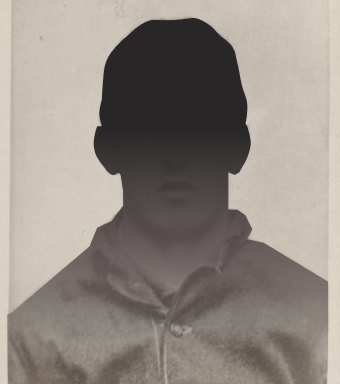
Tried 14 December 1865, aged 25, Trade Coachman, Single

Even though some think that this is the same person as Jeremiah O'donovan Rossa of Irish/American fame & the author of a number of books, this is not the case. This well known Jeremiah O'donovan Rossa never came to Australia but was transported to America in 18 70. The Jeremiah O'Donovan who left Ireland on 10th October, 1867 aboard the Hougoumont and arrived in Western Australia on 9th January, 1868 and as one of a group of the men who were marched, for 2 days, to a stone quarry near Guildford where they were assigned to work. He, with 32 other Civilian Fenians, received his pardon on 15 May 1869. Many who were pardoned chose to return to Ireland, moved interstate or to America, but Jeremiah chose to remain in Western Australia where he was employed as a groom to William Locke Brockman, a pastoralist at Guildford. (https://www.swanguildfordhistoricalsociety.org.au/fenians-in-the-swan-river-colony/) Quote: "The Fenians who chose to remain in the Swan River Colony included Jeremiah O’Donovan, who was employed as a groom to W.L. Brockman at Guildford."
Pardoned in 1869 and returned to Ireland.