Summary
Personal Information
Crime
Voyage
Transportation
Samuel Summers was transported on the William Jardine, departing 9th Aug 1850 and arriving 14th Nov 1850 with 264 passengers.
 William Jardine (generic)
References
| Primary Source | Australian Joint Copying Project. Microfilm Roll 92, Class and Piece Number HO11/16, Page Number 320 |
| Source Description | This record is one of the entries in the British convict transportation registers 1787-1867 database compiled by State Library of Queensland from British Home Office (HO) records which are available on microfilm as part of the Australian Joint Copying Pro |
| Original Source | Great Britain. Home Office |
| Compiled By | State Library of Queensland |
| Database Source | British convict transportation registers 1787-1867 database |
Claims
No one has claimed Samuel Summers yet.
Photos
No photos have been added for Samuel Summers.
Convict Notes

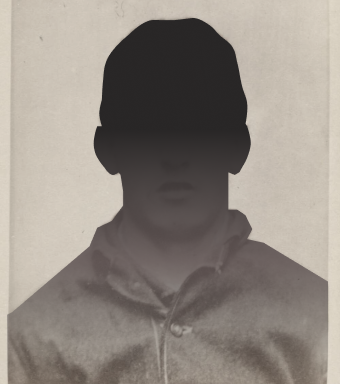
Samuel Summers was 21 years old on arrival and was transported for 'Stealing 4 sacks'. Samuel was born in Bath. Father: Samuel Mother: Elizabeth Sister: Maryanne -- all at native place. Samuel was 5'1" tall, fair complexion, dark brown hair, grey eyes, anchor inside left arm, scar centre of forehead, could read and write a little, protestant and single. 26/6/1852: TOL 6/7/1852: Recommended for a CP 7/2/1854: CP approved. 7/7/1859: Married Emma Sawyer - they had 5 children. 1866: Farmer at Fingal, Tasmania. 3/5/1910: Samuel died at St Helens, Tasmania. 24/6/1910 The Mercury, Hobart: THE LATE MR. SUMMERS. It is not long since the death was recorded of Portland's oldest pioneer in the person of the late Mr T. Coffey, and now the next in length of residence amongst his former neighbours has followed him along that unechoing track which is worn by no returning foot-steps. Mr Samuel Summers, senior, who died at St. Helens the other day was born at a village not far from the city of Bath in the West of England on the 26th July 1825, and came to Tasmania as a young man. Upwards of sixty years ago he took service with the late Mr. Cameron of St. Mary's, and when the late Mr Treloggen pushed through to take up land at George's Bay (where the Messrs Coffey were already settled) Mr Summers entered his employment as dairyman, and at a later stage rented from him a farm, upon which the subject of this memoir settled down, married and reared a family. For Mr. Treloggen, also, Mr. Summers cleared a valuable farm selected by the former at Pyengana ,then known as Georges River. Be-ing a handy man he engaged in various undertakings besides dairying and clearing and most of the early brick-laying executed in the town of St.Helens was of his handiwork . When "the tin broke out" as the local saying goes, he was associated with Mr. Samuel Harrison who survives him, in prospecting for the late Dr. W. L.Crowther at Lottah and on the BIue Tier and it is claimed for them that amongst the first who discovered tin in those localities. He was also amongst the first who discovered tin in the Ruby Valley, near St. Helens, where he worked for the late Mr. Beaby. Mr Summers could tell how the giant gum, in the earliest days stood thickly around George's Bay, from whose waters they were parted only by dense tea tree scrub; of the soldiers who in those days, were still stationed at the barracks situated at St. Helens Point; of the long circuitous, and often precipitous road whereby the St. Helens selectors gained the ocean beach to the south and of the dangerous bar ways at Dianna's Basin and Scamander, which had to be negotiated ere Falmouth was reached, en route for Fingal and the main road at Conara; of the rollicking days of the great alluvial tin boom, and of such local eras as were marked by the erection of the first bridge at St. Helens and Scamander. In short, his memory, which was clear to the end, went back to the very earliest times of settlement in Portland and until a week or so back no figure was more familiar than his in all our township and its neighbourhood. Mr. Summers is survived by his widow, an only son Mr Samuel Jacob Summers of the Ringarooma District, and four daughters - Mrs Joseph Clifford, of St. Helens; Mrs. George Anderson, now residing on the mainland; Mrs. Joseph Salter of Scottsdale; and Mrs. Wm. Quinn, of St. Helens. He was buried at the St. Helens Cemetery and was followed to the grave by numbers from the town and district.

A daughter of Samuel Summers, Agnes Mary Summers, married George William Anderson in 1880 in Tasmania. George William was the son of another former Tasmanian convict Charles Henry Anderson and former female convict Rose Ann Burns.