
Summary
Personal Information
Voyage
Transportation
Henry Laporte Smith was transported on the Candahar, departing 26th Mar 1842 and arriving 20th Jul 1842 with 251 passengers.
 Candahar (generic)
References
| Primary Source | Tasmanian Libraries. Norfolk Island, First Fleeters & families website. Geni. family papers |
Claims
No one has claimed Henry Laporte Smith yet.
Photos
No photos have been added for Henry Laporte Smith.
Convict Notes

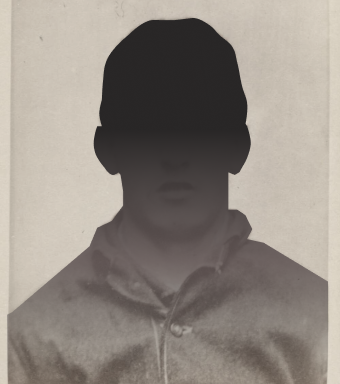
Regarding the birth and death dates of 1 September 1793 and 1 May 1877, these are plausible especially in the absence of any more likely dates if we speculate that Laporte was baptised as Henry Vereker Smyth in Limerick on the date in 1793 and that he was the senile, invalid and potential emancipist who was buried from the Launceston Invalid Asylum on the 1877 date at age 82. There is no proof of either speculation but Laporte's conduct record does allow both possibilities and Laporte may well have been connected with Anglo-Irish establishment Smyth families in southwest Ireland
Conduct Record: aged 49, Tried 4 Dec. 1841 & transported for Forgery, Protestant, can read and write, Trade Provision Merchant, Conditional Pardon approved 23 Nov. 1847 https://stors.tas.gov.au/CON33-1-23$init=CON33-1-23P209 Description List: aged 49 https://stors.tas.gov.au/CON18-1-31$init=CON18-1-31P137 More details:- http://norfolkislandfirstfleetersandfamilies.blogspot.com/2018/05/henry-smith-and-henrietta-letitia-smith.html https://www.geni.com/people/Henry-Laporte-Smith/6000000000235508246
Henry Laporte Smith claimed on his wife’s headstone to be from ‘Ballinatrea’ County Cork [Ballinatray is in Waterford on its boundary with Cork, near Youghal] and Stephens Green Dublin’ but I wonder, from the fact that nothing ‘known’ about him or his family before 1841 has been corroborated and from the detail on this headstone, whether Laporte was using the headstone to give himself a back story in Guernsey (where burials in the town cemetery were then mainly limited to locals, suggesting a more local connection). From the ‘Laporte’ in his name [the Ottoman court at Constantinople was often referred to as ‘La Porte’], Blair Smith speculated that Laporte was a son of John Spencer Smith, an envoy in Constantinople from 1795. This would have Laporte a nephew of Admiral William Sidney Smith and related to other notable (and sometimes shady) Smiths and Smyths (including the Lords Strangford) who did have associations with Ballinatray. As with the back-story researched for Maria, no links with these families have been confirmed. No documentation of Laporte’s birth or his first marriage (in 1821 according to the 1841 settlement) has been found. Nor has anything been found to support the ideas that Laporte had been a surgeon and maybe eloped with the Maria born in 1804 who would have been 15 in 1821. Did the two meet shipboard somewhere? Might Laporte have had some military connection (though by the 1820s England was no longer the military camp it had been a decade earlier). All of this is the stuff of speculations at present! Nor have traces been found of any of Laporte’s siblings listed in his convict indent, even of Lt Charles Augustus Smith, who also was another executor of Laporte’s 1841 settlement though he might have been the merchant’s clerk of that name bankrupted in London in 1844. Indeed, the only ‘official’ record found of the years or places of the births of Laporte’s and Maria’s children is an adult baptismal one in 1850 for our Henrietta (which discounts any link to a similar family that lived in London). Family stories suggest that the Smiths (or Langfords) had money and connections with Dublin’s Roman Catholic establishment through banker, merchant and nationalist Nicholas Mahon and family solicitor Thomas Richmond Evans. They have connected them also to Sidney Herbert, an important political associate of Peel and Disraeli (he became Baron Herbert of Lea) and it has been suggested that Laporte was related to Florence Nightingale whose grandfather was a William Smith and who was a protégé of Sidney Herbert and his wife. None of these connections have been proven and relevant Irish records may have been destroyed in 1922. If the Smiths were connected with powerful and distinguished military, diplomatic and political Anglo-Irish families they would have been linked to the heart of the English and Anglo-Irish Establishments. But Laporte possibly disgraced himself if he did marry Maria as a Catholic girl who was under-age in 1821. And he certainly disgraced himself in 1841. Perhaps people including Maria’s children covered these up. Indeed, all that was known to Maria’s grandchildren with any degree of certainty about Laporte, Maria and their children came out of four sets of events in 1841: Maria’s death (which is proven); Guernsey’s census of that year (which has her family at Vauvert Cottage; and may be reliable as to the birth order of the siblings if not to birth years); Laporte’s proven second marriage; and the ‘disappearance’ of Laporte after that. Even now, no firm evidence from before 1841 has yet been found. But there were stories. In 1841, Laporte and Maria had come (perhaps recently from Ireland and/or London) to Guernsey with their seven surviving children all of whom except Eliza (born in Ireland) were reported in the census of 1841 as born in England (some later claimed Ireland, and Guernsey), including ‘our’ Henrietta who was born in 1831. In February 1841 Maria died, in June Laporte remarried and in August he ‘disappeared’ leaving both his pregnant new wife (Clara Cummins) and his born children apparently without any knowledge of what had happened to him. For the next 165 years nothing more seems to have been known about Laporte. It had been thought (including by my father) that Laporte’s disappearance was somehow related to the 1841 deed that settled £3000 (say $370,000 in 2019 dollars) onto his second wife, half of the money said to have been previously been settled on Maria. It was speculated that Laporte might have carried out plans which he had shared with his second wife, Clara Cummins, and migrated to America or Australia perhaps under the name of Courtney (which, curiously, is the family name of a possible Rowley ancestor of Maria). However, in 2006 Anne Mason discovered that in fact Laporte had been arrested and on 4 December 1841 convicted in the Royal Court of Guernsey of forging three bills on the Bank of Ireland totalling £530 (say $65,000) in July 1841 (after his second marriage!). He was sentenced to be exiled from Guernsey (a sentence with meaning only for a Guernseyaise) but also to be transported for seven years. After the rejection of a petition to the Privy Council, he was transported to Van Diemen’s Land on the Candahar in March 1842. All of this seems to have been unknown to his descendants or, in the case of Sydney Edgar Langford Smith (who may have found something in 1913 and who surely knew when he buried his aunt Louisa Smith (as Mrs Gee) in 1920), it may have been covered up (Edgar, who knew that Laporte was a ‘forger’, wrote of his worry about the possibility of a ‘convict stain’). Strangely, also, my father noted Laporte’s father as John when he penned a family tree in the late 1940s. The reticence is curious for a number of reasons. Firstly, the reticence may have been related to a more general reluctance in antipodean society to admit to convict backgrounds. Certainly, Henry and Henrietta Smith and their descendants seem also to have been unaware also of their links to James and Ann Morrisby until late in the twentieth century, though these links weren’t unknown among other Morrisby descendants in Tasmania. Perhaps the Smith family inherited heightened concerns about scandals? Secondly, Laporte’s trial was widely reported across the British Isles and elsewhere including in The Times of London (why, I wonder?), though not as extensively as the trial about the same time of Edward Beaumont Smith for forging a much larger sum of Exchequer bills. Beaumont Smith, who was a son of Admiral Sidney Smith and so would have been a cousin of ‘our’ Smith if Blair is correct in his suppositions, was convicted of the ‘Exchequer Fraud’ in 1841 and also transported in 1842 to Van Diemens Land where he died as a schoolmaster in 1877. Thirdly, notwithstanding any scandal, my great-grandmother Henrietta seems to have known Mrs Elizabeth Herbert, wife of Sidney (who was a brother of the 12th Earl of Pembroke), describing her as ‘guardian and friend’. Also, Henrietta claimed to have been fare-welled when she left England in 1854 by another Elizabeth Herbert, Sidney’s sister who was married to the Anglo-Irish Earl of Clanwilliam (and/or by Florence Nightingale); her ship – the Constance –did indeed anchor off Deal where the Earl of Clanwilliam was Captain of Deal Castle. Fourthly, while it true that no traces of Laporte after the 1850s have yet been found, records and newspaper entries have now been found online which roughly confirm many of the family stories through Henrietta about the movements of Laporte’s children (including Henrietta and, separately three of her siblings, to Australia) and which suggest that rather more might have been known to his children than was passed on to the his grandchildren about Laporte’s movements after 1841. In particular, after three of Henrietta’s younger siblings arrived in Sydney in late 1854, they placed advertisements in the Empire newspaper that indicate that they understood that their father – as ‘Mr Laport Smith’ – had been in Sydney but were unable to contact him. Another newspaper advertisement placed from Christchurch in the Sydney Morning Herald in 1880, suggests that he was known to have been in Victoria and this is more-or-less confirmed in lists of unclaimed letters awaiting him – generally as ‘Laporte Smith’– in Melbourne in 1854/5. At his trial, Laporte claimed to be a native of Cork in Ireland and was reported to be the son of John, a ‘highly respectable person’ in Cork. He claimed to have been a partner in a firm with business in London, Cork, Jamaica, Lisbon and Gibraltar but declined to reveal the name of the firm other than that his name was not in it. One of the bills was drawn on the firm Kinahan Son & Smythe, and it may be that Laporte was in the sugar or spirits trade (he was described in his convict records as a ‘provision merchant’, though other sources have described variously as ‘yeoman’, ‘esquire’, ‘accountant’ and even ‘physician’). Since the rediscovery of Laporte in 2006, it has emerged that after serving time in a road gang based at the Bridgewater probation station (at Granton) he became a petty constable in the Richmond police force in 1844 and was watch-house keeper at the Richmond convict depot until 1847 (‘neglectful of duty’ on one occasion). Towards the end of 1847 his pardon – though it had been recommended a year before had been that he should remain in the Australasian colonies – was gazetted, curiously conditional only on his 'not to return or be found within the limits of the Island of Guernsey'. Laporte resigned from the police force at the end of 1847, presumably left Van Diemens Land shortly thereafter and had been in Melbourne by 1848/9 (when unclaimed letters awaited ‘Smith, Laport’ and ‘Smith, H de L’ at the Post Office). He was residing in Sydney as ‘Laporte Smith’ by 1851 and was still there in 1854. The 1880 Sydney Morning Herald advert suggests that he was ‘in Sydney in 1855 but last heard of in Avoca, Victoria’ which perhaps was information that came through James, his son who is thought to have gone to the goldfields. Further unclaimed letters awaiting ‘Smith, Laport’ and ‘Smith, Laporte’ at the Melbourne GPO in 1854/5 suggest that he returned to Victoria, while other unclaimed letters, to Henry L Smith (1854) and H L Smith (1855) in Sydney might have been letters to him, perhaps telling of his children’s movements. The letters and advertisements do suggest that, contrary to what is said in letters between Laporte’s children (copies of which still exist), some people had clearer ideas about his movements in Australia than has been suggested to Henrietta’s descendants. It seems that James lost contact with his sisters because in 1877 he advertised in Tasmanian newspapers (coincidentally in the issue of the Hobart Mercury that advertised Beaumont Smith’s intestate estate) seeking his sisters. We don’t know whether he made contact but the timing is curious in that it could have been related to the death from senility in that year in Launceston, of an ex-convict invalid Henry Smith born about 1795. And, perhaps, it was this that gave basis to the vague idea that James was or had been in Queensland. However, other deaths were registered in Australia of Henry Smiths born at the end of the eighteenth century. Other deaths were registered in Britain and Ireland (including an 1864 death in Limerick informed by a Rowland Smith of a Henry Smith born 1792,that I cannot confirm) and, given Laporte’s possible occupation as a providore and the fact that in Sydney he had lived near Darling Harbour, it is possible that he returned ‘home’; there are ship-related records that could be related to such a return. We may never know. Although Laporte’s second wife understood him to have been a man of property in Ireland, she made no claim to this property (which was subsequently embezzled, according to family mythology, though it might have been called on by Laporte). She returned to her parents and lived in London and France for some years, losing touch with the children of Laporte’s first marriage until after her return to Guernsey by 1851. Yet, rather than being sent to a poor-house, six of Laporte’s children were boarded during 1842-3 at the expense of the Parish of St Peter Port, during which time Henrietta reported a visit from Uncle James (Home, on leave from India). It is not known why or for how long the Parish Douzaine took on this expense. However, in 1849 three of Henrietta’s siblings left Guernsey while she, having finished private schooling on Jersey, was enrolled (after an adult baptism into the Anglican Church in Jersey) in a one-year course at an Anglican teachers’ training college in the Close of Salisbury Cathedral (1850-51) with her home address given as at Pierre Percée, the estate of James and Elizabeth MacCulloch, members of an influential Guernsey family known for their Methodist charity but linked by marriage to other important families such as the (Anglican again) reverend Brocks. Although there is online speculation that there was an orphanage or boarding school at Pierre Percée, Henrietta claimed Mrs MacCulloch also to have been a ‘guardian’. So, with MacCulloch’s father a wine merchant in Brittany in the 1790s, it is possible that there had been ‘mercantile’ connections (licit or otherwise) between the Smiths and the MacCullochs earlier in the nineteenth century. If so, the Smiths may have had dealings also then with the Herberts, for the 11th Earl of Pembroke had been Governor of Guernsey between 1807 and 1827. In reviewing both what Henrietta is reported to have told her children and the fragments that exist in a number of documentary records that have been uncovered over the last decade or so I wonder whether Henrietta had been singled out for special treatment compared with her siblings (and, if so, why) but we can only speculate about that. Henrietta’s younger siblings may have also had lived at le Manoir du Pierre Percée but James MacCulloch died in 1850 and Elizabeth may have moved out then as she isn’t recorded in the Channel Islands (or English) 1851 censuses. The 1851 census has Henrietta’s sisters boarding with teachers more-or-less next door to le Manoir , while James was boarding near the school attached to St Pierre du Bois (the church of the Rev Thomas Brock until the latter died in 1850) and Rowland was working (for a family of the same name) on a farm in St Pierre du Bois. Despite the scandal of 1841, Henrietta went to a church teachers’ college and (from letters written to her by Elizabeth (later Lady) Herbert) interacted socially with Mrs Herbert in London, during 1850-53. Certainly, Wilton House home of the Herberts (which Henrietta claimed to have known, pointing to the room where she had stayed) is close to Salisbury where Henrietta studied but the nature of her connection with the Herberts remains a mystery (apart from suggestions that Laporte was connected with Sidney Herbert or his wife).