
Summary
Personal Information
Voyage
Transportation
Owen Suffolk was transported on the Joseph Somes, departing 2nd Jun 1847 and arriving 24th Sep 1847 with 251 passengers.
Built 1845 at London. Wood ship of 780 Tons. The owner was Thomas Colyer of Kent, the son-in-law of Joseph Somes. Two voyages with transport convicts to Australia: 1845/1846: 1847: 248 male people (known as "exiles" landed at Point Henry, Geelong, Victoria and 1 went on to Van Diemen's Land (Tasmania). Queen Victoria had decreed that all of these men (many of them youths from Parkhurst, Isle of Wight) should be treated as "free" upon arrival (significant backlash to transported criminals at this time).
 Joseph Somes (generic)
References
| Primary Source | Australian Joint Copying Project. Microfilm Roll 92, Class and Piece Number HO11/15, Page Number 179 (91) |
| Source Description | This record is one of the entries in the British convict transportation registers 1787-1867 database compiled by State Library of Queensland from British Home Office (HO) records which are available on microfilm as part of the Australian Joint Copying Pro |
| Original Source | Great Britain. Home Office |
| Compiled By | State Library of Queensland |
| Database Source | British convict transportation registers 1787-1867 database |
Claims
No one has claimed Owen Suffolk yet.
Photos
No photos have been added for Owen Suffolk.
Convict Notes

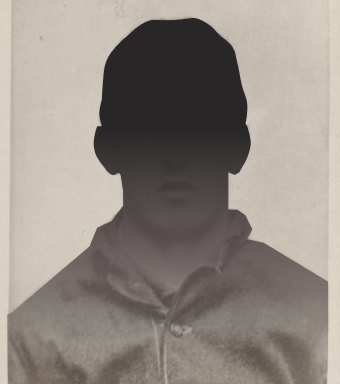
Source: https://archive.org/stream/cu31924030386290/cu31924030386290_djvu.txt Owen Suffolk The Prison-Poet of Australia Owen Henry Suffolk, the son of a London merchant, was a junior post-office clerk who in a moment of tempta- tion opened a money-letter. His character till then had been exemplary; still there was no First Offenders' Act then, so he was sentenced to be transported for seven years. He proved to possess conspicuous ability. His life was a constant struggle between his worse and better natures. In odd moments he wrote poetry. A verse from "The Dream of Freedom," written on board the "Suc- cess," will serve as an example: "In the captive's dream of fancy wild, He looked no more on the man of care; His gaze was fixed on a beauteous child Who knelt at his mother's feet in prayer. Its little hands were clasped — its eyes Uplifted were to Paradise; Its simple words of faith and love Were registered in Heaven above; Recorded there with angels' tears As they wept o'er the hopes the mother built. For they looked through the vista of coming years And saw it fettered to future guilt." Yet he robbed the Ballarat and Bendigo mail coaches, stole horses, and being arrested, escaped again from gaol and became a notorious bushranger. The following lines were written while in the company and under the influence of highwaymen, association with whom only hastened his downward career; he always expressed regret that they had ever appeared in print: "It is not in a prison drear Where all around is gloom, That I would end life's wild career And sink into the tomb. For though my spirit's ever bold Each tyrant to defy, Still, still, within a dungeon cold I could not calmly die. It is not that my cheek would pale Within a lonely cell; It is not that my heart would quail To bid this world farewell; For if oppressed by tyrant foe I'd freely be the first To give my life and strike the blow To lay him in the dust. But place me in a forest glen Unfettered, wild and free, With fifty tried and chosen men, A bandit chief to be; 'Tis there when fighting with my foes Amidst my trusty band, I'd freely leave this world of woes, And die with sword in hand." Yet Suffolk would be melted to tears at any recol- lection of his early life and home. By chance he saw in the "Missing Friends" column of the Melbourne Age, an appealing advertisement from his heartbroken mother in England imploring him to make his whereabouts known. He never answered the advertisement, but the following lines (discovered in his camp) will show his true feelings toward her: "Mother ! darling mother, you are seeking me, I know And I feel thy love will follow through the world where'er I go; But I cannot come, dear mother ; I am sadly altered now : The once fair wreath of innocence that garlanded my brow Has faded ne'er to bloom again; and from the things of yore — The fair, the good, the beautiful — I'm severed evermore. My onward way must be a path of darkness and of pain, But I must tread it all alone — I cannot come again. Of all the changes that have come, I know that this will be, Where all the changes have been sad, the saddest change to thee. I know how much thou'lt weep, mother, for thy dear boy so lost, And 'tis the sorrow thou must feel that makes me sorrow most. I strove against this darker fate, I struggled, mother, long ; I starved and suffered months, mother, ere I was linked to wrong; And even now good angels plead to win me — but in vain ! Once fallen is forever lost — I cannot come again. I'm severed from thee by my sin, but cannot say "forget;" Thy love is such a hallowed thing, I ask it even yet; But let it be a memory that images all fair The child that with uplifted hands in faith knelt by thy chair. Think of me, mother, as I was when joy lit up my brow And my young heart was innocent, but not as I am now. Pray for me. This I know thou'lt do! but seek me not, 'tis vain; I'd throw a shadow on thy home — I cannot come again. They say that in the desert drear some greenness may be found, Some oasis in contrast strange to all the waste around ; And even thus, within my heart, guilt-darkened though it be, There is a love all beautiful that lies and clings to thee. I'm weeping very bitterly, I cannot help these tears, They are the tribute memory pays to joys of fleeted years. Good-bye! God bless thee, mother dear! I sorrow for thy pain. Oh ! if I were but innocent, I'd gladly come again." He served seven years of his numerous sentences on board the "Success." After all that dreadful discipline of darkness mostly, the natural course of time brought about his day of release. As he stepped free, his appre- ciation of the brightness of everything is well conveyed in the following lines: I FEEL THAT I AM FREE. "To me the sky looks bluer, And the green grass greener still; And earth's flowers seem more lovely As they bloom on heath and hill. There's a beauty breathing round me Like a newborn Eden now, And forgotten are the furrows Grief has graven on my brow. There is gladness in the sunshine As its gold light gilds the trees, And I hear a voice of music Singing to me in the breeze. There is in my heart a lightness That seemeth not of me, For to-day I've burst from bondage, And I feel that I am free. Free in the golden sunshine, Free in the fresh pure air, Where the flowers of the forest In their wild homes flourish fair; Free to thought, to give expression, To sing, to dance, and show That the stern world has not crushed me With its weary weight of woe. Are the years of care and sorrow But a dark dream of the past, Or this new life but a vision That is all too bright to last? How exultingly my spirit Flashes forth its newborn glee, As amid rejoicing nature I can feel that I am free. I have neither friend nor loved one To welcome me, nor home; And lonely through the wide world As a stranger I must roam; I know not where to-morrow To procure my daily bread, And to-night the waving branches Must canopy my head. But if I had a place, If of friends a gladsome throng, If some darling one were near me To cheer with love and song, If I'd riches which were boundless, No more joyous could I be Than what I am, exulting In the thought that I am free. Free in the bright glad sunshine, Free in the fresh pure air, My heart with gladness throbbing, And on my brow no care. There's the blue sky all above me — Not a prison-roof between — And at my feet the flowers Nestle in the verdure green. Hark! I hear the breezes singing — 'Lift thy heart to God on high, Who hath brought thee back from sorrow To this world of hope and joy.' And the little nodding flowers In a chorus sing to me — 'If thy God from sin shall free thee, Then thou shalt indeed be free.' " When the hulks were abolished and the prisoners were taken ashore, the Melbourne Argus offered a ,£100 prize in open competition, for the best essay on "Crime." Under a nom-de-plume, Owen Suffolk won the prize with his "Days of Crime and Years of Sufferance," a really fine literary performance.

OWEN HARGRAVE SUFFOLK Tried at the Old Bailey: http://www.oldbaileyonline.org/browse.jsp?id=def1-1656-18440610&div=t18440610-1656#highlight http://www.oldbaileyonline.org/browse.jsp?id=def1-839-18460330&div=t18460330-839#highlight Transported on the Joseph Somes which arrived at Corio Bay, Geelong, Port Phillip, Victoria on the 24 Sep 1847 with 248 prisoners. Owen Suffolk, an Australian bushranger, poet, confidence-man and author of Days of Crime and Years of Suffering (1867). Born in comfortable circumstances in Finchley, Middlesex, Suffolk was sent to sea as a youth when his father was ruined, and on return found himself homeless and fell into a life of crime. Charged with stealing in 1844 and sentenced to a year’s detention he was then convicted of forgery and uttering on the 30 Mar 1846 serving time in Newgate, Millbank and Coldbath Fields prisons before being transported in 1847. In Victoria, Australia by his own account he led a colorful life as a bushman, bushranger thief, prison identity and repeat offender. In his third period of incarceration commencing in 1858 he began his autobiography. In July, 1866, Suffolk received a ticket of leave, his third in Victoria, and a full pardon on board the Norfolk bound for London on 20 September 1866 under the name Charles Vernon an alias. This pardon (in the possession of the National Museum of Australia) was conditional on his not returning to Australia. Suffolk thus obtained the neat distinction of having twice been made an exile. His story published in the Australasian newspaper in 1867 was well-written, racy and a powerful account of criminal and prison life by an insider, one that squared well with the popular fiction of the day. His account of family misfortune, ill-treatment at school and at sea, subsequent misadventures, romantic interludes and descent into vagrancy and crime in London, reads like a misplaced Charles Dickens plot. In Australia he tells of his youthful infatuation with crime, bush ranging and difficulties in finding honest work, and the hardships, injustices and folklore of prison life. Back in England he quickly resumed his old habits as a confidence-man, swindler and thief and added bigamist and deceiver of women. In March, 1867, he married a widow, Mary Elizabeth Phelps, in London. In August 1868 Owen Suffolk, 'a journalist', appeared before Lord Chief Justice Sir Alexander Cockburn at Ipswich charged with stealing a black mare and carriage belonging to the landlady of the Great White Horse Hotel and obtaining ten pounds by false pretences. Suffolk begged for mercy on account of his de facto wife, aged 19, who was his brother's child, and her infant. The judge rejected the marriage as bigamous and sentenced Suffolk to 15 years penal servitude. By 1880 he had been released from prison and on the 4th August married Eliza Shreves at St Lukes Church in the parish of St Marylebone in London. Suffolk is remembered as Victoria's 'prison poet' and for his readable autobiography which reveals much about London street life and the behaviour and treatment of criminals in the Victorian era. An important contribution to Australian literature it influenced Marcus Clarke and his novel His Natural Life. Marriages Mar Qtr 1867 SUFFOLK Owen Hargrave poplar 1c 885 PHELPS Mary Elizabeth poplar 1c 885 Marriages Sep Qtr 1880 SUFFOLK Owen Hargrave marylebone 1a 1051 SHREVES Eliza marylebone 1a 1051