
Summary
Personal Information
Crime
Voyage
Transportation
William Twiddy was transported on the Mangles, departing 24th Apr 1835 and arriving 1st Aug 1835 with 310 passengers.
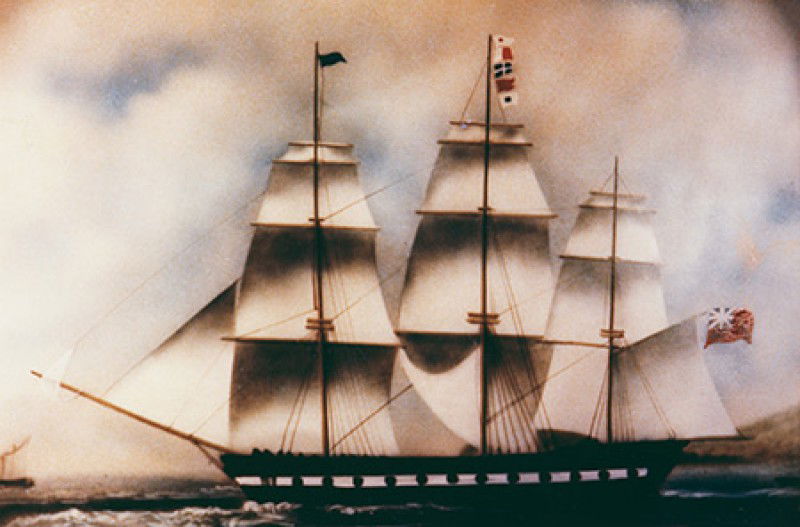 Mangles
References
| Primary Source | Australian Joint Copying Project. Microfilm Roll 90, Class and Piece Number HO11/10, Page Number 42 |
| Source Description | This record is one of the entries in the British convict transportation registers 1787-1867 database compiled by State Library of Queensland from British Home Office (HO) records which are available on microfilm as part of the Australian Joint Copying Pro |
| Original Source | Great Britain. Home Office |
| Compiled By | State Library of Queensland |
| Database Source | British convict transportation registers 1787-1867 database |
Claims
No one has claimed William Twiddy yet.
Photos
No photos have been added for William Twiddy.
Convict Notes

William Twiddy, aged 23, James Walker, aged 22, and Samuel Soames alias King, aged 20, stood charged with breaking into the dwelling-house of Robert Harbord, Walnut, blacksmith, and stealing thereout nine sovereigns, two half sovereigns, twenty shillings, and some silver spoons; they also stood stood farther charged with having broken into the dwelling-house of Charles Oix, of Happisburgh, the same day, and stealing three silver tea spoons; they also stood farther charged with having broken into the dwelling house of Jonathan Balls, of the same place and on the same day, and stealing thereout two sovereigns, eight shillings and sixpence, twenty-four penny pieces, some silver spoons, and other articles. Soames pleaded guilty to each indictment; Twiddy and Walker pleaded not guilty, and were tried the first indictment, but acquitted.— the second indictment the Jury found them both guilty, and his Lordship, in passing sentence upon all three, said be did not entertain any doubt of the propriety of the verdict of the Jury. Of the former charge they had taken merciful view, and on that he said nothing but they bad been found guilty of an offence for which they had subjected themselves to sent out the country for the for the rest of their lives. With respect to transportation, was fit they should know it was quite of different nature to what it was formerly. When they arrived they would find not mere change from one country to another, where they would be employed their own occupatlons but that they would subjected hard toil, which they would have to undergo under circumstances of painful description .The sentence of the Court was, that they should be each transported for the term of their natural lives. Twiddy said. on going from the bar, “I suffer innocently, my Lord.” No evidence was offered on the third indictment. Norwich Mercury 2 Aug 1834.