
Summary
Personal Information
Transportation
Edward Wildblood was transported on the Neptune, Scarborough And Surprize, departing 30th Nov 1789 and arriving 26th Jun 1790 with 1084 passengers.
Neptune 809 tons built on the River Thames 1779. The largest ship of the Second Fleet.
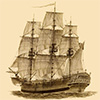 Neptune, Scarborough And Surprize (generic)
References
| Primary Source | Australian Joint Copying Project. Microfilm Roll 87, Class and Piece Number HO11/1, Page Number 61 (32) Hereford Journal - Thursday 07 August 1788 p 3 David Collins “An Account of the English Colony in NSW, Volume 1” |
| Source Description | This record is one of the entries in the British convict transportation registers 1787-1867 database compiled by State Library of Queensland from British Home Office (HO) records which are available on microfilm as part of the Australian Joint Copying Pro |
| Original Source | Great Britain. Home Office |
| Compiled By | State Library of Queensland |
| Database Source | British convict transportation registers 1787-1867 database |
Claims
No one has claimed Edward Wildblood yet.
Photos
No photos have been added for Edward Wildblood.
Convict Notes

Australia, Convict Index, 1788-1868 Ship; Surprise Age; 26 years old

The wonderfully named Edward Wildblood was transported to Australia on the Second Fleet ship “Surprise”, arrived 26 Jun 1790, at Sydney. He was tried on 26 Jul 1788, at Shrewsbury assizes, Salop (i.e. Shropsbury) for stealing a silver watch. First sentenced to death he was then reprieved to transportation for Life. in NSW he was executed by hanging, only four months after arriv.al. He was the 25th person hung by the state since the colony commence din january 1788. Hereford Journal - Thursday 07 August 1788 p 3 “At the assizes at Shrewsbury, seven prisoners received sentence of death, viz, … and Edward Wildblood, for stealing a silver watch.” Other convicts tried with him at the same Shrewsbury assizes and transported to NSW on “Surprize” were James Becket, Thomas Rewell, Thomas Owen, and Edward Wildblood. Two others, Francis Stermy and Samuel Broom arrived on ‘Scarborough’. Wildblood left England eighteen months after his trial - in January 1790 - and arrived at Sydney Cove on 26th June 1790. VOYAGE of SECOND FLEET Two other ships of the second fleet - Scarborough and Neptune - arrived two days later. The convicts on these ships were severely mistreated on the voyage and the death toll was high. As the three ships began to disembark their cargo of malnourished and sickly convicts, the extent of mistreatment became clear. On the ship ‘Surprize’ 36 convicts had perished during the voyage, and 126 required hospitalisation on arrival; many died in the months after disembarkation. Wildblood had been lucky to survive this treatment. Yet he would be executed within four months. FOUR MONTHS IN NSW. David Collins in his book “An Account of the English Colony in NSW, Volume 1” wrote about the circumstances of Wildblood’s execution. Wilblood must have been assigned at Rose Hill after his arrival in June 1790. Collins said that “these people [i.e Wildblood and harris] had given a great deal of trouble before they committed the offence for which they suffered.” In the three months from his arrival in NSW until the end of September, Wilblood, with Harris, had more than once or twice robbed their companions at Rose Hill, and towards the end of September, “ … they took to the woods. Since they were well known, the watch soon brought them in to the settlement at Sydney. They confessed that the night before they were apprehended they had killed a goat belonging to Mr White. “ The Governor directed them immediately to be linked together by the leg and sent them back to Rose Hill, there to labour upon bread and water. It was in this situation that, taking advantage of their overseer’s absence for a few minutes, they went to the hut, having previous knowledge of it, and robbed it of everything they could carry away.” On 28th October 1790, Edward Wildblood and William Harris were tried for ‘housebreaking’ - entering the hut in Parramatta, and stealing from it. Collins recorded of the crime that there was only one man in the hut “ and that a sick person, whom they knocked down, and then robbed the hut.” Collins’ view of their execution: “ They were clearly convicted of the offence, and being most daring and flagrant offenders, were executed at Rose Hill, near the hut which they had robbed.” Buried 28 Oct 1790 Burial registered at St Philip's Church of England