
Summary
Personal Information
Voyage
Transportation
Jan Windvogel was transported on the Earl Grey, departing 27th Aug 1836 and arriving 31st Dec 1836 with 50 passengers.
Built at Newcastle Upon Tyne in 1835. 571 tons. Made 4 voyages to Australia transporting convicts. n.b. Registers of some voyages are not yet complete - currently being updated. Please note if searching records.
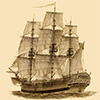 Earl Grey (generic)
References
| Primary Source | NSW Convict Ship Muster Rolls and Related Records, 1790-1849; 1836 Earl Grey; and http://members.pcug.org.au |
Claims
No one has claimed Jan Windvogel yet.
Photos
No photos have been added for Jan Windvogel.
Convict Notes

1850, 15 October: Issued with a Ticket of Leave Passport: “Allowed to remain in the service of Mr I Taylor, New England, 12 months” (see NSW Tickets of Leave, 1810-1869; Butts of ticket of leave passports, 1835-1869; Butts of Ticket of leave passports, 1849-1850).
1845: Called Jan WINDOOGEL, he is granted a Ticket of Leave #45/1918 for the District of Port Macquarie (see NSW Convict Indents, 1788-1842; and NSW Government Gazette, Tue 21 Oct 1845 [Issue No.86], p1155, Government Gazette Notices). 1846, 25 February: Called Jan WINDOOGEL, he is issued with a Ticket of Leave Passport #46/273 and “allowed to remain in the service of Major Innes at New England for 12 months (see NSW Tickets of Leave, 1810-1869; Butts of ticket of leave passports, 1835-1869; Butts of ticket of leave passports, 1846). 1848, 15 July: Issued with Ticket of Leave Passport #48/445: “Allowed to remain in New England in the service of Mr James Scott” (see NSW Tickets of Leave, 1810-1869; Butts of ticket of leave passports, 1835-1869; Butts of ticket of leave passports, 1847-1848).
1837, 18 January: Prisoners from the Earl Grey were landed at the Point and marched to Hyde Park Barracks for inspection and assignment (see Sydney Gazette and NSW Advertiser, 19 Jan, p2). 1837, 23 January: The “210 prisoners from the Earl Grey were marched from Soldiers’ Point, where they were employed breaking stones, to be handed over to their various assignees or their agents” (see Sydney Gazette and NSW Advertiser, 24 Jan, p2). 1837: Convict Muster – Called Jan WINDOOGEL, he is assigned to John I Pearce Esq, Sydney (see NSW and Tasmania, Australia Convict Musters, 1806-1849; NSW General muster R-Y, 1837). 1837: Convict Muster – Called James WINDOGET, he is assigned to George Wright, Parramatta (see NSW and Tasmania, Australia Convict Musters, 1806-1849; NSW General muster R-Y, 1837). 1837, 13 June: He is called “Jan WINDDOGEL” and is on a list of convicts who have absconded from their places of employment. Described as 26, 4’10½”, copper complexion, black and woolly hair, bluish eyes; nose short and cocked, lips thick, fingers of right hand contracted, third finger and little finger of left hand contracted, - “a Hottentot”. Listed as having absconded from the Government, Port Macquarie (see NSW Government Gazette, Wed 14 Jun 1837 [Issue No.280], p442).
1836, 5 April: On this day, Jan WINDVOGEL was tried in the Circuit Court at Graham’s Town, District of Albany, Colony of Cape of Good Hope, for housebreaking with intent to steal/burglary and theft. He was found guilty and sentenced to transportation for life; he also received intermediate imprisonment with hard labour at Robben Island. He was 25 yo, born in 1811; native place Cape of Good Hope; stockman; remarks: “Black African” (see NSW Convict Ship Muster Rolls and Related Records, 1790-1849; 1836 Earl Grey; and http://members.pcug.org.au/~ppmay/cgi-bin/irish/irish.cgi). 1836, 31 December: Jan WINDVOGEL was 25 yo on arrival in NSW; he could not read or write; religion “Hottentot”; single; native place Cape of Good Hope; stockman; burglary and theft; tried at Graham’s Town, 5 April 1836; life; he had previously been convicted and served 7 years in jail at Graham’s Town; 4’10½”, copper complexion, black and woolly hair, black eyes; nose short and cocked, lips thick, fingers of right hand contracted, third finger and little finger of left hand contracted – “a Hottentot”(see NSW Convict Indents, 1788-1842).
Prisoners from Cape Town, Cape of Good Hope: By mid-October, around 30 men on the Earl Grey were suffering from scurvy. The ship’s surgeon, William Evans, recommended that “the master call at the Cape for refreshment, experience having taught him that ‘lime juice and nitrate of potash are mere prophylactics' and that fresh meat and vegetables were the only sure means of ensuring health for the rest of the voyage” (see www.jenwilletts.com). The Earl Grey anchored in Simon's Bay (Simon’s Town), near Cape Town, on 4 November 1836. She remained there for eight days, taking on board fresh beef, mutton and vegetables as well as live bullocks and sheep. She also took on eight prisoners – among them was Jan WINDVOGEL.