
Summary
Personal Information
Voyage
Transportation
John Duval was transported on the Sesostris, departing 23rd Nov 1825 and arriving 21st Mar 1826 with 151 passengers.
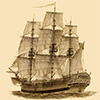 Sesostris (generic)
References
| Primary Source | Australian Joint Copying Project. Microfilm Roll 88, Class and Piece Number HO11/5, Page Number 310 |
| Source Description | This record is one of the entries in the British convict transportation registers 1787-1867 database compiled by State Library of Queensland from British Home Office (HO) records which are available on microfilm as part of the Australian Joint Copying Pro |
| Original Source | Great Britain. Home Office |
| Compiled By | State Library of Queensland |
| Database Source | British convict transportation registers 1787-1867 database |
Claims
No one has claimed John Duval yet.
Photos
No photos have been added for John Duval.
Convict Notes

In the summer assizes of the county of Stafford in July 1825 there stood arraigned in the dock a farmer aged about 28 years, of moderate stature, grey-eyed, of light brown hair, and pale in complexion. Trembling he heard his indictment for breaking and entering the dwelling of one T. Rogers at West Bromwich and stealing a waistcoat, a pair of trousers, a pair of stockings, and a handkerchief. The jury found him guilty of the burglary and he was duly sentenced to death, but this sentence was later commuted to imprisonment for the term of his natural life. After being confined in the Hulks at Portsmouth he was transported in the Sesostris to the colony of New South Wales, and arrived in 1826. Three years later he absconded from Carter's Barrack but must later have been apprehended as he is known to have been issued a ticket-of-leave in 1834. On 1st July, 1841 he obtained a Conditional Pardon. Such in brief is the official history of John Duval (Devell, Duvall), a servant (but not apparently an assigned servant as William Gardner says) of Captain William Dumaresq. Dumaresq, brother-in-law of Governor Sir Ralph Darling, Acting-Chief Engineer in the colony until 1829, and a recipient of great land grants, took up Tilbuster station about 1835. The rest of the story may best be left to the words of the Father of New England history: “This part of the country named Beardy plains received this name from the following circumstance. Two stockmen named Duval and Chandler, who were at that time assigned servants to Captain Dumaresq, and Peter Mcintyre Esq., were in charge of Cattle belonging to these gentlemen. Duval at Tilbuster four miles to the northward of Armadale and Chandler at Ruengurer or Guira station ten miles to the north east of that township. These stations were furthest out at that time, the men from their vocation had every opportunity of first seeing an extensive country, laying to the northward hitherto unexplored by White men. When stations came to be in demand in New England, those who were desirous to have their Stock removed to this part of the district, were recommended to call first upon these men, to point out the most favourable stations for Stations, for this service report states that they were generally well rewarded. Duval ran his Cattle, at the back of the mountain bearing his own name to Tilbuster - Chandler ran his cattle more to the east, which part of the country also bears the name of Beardy plains, he has left a memorial of his name in the mountain named Chandlers Peak.“