
Summary
Personal Information
Voyage
Transportation
Samuel Farrell was transported on the John Barry, departing 12th Nov 1838 and arriving 22nd Mar 1839 with 320 passengers.
 John Barry (generic)
References
| Primary Source | Australian Joint Copying Project. Microfilm Roll 90, Class and Piece Number HO11/11, Page Number 382 Biographical story by Margaret Parkes, source Ancestry.com |
| Source Description | This record is one of the entries in the British convict transportation registers 1787-1867 database compiled by State Library of Queensland from British Home Office (HO) records which are available on microfilm as part of the Australian Joint Copying Pro |
| Original Source | Great Britain. Home Office |
| Compiled By | State Library of Queensland |
| Database Source | British convict transportation registers 1787-1867 database |
Claims
No one has claimed Samuel Farrell yet.
Photos
No photos have been added for Samuel Farrell.
Convict Notes

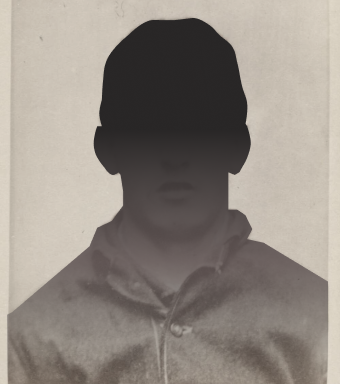
Samuel Farrell was the ninth child of John Farrell and Hannah Stubbs, born 1 Jan 1819 and baptised 7 Feb 1819 in the Bethesda Chapel, (new Methodist Connection) Skelton, in Staffordshire. His maternal grandfather was recorded in the baptismal entry as Samuel Stubbs, a farmer of Middlewich in Cheshire. The baptisms of three daughters were also recorded, in 1809, 1813 (the third child) and 1816 (the sixth child), but we have not located the names or birth dates of the other children. In March 1838, Samuel, aged 19 was charged with stealing from the home of Richard Mellor, the witnesses against him were George Rhodes P.E., Mary Mellor, Ann Mountford and Emma Fenton. This took place on Saturday 10 March 1838, the first year of the reign of Queen Victoria, and John Stephenson Salt Esq was the Sheriff. Further details were given of his charge 'Sam Farrell burglary breaking and entering of the dwelling house of Richard Mellor and stealing two shawls, two gowns, one pair of shoes, one cloak and four sheets, to the value of £3.14.0 in the Paris of Burnham, from the house of Richard Mellor, the goods and chattels of Mary Mellor’. Samuel was found guilty of burglary and sentenced to fifteen years transportation. Immediately after Samuel's conviction, his Mother and other residences of the township of Burselem and its environs petitioned the Authorities for the conviction to be overturned. The petition stated that ‘Samuel Farrell was charged with having in company with another man - who has absconded, offered to pawn a shawl supposed to belong to one Mary Mellor’. Samuel had not absconded but remained in his usual place of residence, and after several days was apprehended by the police, but bailed until he should voluntarily appear for trial at the Assises. At the trial it was admitted that Samuel had never had any previous charges brought against him, and several persons of unimpeachable character had come forward to speak of his general good conduct. In spite of this the jury had pronounced him guilty and the judge had sentenced him to 15 years transportation, intimating that his long sentence was in consequence of ‘something he had heard about him’. It was pointed out that there had been much general unemployment during the past two years due to the depressed trade in the Staffordshire Potteries, but that the last Master with whom Samuel Farrell had worked, had attested to his good character. His mother was described as a ‘poor widow depending almost exclusively on him for support’. The petitioners asked that the case be reviewed and the sentence mitigated. The letter was signed firstly by Mary Mellor the ‘Persecutor’, followed by another sixty persons from the town, including nine grocers and ten potters. One person added the following reference Samuel Farrell was employed by me for between one and two years and conducted himself in the most satisfactory manner and on one occasion he was trusted with a large sum of money which he conveyed to its destination in an honest and proper manner and from his general conduct with us I could have trusted him with any amount. Wm. Maddock. The petition was refused in April 1838, and a second petition in May was also refused. In August Hannah Farrell again petitioned the authorities, through Mr Dale from the Staffordshire Staff Potteries and Alderman Copeland, for the sentence to be reviewed due to the fact that Samuel had only tried to pawn the items on behalf of another person, but this also fell on deaf ears. Meanwhile, Samuel had been held on the hulk ‘Ganymede’ in London, with one gaol report stating that his ‘character was not known’. In November 1838 Samuel was transferred to the ‘John Barry’, departing from Sheerness via Teneriffe for New South Wales, arriving on 22 March 1839. This was the fifth voyage of this vessel, the master was John Robson, and the surgeon Campbell France. The Surgeons Report for the voyage stated that Samuel reported sick with a fever on March 15, being discharged and put off the sick list on 22 March. One convict died during the voyage and 319 disembarked at Sydney. The Convict Indent for 1839-39 recorded Samuel Farrell as being aged 21, single, a Protestant from Staffordshire who could read but not write. His trade or calling was as a labourer and he had been convicted of ‘House Breaking’ at the Stafford Assizes and sentenced to 15 years transportation. He had had no former convictions; he was five feet seven and a half inches tall, with a ruddy complexion, a diagonal scar on the right side of his forehead and a scar on the back of his left thumb. It is not known where Samuel was sent on arrival in New South Wales, but in May 1845 he was issued with a Ticket of Leave and allowed to remain in the district of Scone. His sentence was noted on this form as being for 10 years, not the original 15 years he had been sentenced to. In November of the same year he was granted permission to drive cattle between the Darling Downs and Morphet, during the next twelve months while working for Mr Goggs. In January 1847 another Ticket of Leave was issued to Samuel for twelve months, allowing him to remain in the services of Mr W C Wentworth at the Namoi River. In 1847 his mother Hannah Farrell had again petitioned for the reduction of his sentence and for her son to be returned to her in England. This letter had been forwarded to the Governor of New South Wales in Sydney, who replied through his secretary that they did not have the authority to remit Samuel’s sentence, and that he was holding a Ticket of Leave for the Scone District and that his mother’s letter would be forwarded on to him. Samuel received a Conditional pardon in October 1848, ten years after he was convicted. In 1857, Samuel Farrell married a young widow Mary Foster [nee Bath]. Mary was aged 25 and had four children from her first marriage. Mary was the fifth of seven children of William Bath and Susannah Bridgeman, born 16 March 1831 in Christian Malford in Wiltshire. After the death of her mother in 1840, her father William had married Sarah West and had then migrated to Australia with their first child and six of the children from his first marriage. Mary Bath had first married John Francis Foster on 2 May 1848 at Waterloo Station near Walcha. John Foster, aged 30, worked on ‘Ohio” Station, and Mary’s father William Bath gave permission to the marriage, as Mary was only aged 16. Mary and John had four children, William born 1849, Frances born 1850, Ann born 1851 and Albert born 1853. John Foster died in May 1856, his death certificate recording only his name and age – 38 - the date of death and the place – Waterloo Station – and the name of the person who registered the death six weeks later at Armidale. It is possible that John Foster was born in St George in the East London and came to Australia as a convict in 1835 on the ‘Mary Ann’, having been baptised in 1820, his parents listed as Francis and Susannah Foster, but we have no evidence to connect him to these facts. Samuel and Mary went on to have another ten children. Samuel died at Walcha aged 76 on 27 Sept 1894, his occupation being given as a Butcher. His will showed that he had assets valued at almost £610, but owed £684, having an overdraft at the bank for £552 therefore being in deficit for £74. Mary Jane died on 22 June 1903 aged 71.