
Summary
Personal Information
Crime
Transportation
Robert Thomas Palin was transported on the Nile, departing 18th Sep 1857 and arriving 1st Jan 1858 with 271 passengers.
 Nile (generic)
References
| Primary Source | Australian Joint Copying Project. Microfilm Roll 93, Class and Piece Number HO11/18, Page Number 235 (119) |
| Source Description | This record is one of the entries in the British convict transportation registers 1787-1867 database compiled by State Library of Queensland from British Home Office (HO) records which are available on microfilm as part of the Australian Joint Copying Pro |
| Original Source | Great Britain. Home Office |
| Compiled By | State Library of Queensland |
| Database Source | British convict transportation registers 1787-1867 database |
Claims
No one has claimed Robert Thomas Palin yet.
Photos
No photos have been added for Robert Thomas Palin.
Convict Notes


BACK IN ENGLAND: From 'The Manchester Guardian', January 2, 1856: "CHARGE OF BURGLARY The man Palin, who was acquitted at the Maidstone assizes on Friday se’nnight of the murder of Jane Beagley, at Cudham, was brought up in custody, on remand, at the magistrates’ office, Thornbury, Gloucestershire, on Saturday last, charged before Messrs. Townsend, Howard, and Davies with, on the night of the 18th of August last, burglariously breaking and entering the dwelling-house of Miss Jane Shepherd, at Buckover, near Thornbury and stealing there-from several articles of wearing apparel and 10s. in money, belonging to her brother Henry Shepherd, as well as some provisions and wine, her property. The prisoner Palin, who looked as if in ill health, was residing at the house of a returned convict on a ticket of leave, named Mark Wheeler, who has, since Palin’s arrest on the charge of the murder, as we have before stated, been re-committed by order of the Secretary of State for the remainder of his sentence. Great interest was manifested to catch a glimpse of Palin while on his way, in the custody of the officers, to the magistrates’ office, which was crowded with spectators. The witnesses from Croydon who were summoned since the last hearing of the case were in attendance. The first witness called was Miss Annie Shepherd, the sister of Miss Jane Shepherd, whose house was broken into, who deposed: I reside in the house of my sister, Jane Shepherd, at Buckover, in this parish. My brother Henry also resides with us, and a gentleman named Leonard Bennett lodges with us. I remember the 18th day of August last. It was on a Saturday. The house was closed about half-past nine that evening. My sister alone was absent on a visit. About six o’clock the following morning I found that the house had been entered during the night, and a variety of articles stolen. I missed a coat and two waistcoats, half a dozen neckerchiefs, a pair of stockings, a pair of braces and 10s. in silver, all belonging to my brother Henry. I also missed two table spoons, silver sugar tongs, half a dozen knives and forks and a large carving knife, about 30lb. of bacon, a piece of cheese, three large loaves of bread, 4lb of brown sugar, and a small quantity of tea, all belonging to my sister; likewise a box of gun caps, a canister of powder, powder flask, and four bottles of wine belonging to Mr. Bennet; the parlour windows and shutters had been forced open. They were fastened the night before in the usual with a bar across the shutters. The clothes were taken out of a bureau drawer in the parlour. The eatables were taken out of the pantry and cellar. Nothing was taken from the rooms upstairs. I have seen the two waistcoats now produced, and know them to belong to my brother. One button is missing off the plaid waistcoat. I know that was off before it was stolen. My brother had spoken to me about putting another on for him. I know the black waistcoat by its general appearance, and by the striped lining. I knew the prisoner had been lodging for some little time at the house of Mark Wheeler, a short distance from our house, and I saw him pass our house between seven and eight o’clock on the Saturday evening. I also saw him on the Sunday. I did not see him again until about a fortnight afterwards, when he was in the company of a police constable. My brother is not quite of sound mind, and does not attend, being unable to bear the excitement. I saw my brother’s clothes safe on the Saturday night. Thomas Carey, of Croydon, shoemaker, was the next witness called, who deposed: I know the prisoner; he is a relation of mine. His father and I are first cousins. He came to my house on the 23rd August last, about noon. He stayed until the evening, and then left for London. He left my house about six or seven o’clock. I walked up into the town with him. I went with him to the shop of William Henley, who deals in clothes. He went in, and I waited until he came out. He said he had sold some articles for 9s. He had a small bundle with him previously to his going into the shop. He opened the bundle at my house and showed me a coat and a waistcoat. He had previously given me a waistcoat. It was a kind of a plaid. He said he gave it to me to work in. I believe the waistcoat now produced is the same. I delivered it up to Mr. Smith, the police constable on the 5th September. William Henley, of Croydon, dealer in clothes, was next called who deposed: I remember purchasing a coat and a waistcoat of a person resembling the prisoner for 9s. I cannot say what has become of the coat. The waistcoat, a black one, I now produce. John Smith, No. 60P of the metropolitan police, stationed at Croydon, was next called who deposed: I obtained the plaid waistcoat now produced from Thomas Carey on Wednesday 5th September last. It has been in my possession ever since. On the 5th September I went to Mr. Henley’s shop and there saw the black waistcoat now produced in his possession. The prisoner Palin when called upon for his defence said: The waistcoat I gave Thomas Carey and the things I sold to William Henley, I bought of Henry Shepherd, and a pair of trousers besides, on 21st August, for which I gave him 22s 6d. On the night the burglary was committed I slept at Wheeler’s and was there from 10 o’clock at night to 6 in the morning. On the 23rd I went to London. Their worships fully committed the prisoner to wait his trial at the next Gloucester assizes for the offence. ‘Times Newspaper' (http://www.perthdps.com/convicts/w4606.htm) --00--
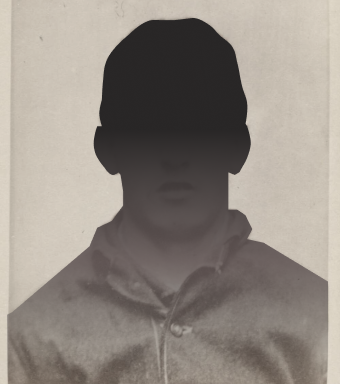
PALIN, Robert Thomas Convict No 4606 Ship Name Nile Ship Arrival Date 1 Jan 1858 Birth Date 1834 Deceased 9 Jul 1861 Place of Death Perth, hanged for burglary Marital Status Unmarried Occupation shoemaker Literacy lit Religion Prot Sentence Place Gloucester Sentence Province Gloucester Sentence Country England Court Assizes Length of Sentence life Crime burglary Previous Conviction prev conv Ticket of Leave Date 22 Jan 1861 Robert Thomas Palin was a convict transported to Western Australia. His execution in 1861 was the only time in the convict era of Western Australia that Ordinance 17 Victoria Number 7 was used to secure the capital punishment of a convict for a crime not normally punishable by death. Born around 1835, nothing is known of Robert Palin's early life except his criminal record. In 1851, he was sentenced to ten years' imprisonment for housebreaking; in 1853, he was tried but acquitted of murder; and in March 1856, he was convicted of "burglary from the person" and sentenced to penal servitude for life. At the time of his sentencing, he was described as a shoemaker by trade. Palin was transported to Western Australia on the Nile, arriving in January 1860. His behaviour was good both during and after the voyage. In April 1860, he was appointed a probationary constable and received his ticket of leave in January 1861. At that time he had a house in Fremantle from which he worked as a shoemaker and took in lodgers. On 29 May 1861, Palin was charged with having broken into the home of Samuel and Susan Harding. Susan Harding gave evidence that her husband had been away and that she had woken during the night to find a man standing at the side of her bed. The man seized her by the arm and demanded money. When she said she had none, "he pulled the bedclothes down and felt about the bed... I thought he was going to commit some assault." Harding then gave the man a number of valuables and he left. The following morning, the police followed a set of footprints to Palin's house, where they found some wet boots whose tread matched the prints. They also recovered a number of the valuables that had been stolen. Palin claimed to have been set up by William Cockrane, another ticket-of-leave man whom Palin said had a grudge against him. However, he was not believed and the jury found him guilty of robbery with violence, the violence being the "battery on the person of Mrs. Harding by seizing her by the arm while she was in bed." Chief Justice Archibald Burt passed a sentence of death and Palin was hanged three days later on 9 July 1861.