Summary
Personal Information
Crime
Voyage
Transportation
Thomas Bowler was transported on the Hougoumont, departing 10th Oct 1867 and arriving 9th Jan 1868 with 281 passengers.
875 ton ship was built at Moulmein in 1852. http://www.australiangeographic.com.au/journal/on-this-day-in-history-australias-last-convict-ship-docks.htm ---------------------------- Incorrect Image ....This is a four masted steel hulled Barque in the drawing , im surprised Australian Geo didn't do a bit more research on this .......The Hougoumont was a works ship on the Forth Bridge Project in 1885 ....the one potrayed as a drawing in Aust Geo is the later version of this ship.....the photograph i have attached is the correct and original convict vessel. --00-- 1867 "The hired convict ship Hougoumont, which has been taken up by the Government for the conveyance of a numerous party of convicts to Freemantle, Western Australia, left the Nore on October 1, and proceeded down Channel, after receiving on board 150 convicts from the establishments at Chatham and Millbank. The convicts from the Chatham establishment, at St. Mary's, embarked from the dockyard on board the paddle-wheel steamer Adder, Mr. W. J. Blakely, and were in charge of a numerous party of convict guards and wardens, all heavily armed. Among the convicts shipped were a party of fifteen Fenians, who were engaged in the late conspiracy in Ireland, together with the officers and crew convicted of scuttling the ship Severn, and some others who have achieved notoriety from their crimes. The Fenian convicts, like the remainder of the prisoners, were chained together in gangs, but it was observed that they were kept apart from the other convicts in a portion of the vessel by themselves. The steamer Petrel also took down a number of convicts from the establishment at Millbank for shipment on board the Hougoumont, in charge of a strong escort and convict guard. On Tuesday, October 8th, the Hougoumont arrived in Portland roads. Shortly before midday ninety convicts were marched down to the Government pier at Portland under a strong escort of the 12th Light Infantry. The party included twenty-three Fenian convicts, among whom it was said, was Moriarty. The Government steamer employed in the breakwater service was used for conveying the convicts on board the Hougoumont transport ship. The convicts were chained together on embarking, and on board the steamer a strong guard of marines from her Majesty's ship St. George was formed, and saw the convicts safely placed on board the Hougoumont. The Governor of the penal settlement at Freemantle, Captain Young, is on board the Hougoumont, and returns in that ship to his sphere of duty after paying a visit to his native land." Source: Sydney Morning Herald, Thu 19 Dec 1867, p4, English Shipping, available on Trove at https://trove.nla.gov.au/newspaper/article/28608271?searchTerm=hougoumont.
 Hougoumont
References
| Primary Source | Australian Joint Copying Project. Microfilm Roll 93, Class and Piece Number HO11/19, Page Number 258. National Library of Ireland http://sources.nli.ie/Record/MS_UR_001031. |
| Source Description | This record is one of the entries in the British convict transportation registers 1787-1867 database compiled by State Library of Queensland from British Home Office (HO) records which are available on microfilm as part of the Australian Joint Copying Pro |
| Original Source | Great Britain. Home Office |
| Compiled By | State Library of Queensland |
| Database Source | British convict transportation registers 1787-1867 database |
Claims
No one has claimed Thomas Bowler yet.
Photos
No photos have been added for Thomas Bowler.
Convict Notes

OCCUPATION: Thomas Bowler (alias Cullinane) is listed on the WA Convict Register as a labourer (see Western Australia, Australia, Convict Records, 1846-1930 for Thomas Bowler; Convict Department, Registers; General Register for Nos 9059 - 9598 cont., 9599 - 10128 (R15 - R16)).
1869, 9 October: From the Freeman's Journal, p2: "ARRIVAL OF THE LIBERATED IRISH STATE PRISONERS IN SYDNEY. The Rangatira, with twenty five of the Amnestied State Prisoners on board, left Melbourne at about half-past four o'clock on last Saturday afternoon, but did not arrive in Sydney until some short time after eight on Tuesday morning. This detention was caused by a strong northerly breeze and head sea which the vessel encountered immediately on rounding Cape Howe. The Sub Committee appointed by the Central Committee of Sydney had secured apartments for them at the Italian Hotel, in north George street, and were at their post at the hour when the steamer was due. It had first, on the report of apprehended disturbance on the part of the Orangemen, been arranged that the subcommittee should engage a small steamer and take their friends off the Rangatira somewhere below Port Denison. This intention was abandoned because it might be subsequently alleged, by people who have shown some anxiety to misrepresent the real state of affairs, that the patriots were smuggled ashore. Accordingly the gentlemen deputed to receive the guests took their station on the wharf as soon as they learned that the steamer was coming up the harbour and awaited their arrival. The news of the arrival of "the Fenians" spread with astonishing rapidity in the vicinity, and crowds were immediately rushing to the water's side to catch a glimpse of the much dreaded revolutionists. By the time time the men had disembarked there were some hundreds on the wharf. There was not even the semblance of a demonstration on either side, not a voice was raised not a gesture made. Indeed save and except the numbers present not the least difference could be noticed between the landing of the ex-prisoners and the landing of an equal number of ordinary immigrants from the neighbouring colonies. The men then marched four abreast to the carriages waiting for them and were driven off to the hotel abovementioned. None of them seemed much the worse for their imprisonment, and all of them declared that bad as penal servitude in Western Australia was, it was infinitely preferable to incarceration in any of the English prisons. They are chiefly from Cork and Limerick, with a few from Dublin, as will be seen by the annexed list. They are very favourable specimens of the young and intelligent Irishmen of the present day, and are evidently imbued with a manly and patriotic spirit. We understand that none of them care about remaining in the colony; the great majority of them will return home to Ireland, and the remainder of them will proceed by the first opportunity to San Francisco. We were highly pleased to see that they were accorded a genuine Irish "Cead mille failthe" without the slightest pretext being given to certain parties, who shall be nameless for the present, at all events, to cry out that a "Fenian demonstration" was taking place, or that "old sores", whatever kind of wounds they may happen to be, were being ripped open once more. A constant tide of friends and sympathisers, anxious to clasp the hands of the patriots and to congratulate them on their release from their unmerited suffering, flowed through the rooms and threatened occasionally to become a decided nuisance to our gallant young countrymen. It must have been a great relief to them when the hand shaking terminated and they were allowed to retire and rest themselves after their protracted and disagreeable passage from the Sound. On one occasion two members of the detective force mingled with the throng in the room, and although they were instantly recognized there was no more notice taken of their presence than if they had been but a couple of cur dogs that followed the crowd. We regret that we are quite unable to say whether they were able to report anything important to their highly respected, intelligent, and efficient chief. Our friends are by no means confined in their movements, they ramble freely about the city, and so far as we can hear, they have been subjected to no unfriendly molestation or interference of any kind. Their quiet unostentatious and gentlemanly manner has favourably impressed both friends and foes, who have come in contact with them. We append a list of their names, place of birth, where convicted, and nature of sentence, which we make no doubt will prove interesting to many of our readers as by this means they can tell whether they have been acquainted in the old country with the prisoners, or their families:— 1. Mr. John Kenealy, born at Newmarket, county Cork; convicted at Cork, December 1865; sentence, 10 years penal servitude. 2. Mr. Jeremiah O'Donovan, born at Blarney, county Cork; convicted at Cork, December 1865; sentence, 5 years penal servitude. 3. Mr. John S. Casey, born at Mitchelstown, county Cork; convicted at Cork, December 1865; sentence, 5 years penal servitude. 4. Mr. Michael Moore, born at Dublin; convicted at Dublin, December 1865; sentence, 10 years penal servitude. 5. Mr. Patrick Dunne, born at Dublin; convicted at Dublin, December 1865; sentence, 5 years penal servitude. 6. Mr. Denis B. Cashman, born at Waterford; convicted at Dublin, January 1866; sentence, 7 years penal servitude. 7. Mr. John B. Walsh, born at Dublin; convicted at Dublin, January 1866; sentence, 7 years penal servitude. 8. Mr. Patrick Doran, born at Dublin; convicted at Dublin, April 1867; sentence, hanged, drawn and quartered. 9. Mr. Eugene Lombard, born at Cork; convicted at Cork, May 1867; sentence, 7 years penal servitude. 10. Mr. Eugene Geary, born at Cork; convicted at Cork, May 1867; sentence, 5 years penal servitude. 11. Mr. David Joyce, born at Ballamacoda, county Cork; convicted at Cork, May 1867; sentence, hanged, drawn and quartered. 12. Mr. THOMAS CULLINANE [aka Thomas BOWLER], born at Ballamacoda, county Cork; convicted at Cork, May 1867; sentence, hanged, drawn and quartered. 13. Mr. Simon Downey, born at Cork; convicted at Cork, May 1867; sentence, 7 years penal servitude. 14. Mr. Morgan McSweeny, born at Cork; convicted at Cork, May 1867; sentence, 7 years penal servitude. 15. Mr. Denis Hennessy, born at Kilmallock, county Limerick; convicted at Cork, May 1867; sentence, 7 years penal servitude. 16. Mr. Maurice Fitzgibbon, born at Kilmallock, county Limerick; convicted at Cork, May 1867; sentence, 5 years penal servitude. 17. Mr. Thomas Daly, born at Kilmallock, county Limerick; convicted at Cork, May 1867; sentence, 15 years penal servitude. 18. Mr. John Sheehan, born at Kilmallock, county Limerick; convicted at Cork, May 1867; sentence, 7 years penal servitude. 19. Mr. David Cummins, born at Youghal, county Cork; convicted at Cork, May 1867; sentence, 7 years penal servitude. 20. Mr Michael Noonan, born at Kilmallock; convicted at Cork, May 1867; sentence, 5 years penal servitude. 21. Mr. Patrick Riordan, born at Kilmallock; convicted at Cork, May 1867; sentence, 7 years penal servitude. 22. Mr. Patrick Leahy, born at Thurles, county Tipperary; convicted at Cork, May 1867; sentence, 5 years penal servitude. 23. Mr. Thomas Fogarty, Kilfeacle, county Tipperary; convicted at Cork May 1867; sentence, 5 years penal servitude. 24. Mr. Robert May, born at Drogheda; convicted at Dundalk, August 1867; sentence, 5 years penal servitude. 25. Mr. Patrick Wall, born at Drogheda; convicted at Dundalk, August 1867; sentence, 5 years penal servitude.
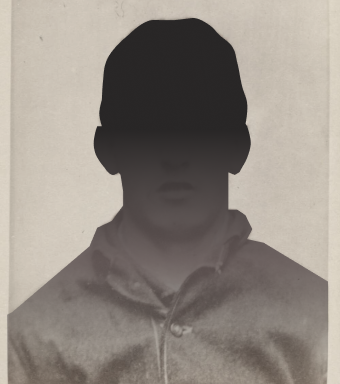
Thomas 'Bowler' Cullinana - FENIAN SUSPECT. One of several who had taken part in the Irish Rising of March 1867 who were known as the “military Fenians” because they had been serving in the British army when convicted of taking the I.R.B. oath or of otherwise helping Fenianism. Life sentence and transported to Western Australia on the 'Hougoumont' 1868. Three of the Co. Corkmen on board had originally been sentenced to death, their sentence later being commuted to penal servitude for life. Those three were David Joyce and Thomas Bowler Cullinane of Ballymacoda, two Irish speakers, who had raided Knockadoon-Warren coastguard houses under Peter O’Neill Crowley on the night of the Rising; and John Edward (Ned) Kelly, a Kinsale born Protestant who had been with O’Neill Crowley at the fatal affray at Kilclooney on March 31, 1867. During the voyage a 64 page Irish handwritten newspaper called The Wild Goose was produced. Royal pardon to Thomas Cullinane (or Bowler), and others (including John Casey and Jeremiah O'Donovan), now serving sentence of penal servitude in Western Australia, with signature of Henry Austin Bruce, Home Secretary, 24 Feb. 1869. As stated in other Contribution, Thomas returned to Ireland where he died in 1928 and a monument erected to his life and memory.
thomas is buried in the hill cemetery, ballymacoda, county cork, ireland. his headstone is in good condition and gives some details of his life. to locate his grave turn right when you enter the cemetery by the pedestrian gate.
thomas is buried in the hill cemetery, ballymacoda, county cork, ireland. his headstone is in good condition and gives some details of his life. to locate his grave turn right when you enter the cemetery by the pedestrian gate.
his full name is thomas bowler cullinane. the word bowler is placed betwen inverted commas, inferring that it's a nickname. perhaps he played road bowling, a hobby still popular in two of ireland's 32 counties, cork and armagh.