Summary
Personal Information
Voyage
Transportation
Thomas Hirons was transported on the Lord Raglan, departing 3rd Mar 1858 and arriving 1st Jun 1858 with 270 passengers.
 Lord Raglan (generic)
References
| Primary Source | Australian Joint Copying Project. Microfilm Roll 93, Class and Piece Number HO11/18, Page Number 271 (137) |
| Source Description | This record is one of the entries in the British convict transportation registers 1787-1867 database compiled by State Library of Queensland from British Home Office (HO) records which are available on microfilm as part of the Australian Joint Copying Pro |
| Original Source | Great Britain. Home Office |
| Compiled By | State Library of Queensland |
| Database Source | British convict transportation registers 1787-1867 database |
Claims
No one has claimed Thomas Hirons yet.
Photos
No photos have been added for Thomas Hirons.
Convict Notes


FOOTNOTE: TRANSPORTATION: All four men involved in the burglary of John Tims’ home would be transported, separately, to Western Australia. The first to arrive was CHARLES CHANCE, per Clara, on 3 July 1857—see his bio at https://convictrecords.com.au/convicts/chance/charles/14086. WILLIAM SMITH was transported per Nile just under 6 months later -- see his bio at https://convictrecords.com.au/convicts/smith/william/60826. Next to arrive was THOMAS HIRONS, aboard the Lord Raglan, on 1 June, 1858. ALFRED SMITH was sent per Edwin Fox and arrived on 21 November, 1858—see his bio at https://convictrecords.com.au/convicts/smith/alfred/95587. --00--
NEWSPAPER report of his trial on 12 July, 1855, at the Oxford Assizes: “AT LITTLE BARFORD. Chas. Chance, Wm. Smith, Alfred Smith, and Thos. Hirons were indicted for having, on the 1st May, broken into the house of Mr. John Tims, of Little Barford, and stolen therefrom a £10 note, three watches, and other property, including two guns. Mr. Pigott and Mr. Cripps prosecuted, and Mr. Powell defended Wm. Smith and Chance. Mr. Pigott opened the case, and characterised it as one of the most atrocious burglaries that was ever committed; for the prisoners were all masked and armed, and after tying the prosecutor and his wife together, and both to the bedstead, they also tied Miss Tims to the bedstead, and did the same to the female servant. Charles Chance would be identified by the servant, and Hirons would be identified by Mr. Tims. The Smiths also would be identified as the parties who changed the £10 note, and upon Alfred Smith were found crow-bar, centre-bit, and other implements used by burglars. John Tims sworn—Am a farmer at Little Barford. I remember May 1, when I heard a noise in the house, and on opening the door four men rushed into my bedroom, and I got back to my bed. I hallooed ‘Murder’, and my wife jumped out of bed. The men had black over their faces, and a dark lantern, which was open. They told us to be quiet, or they would blow our brains out. They asked for the keys, and they were delivered to them. They broke open all the boxes. One man had a pistol with him, but never spoke. They cut the cords of the bed, and tied my arm to my wife’s, and both of us to the bedstead. The man who had the pistol pointed it to us several times. They asked where the money was, and I told them I had a £10 note, and they said they wanted more. It was either a note of Qillett’s or Cobb’s bank of Banbury. I gave the £1O note, and besides that they took some silver spoons, three watches, and gold… and they drank or took away two quarts of brandy. They were about three-quarters of an hour before they left our bedroom, but they came again, and were about a quarter of an hour. I knew one of the men, and that man was Thomas Hirons. He had worked the premises for my father about thirteen years before. Alfred Smith had the spoons, and spoke to me three times. Cross-examined Hirons—You worked the farm, but I don’t know that you were in the house. Re-eximined—Saw enough of Alfred Smith to know him again. My wife has not yet recovered from the fright, and has been ill ever since. I knew Alfred Smith’s voice when he was before the justices at Banbury. Sarah Tims sworn.—I am sister to last witness; remember the morning of May 1, when four men forced the room door, saying was money they came for and money they would have. One said if I was not quiet he would blow my brains out. They all came to my room after leaving my brother’s. One put a pistol to my bead, and another said ‘make her take her oath she has no money’. They tied my wrists to the bedpost and sacked and ransacked all the drawers and boxes. A light was in one of their hands at the foot of my bed. One man took a match out of my room, and they were from half an hour to three quarters there altogether. I identified the Smiths and Chance, and believe Hirons was there also. Alfred Smith held the pistol to my head. All had crape on their faces. Witness, in other respects, confirmed the previous evidence. Cross-examined: As I opened my bedroom door the four men rushed into my room; and one man had a bonnet on his head and a veil. After the first, I was not much alarmed. By the Judge.—I saw Hirons’ features distinctly through the mask. Keziah Butler, servant to prosecutor, said.—She slept in Mr. Tim’s house on the night of the robbery, and saw two men come into her room. One had something white round his head, and the other had black over his face; the tall man asked me if I was the servant or the daughter, and I said, the servant. The men then left my room for about an hour, and on coming back tied one of my hands to one of my knees with a piece of the bed cord, and tied it to one side of the bed. I saw Chance since; he is the tall man, and is the one who stood by the side of my bed and tied me. It was then that I saw his face. At Solihull I saw some persons together, and picked out Chance from amongst them. He was dressed in the same way when I saw him before and I heard him speak again. It was the same voice when he spoke to me in the house of Mr. Tims. Cross-examined.—Have said that I did not see the tall man’s face, because he had something over it. Don’t recognise either of the other prisoners. Re-examined.—Knew Chance again from his height, clothes, and speech. Daniel West, carter, slept in Mr. Tims house on the night of the robbery. The men were about two minutes in my room, and then went out. John Bass.—Live at the Navigation Inn, Warwick. The morning of May 1, three men came to my mother’s Inn. Hirons and Chance were two of them. The other man I did not notice sufficiently. Chance tendered the note, and the language used by the men was so bad that I was sent for. Chance was told he had better take the note to the bank, and after that he gave it to a militiaman named Pratt, and he tried to change it. Chance said he stuck to the ‘Tiller’ well, or he should not have got out of the wood. Hirons said to Chance, ‘You have been a good master to me, although I have known you only five or six weeks.’ Jessie Pratt, the militiaman, proved having taken the note from Chance, and saw him and W. Smith go into the Inn at Warwick. Witness got the note changed at Mr. Brown’s, and observed that the men had been somewhere upwards, viz., near Banbury, from the red dirt on their boots. Witness cleaned Chance’s boots for him. Chance told him to give the name of Thomas Queen in changing the note… Thomas Brown, of Warwick, grocer, proved changing the note when taken to him by the last witness. It was a Banbury note, of Cobb’s bank, but witness took particular notice of that note. James Wild, superintending constable, Solihull, May fifth, took Hirons on that day, and handed him over to Superintendent Burton. On the ... of May Charles Chance and William Smith came towards me, and then went another way. I overtook them and searched them; another man was with them. Wm. Smith I found a dark lantern, pistol, piece of crape, spring knife, etc.; and on Chance, was piece of fried liver which burglars quiet dogs with. I have quieted a bull dog with it. On going along the road to Birmingham, I overtook Alfred Smith and found on him a centre bit, a spring-backed knife, crowbar, and watch. I had known the Smiths before, but not Hirons. Charles Smith [Chance?] said his name was Charles Green, when apprehended. I took Hirons in bed at Thames-green. He had on a coat and cap, which the Smiths had also worn. I went to Barford on May 28th, and compared the indentations on Tims’ bureau, and they corresponded with the size of the crow-bar. There was also mark on the cupboard that fitted the crow-bar. A mark on the door stairs had also been made by the crow-bar. Joshua Burton, superintending constable at Banbury, went to Barford after the burglary. The entrance was effected by a pane being taken out of the window; witness confirmed the other evidence as to the marks made by the crow-bar. On Monday the 11th, witness had Hirons in custody and he was placed in the Lock-up at Banbury, from whence escaped, and was apprehended on Thursday last, at Kenilworth. Thomas Jones, of Solihull, bricklayer, was going work on the morning of the fifth of May, and saw Alfred Smith. Asked him what success he had had, and he said they had caught three pike that night. Witness gave information to the constable, and the prisoners were then apprehended. Daniel Newton, of Neithrop, constable, sworn.—Heard Chance say at the station, it was a bad job, and he hoped he would not get more than 15 years, because he could stand that well. This closed the case for the prosecution. Mr. Powell addressed the jury at some length, contending that the evidence was weak and inconclusive, especially against Chance and Wm. Smith, whom he represented. In summing up, his Lordship directed the attention of the jury especially to the evidence of the parties in the house, who identified Hirons, Alfred Smith, and William Smith, as being some of the men who were in the house the time the burglary was committed. The servant also spoke to Chance, as having been one of the men who leaned over her, while in bed, and tied her arm and leg together. After the robbery, the prisoners were all found together, and three were at the Navigation Inn, Warwick, changing a £10 note, at a time when they had silver about them. His Lordship then recapitulated the evidence, commenting on those portions which bore on the guilt or innocence of the prisoners. Verdict Guilty, as against all the prisoners, who were sentenced to be transported for 15 years. (Oxford Chronicle and Reading Gazette, Saturday 21 July 1855, p3, at https://www.britishnewspaperarchive.co.uk/). --00--

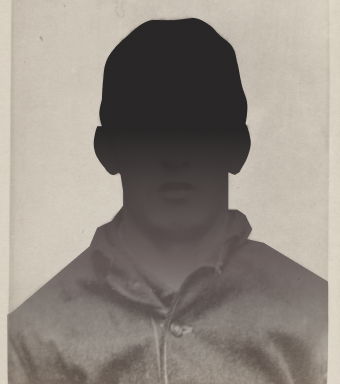
History of burglary. Thomas Hirons was reported in The Oxford Chronicle and Berks and Bucks Gazette on 19th April 1856 as being an "old and notorious thief". Aged 33 from Little Barford, near Banbury, Oxfordshire, it was reported that "he commenced his criminal practices at an early age but the first act that brought him prominently before the public occurred " on 1st May 1855 when he (and 4 associates) burgled Mr John Timms, farmer of Little Barford, was imprisoned in the Banbury lock-up but subsequently escaped. After being involved in a number of other robberies he was re-captured and sentenced to 15 years' transportation at the Oxford Summer Assizes (as reported on 19 Apr 1856) and after a stint in Oxford was moved to Reading prison. Thomas never gave up trying to escape and was discovered within a month of being incarcerated at Reading trying to abscond from his cell having fashioned a screwdriver out of a gaslight hook. Thomas took up tailoring and then shoemaking in prison but again tried to escape having made a knife out a tailor's thimble and the blades from scissors to make another sharp instrument. On 26th February 1856 Thomas was consequently moved to Portsmouth. However, using his tailoring skills he made himself some clothes from rough sheets and managed to get past the prison guards on 8th April 1856 and made his escape to Great Barford stealing a purse of money on the way. A reward of £5 was offered for his capture. His robberies continued (even managing to secure a horse along the way) but the police were on to him and he was eventually discovered in Louzey Field Barn in Wedgenock Park, Warwickshire. He initially outran his pursuers but was finally captured and imprisoned in Warwick. When he was arrested "he was dressed in clothing which he stole from Mr. Woolgrove, of Great Barford, and nearly all the property was in his possession which he has lately stolen". He was subsequently charged with stealing at Warwick Assizes on 14th April 1856 the property of: William Smith, farmer of Hatton and Amos Woolgrove, baker of Great Barford. Thomas was reported as having "a scar over the right eye, another on the thumb, ditto outside both arms, and a deformed left toe" with an "oval visage, fresh complexion, and blue eyes". He was often reported as being "A Berkshire Jack Sheppard" and its as also reported on 20th April 1856 in Lloyd's weekly London Newspaper that he was a native of Keen's Green, Henley-in-Arden who once served with the 26th Regiment of the Foot.