Summary
Personal Information
Crime
Voyage
Transportation
Thomas Mayo was transported on the Ramillies, departing 25th Apr 1854 and arriving 7th Aug 1854 with 280 passengers.
757 ton barque ship Ramillies was built at Sunderland in 1845. There only appears to be one voyage to Australia with convict passengers. She carried the thirteenth of 37 shipments of male convicts for Western Australia. The 1854 voyage took 79 days and the Ramillies arrived in Fremantle on August 7, with 94 passengers and 277 convicts (1 death recorded on voyage). (The passengers comprised 30 Pensioner Guards and their families.)
 Ramillies (generic)
References
| Primary Source | Australian Joint Copying Project. Microfilm Roll 93, Class and Piece Number HO11/18, Page Number 78 |
| Source Description | This record is one of the entries in the British convict transportation registers 1787-1867 database compiled by State Library of Queensland from British Home Office (HO) records which are available on microfilm as part of the Australian Joint Copying Pro |
| Original Source | Great Britain. Home Office |
| Compiled By | State Library of Queensland |
| Database Source | British convict transportation registers 1787-1867 database |
Claims
No one has claimed Thomas Mayo yet.
Photos
No photos have been added for Thomas Mayo.
Convict Notes

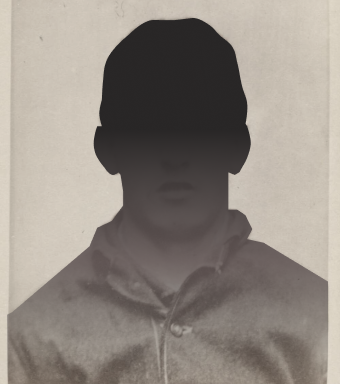
THOMAS MAYO Thomas was born in C.1823 near the town of Worcester in Worcestershire. He turned to a life of crime but he often used his alias “Thomas Satterwaite”. 2nd Dec 1844 – Worcestershire, England – Burglary – Sentence: 6 months 31st July 1847 – Monmouthshire – Burglary before convicted of Felony – 20 years Transportation Convict description: 5’2” tall; brown hair; hazel eyes, long face, fresh complexion, appearance: middling stout; cut on upper lip Occupation: Bricklayer Single with no children Semiliterate Early Crimes: CITY MAGISTRATES OFFICE . Berrow's Worcester Journal (Worcester, England), Thursday, August 22, 1844; Issue 7395. British Library Newspapers, Part II: 1800-1900. Thomas Satterwaite was remanded until Tuesday next, on a charge of being implicated in the burglary at the house of James Cross, the Plough Inn, Fish Street, on the 25th ultimo, for which Henry Hardwick is already committed to the Assizes. CITY MAGISTRATES OFFICE . Berrow's Worcester Journal (Worcester, England), Thursday, August 29, 1844; Issue 7396. British Library Newspapers, Part II: 1800-1900. Wednesday Thomas Satterwaite was again remanded till Saturday, on a charge of breaking into the Plough Inn, Fish Street These crimes were confirmed by Hereford Journal (Hereford, England), Wednesday, August 11, 1847; pg. 4; Issue 5624. British Library Newspapers, Part III: 1741-1950. CONVICTION OF A DARING GANG OF BURGLARS The two first-mentioned prisoners, calling themselves Mayou and Albert, are no other in reality than Thomas Satterwaite and George Dallimore, the former a native Worcester, and the latter of Much Marcle, in Herefordshire. Both have often figured in the calendars, and the previous convictions proved against them were upon the evidence of Mr Griffiths, the Governor of Worcester City Gaol, who was subpoenaed to Monmouth with that view. There is no doubt, also that these two men, with their fellow convict Hayes, were the guilty parties in the burglarious entry and robbery of Mr George. arwick’s shop and residence at Great Malvern, on the night of Wednesday, the 14th April last, aggravated, it will be recollected, by a most murderous attack upon the person of Mr Warwick. Thomas Mayo’s final crime: The Welshman 20th August 1847 News p.1 A GANG OF BURGLARS obtained their deserts at the recent Monmouth assizes. They were convicted under the names of Thomas Mayo, aged 29, George Albert, aged 26, Samuel Hayes, aged 24, and Charlotte Mayo, aged 22. They landed at Newport on the 4th of May, and stayed at the Steam Packet Inn, in that town, until the 6th, on the morning of which day the prisoners left the town, but the female remained behind. They were absent till about five o'clock on the morning of the 8th, when they returned to the inn at Newport, with several bundles. Suspicion was excited; the bundles were searched and found to contain a large quantity of drapery goods, and in the prisoners' possession were dis- covered picklocks, skeleton keys, other implements of burglary, and three heavy life preservers. It was also ascertained that the goods had been stolen the same night from the shop of Mr. William Bull, draper, of Usk. They were all found guilty, and sentenced-- Albert and Mayo to 20 years' transportation Hayes to 15 years'transportation; and Charlotte Mayo to 12 months' imprisonment. It has transpired that the fellows calling themselves Albert and Mayo are desperate characters named Satterwaite and Dallimore, the former a native of Worcester, and the latter of Much Marcle, Herefordshire; and they are the same parties who, on the night of the 14th of April last, broke into the shop of Mr. George Warwick, at Malvern, and made a murderous attack upon that gentleman on being disturbed by him whilst pursuing their work of plunder. Hayes, there is no doubt, was the man who inflicted the heavy blow upon Mr. Warwick with a “ life preserver," and a hat and half-boot left behind them were proved to have belonged, the hat to Satterwaite, and the half-boot to Dallimore. Their conviction and sentence for the Usk burglary has at length put an end, for some time, to their long career of plunder and outrage. Thomas Mayo was described as a short, insignificant-looking man, was very decently dressed, and seemed to watch the course of proceedings with considerable anxiety. After his trial he was imprisoned in Monmouth County Gaol, but with the help of his co-accomplices they made a dramatic escape from the Gaol: Monmouthshire Merlin 11th September 1847 News Page 3. DARING ESCAPE OF FOUR CONVICTS FROM OUR COUNTY GAOL, AND RE-CAPTURE OF THE PRISONERS. On Wednesday morning last considerable excitement prevailed in Monmouth from the rumour of four convicts having escaped from the gaol. Crowds of persons hastened to the neighbourhood of the prison, when it was found that the statement was true, and that the prisoners had taken the direction of the Buckholt in their flight. The names of the runaways are Thomas Mayo, George Albert, and Samuel Hayes, known as the Usk burglars, and who were severally transported at our last assizes for the terms of fifteen and twenty years for a burglary in that town and Patrick Murphy, against whom sentence of death was recorded for burglarv with violence, but which sentence has since been commuted to transportation for twenty years. The known desperate character of these men --sympathy for the respected governor, Mr Barrett no less than the interests of society at large, induced large parties of respectable tradesmen, and of the labouring classes, to join in pursuit of the prisoners. The details of the manner in which these desperate men effected their escape are as follows : During the preceeding night the prisoner Mayo contrived to unfasten an iron rod from the window of his cell, called the saddle bar, he then broke off one of the legs of his low iron bedstead with these instruments he cut away the lower panel of his cell door, and without further difficulty he stepped into the open corridor; he then with the iron bar broke off the large padlocks of two cells in which were Murphy and Hayes; these remained in their cells,whilst Mayo withdrew to an empty one opposite his own, all waiting the arrival of the turnkey with the prison keys. At the usual hour, about a quarter to 6 o'clock, Mr. Allpass, the governors assistant, arrived in the gallery in which these villians were located, and he proceeded to unlock the first cell. he had hardly done this, when Mayo flew upon him with the agile ferocity of a tiger, and clasped him by the throat and mouth. Mr. Allpass thus suddenly attacked, instinctively bit the hand which grasped his mouth. Murphy now bore upon him, and he received a murderous blow on his head and temple, from the iron foot of the bedstead, which weighed 3 ¼ lbs. He fell to the ground, but in doing so. he seized his whistle, and was about using it, when one of his assailants called to his companions to "take his squeaker," Overcome by the strangling griping of his throat and the stunning blow he had received, Mr. Allpass was unable to offer further resistance, and the villians left him, after locking him in the cell with another transport, saying that "they had done for him." They then unlocked Albert's cell, and the four fellows descended the steps of the gaol, armed with the prison keys, which they had taken from Allpass, with a huge padlock, the foot of the iron bedstead, and a large stone which they tore up from a drain. They proceeded to the lodge, at the inner door of which they awaited the arrival from the entrance of the two turnkeys at the appointed hour for commencing the duties of the day. Scarcely a minute had elapsed, when Bradshaw, one of the turnkeys, a powerful and well built young man, unlocked the door, and in a moment he was felled to the ground by a terrific blow on the head from the same iron bar which had been used upon Allpass. Hathaway, the other assistant, who was close behind Bradshaw, was simultaneously attacked by the other desperadoes, though he was the less injured of the three. They then locked the door by which they had entered, and seizing the large key of the outer door from Hathaway they let themselves out, flourished their weapons triumphantly in the air, threw the keys of the prison into a garden adjoining, and ran off up the hill of the old Hereford road. During the savage onslaught on Allpass, he was unable to make an alarm, from being nearly strangled by his assailants; but immediately they had left him, he went to the window and shouted as loud as his weak state would allow him. Mr. Barrett, the governor, hearing him, jumped instantly to the window, from whence he saw the prisoners engaged in conflict with the turnkeys. With the rapiditv of thought nearly, he hastened to their assistance, but the door had been locked upon him. He then directed his steps to Allpass, whom he released from the cell in which he had been locked, and who then joined in pursuit of the prisoners, the keys of the gaol having been recovered. As we stated in the commencement, several parties from the town followed the fugitives; and three men, named John Brown, Edward Jayne, and James Jeremy, caught the pri- soner Murphy about a mile and a half within the Buckholt Wood, lying flat on the ground. Hayes was the next captured, by two men in the employ of Mr. Williams, miller, named William Bevan and George Drunderdam, whom they found in a brake of the ,same wood, into which they had to crawl upon their knees, Mayo and Albert were found by Brown, Jayne, and Jeremy, in a deep blind ditch, their entrance into which they had concealed as well as they could with briars. In each of the two last, cases, the hiding places were well selected, and required corresponding ingenuity to detect. All the prisoners were safely lodged in their old quarters, with the extra appendages of heavy irons and handcuffs, before eleven o'clock in the forenoon. The palpable, intention of these men was to remain in the Buckholt Wood, which is very thickly overgrown with underwood and foliage, until night", when they would have been loose upon society, to re-enact their plunder and their crimes. Universal delight was mani fested at their recapture. We should state that the prisoner in whose cell Allpast-was attacked, took no part in the outrage. He is a convict of seven years' transportation. Mr. Barrett begs, through us, to thank his friends most sincerely for their prompt and very timely assistance. No further action was taken on Thomas and he and his accomplice, George Albert were sent to Gibraltar where they remained until 1854 where they joined the Ramillies for their journey to the Convict Establishment in Fremantle Western Australia. Ramillies - arrived in WA in 1854 This 757 ton barque was built at Sunderland in 1845. It was employed as a convict transport for Western Australia and left London, England on May 20, 1854 bound for the Swan River Colony, stopping at Plymouth and Gibraltar on the way. She carried the thirteenth of 37 shipments of male convicts destined for Western Australia. The voyage took 79 days and the Ramillies arrived in Fremantle on August 7, 1854 with 94 passengers and 277 convicts [Erickson]. Charles Hodder and Daniel Ritchie were the captain and surgeon respectively. There was one death recorded on the convict shipping and description lists for Samuel Frost (3167) and other sources indicate he died on the voyage out. There were 277 convict numbers assigned for the voyage ranging from (2932 to 3208) and considering the death at sea the total disagrees with [Erickson] and [Bateson] who said 280 convicts embarked and 277 arrived. [Bateson] also said 160 convicts were landed in Gibraltar and only 157 left Gibraltar. The ship's surgeon reported one death on the voyage, but not between Gibraltar and Australia. Of the 94 passengers mentioned above, all 94 were pensioner guards and their families, the number being made up of 30 pensioner guards, 22 wives, 17 sons and 25 daughters. Daniel Ritchie's surgeon's journal for the voyage is preserved in the Public Record Office (PRO) in London. Researchers can view a copy on the Australian Joint Copying Project (AJCP) microfilm reel M711 which is held in most major libraries and archives offices throughout Australia. The following list is an alphabetically sorted list of the names associated with each of the 277 convict numbers assigned to this voyage. The comments field gives alternative names attributed to the various convicts, many of which are not only spelling variations, but alternative names used in later life or in subsequent re-convictions. The age quoted seems to refer to the age of the convict when the passenger list was created. Thomas Mayo: Convict# 2962 31st August 1854 received his Ticket of Leave 4th August 1857 received his Conditional Pardon Possible death date: 24th September 1896 Glenn Innes NSW